

When you are overwhelmed, what is the decluttering journey? Every evening, you come home to the kind of clutter that makes simple decisions feel impossible. For busy professionals juggling careers and personal lives, decluttering is rarely just a tidy-up job—it is both housework and a form of self-care.
The truth is, decision fatigue and emotional overload make it tough to part with possessions, turning every object into a micro-decision that drains energy. The right tech solutions, including AI and interactive apps, offer fresh ways to transform this exhausting process into one that actually supports your well-being.
Table of Contents
- What Defines the Decluttering Journey
- Decision Fatigue and Emotional Overload
- AI-Powered Solutions and Gamification Methods
- Practical Steps: Keep, Donate, Sell, or Trash
- Common Pitfalls and How to Overcome Them
Key Takeaways
| Point | Details |
|---|---|
| Decluttering as Personal Growth | Frame decluttering as a journey of self-improvement rather than a mundane task to cultivate ongoing motivation. |
| Manage Decision Fatigue | Tackle decluttering in short sessions and simplify decisions using clear categorization to avoid overwhelm. |
| Utilize AI and Gamification | Leverage AI tools and gamified systems to streamline the decluttering process, making decisions easier and more engaging. |
| Address Emotional Attachments | Recognize and manage the emotional ties to belongings to prevent decision paralysis and foster effective decluttering habits. |
What Defines the Decluttering Journey
What is the Decluttering Journey? The decluttering journey isn’t just about throwing things away. It’s a personal transformation that touches your mental health, your daily habits, and how you relate to the stuff around you. For most busy professionals, decluttering sits somewhere between a necessary household chore and an act of self-care. You’re dealing with the physical reality of too many possessions while also confronting the emotional weight they carry. That’s what makes this journey so much harder than simply hiring a junk removal service.
What makes decluttering genuinely complex is that emotional and mental adjustments happen alongside the sorting and discarding. When you pick up that vintage blender you bought three years ago and never used, you’re not just making a keep or donate decision. You’re processing feelings about wasted money, broken intentions, and the gap between who you wanted to be and who you actually are. This reflective component transforms decluttering from a simple organizing task into something deeper. The process becomes a window into your consumption patterns, revealing why you accumulate and what truly matters to you.
Many people don’t realize that decluttering often serves as a catalyst for sustainable consumption changes. As you work through your belongings, you start questioning future purchases more critically. You become aware of your acquisition habits. You understand the real cost of stuff in terms of space, maintenance, and mental energy. For someone juggling a demanding career and personal commitments, this awareness can be transformative. You stop buying things on autopilot. You become intentional about what enters your home.
The decluttering journey also involves a significant behavioral component. You’re not just changing your environment; you’re changing how you make decisions about possessions. When facing overwhelming clutter, many people find that getting unstuck from clutter paralysis requires breaking the decision fatigue that keeps them frozen. This journey acknowledges that decluttering isn’t a one-time event but an ongoing realignment of your habits and choices.
Pro tip: Frame your decluttering journey as personal growth rather than a chore to complete, and you’ll find the motivation to start and the resilience to keep going even when the process feels slow.
Decision Fatigue and Emotional Overload
You stand in your bedroom surrounded by clothes you haven’t worn in two years. Should you keep that jacket? Donate it? Sell it online? Your brain feels foggy. Making one more decision feels impossible. This is decision fatigue, and it’s one of the biggest obstacles between you and a decluttered home. When you’re already exhausted from work decisions, client meetings, and personal choices throughout the day, facing hundreds of decluttering decisions depletes your mental reserves. Cognitive fatigue diminishes mental effort capacity, making it harder to evaluate each item objectively and increasing the emotional weight of every choice.
What makes decluttering particularly draining is the emotional component layered on top of decision-making. You’re not just sorting objects; you’re confronting the stories attached to them. That expensive piece of kitchen equipment represents a version of yourself who was going to cook more. Those shoes in the back of the closet symbolize failed fitness goals. Each decision to keep, donate, or trash triggers feelings of guilt, regret, and shame. This combination creates emotional overload that goes beyond simple tiredness. Your nervous system gets activated. Your stress hormones spike. You might start feeling anxious or defeated before you’ve even finished one closet. The result is that many people hit a mental wall and simply stop, leaving their clutter untouched for months.
The snowball effect happens quickly. As decision quality deteriorates from fatigue, you make poor choices. You keep things out of guilt rather than genuine need. You second guess donations immediately after making them. You feel increasingly overwhelmed by the task ahead, which triggers avoidance. This cycle feeds itself, deepening the emotional exhaustion and making the project feel even more impossible. Busy professionals are especially vulnerable because you’re already operating at maximum cognitive capacity during work hours. Adding a major decluttering project without addressing decision fatigue becomes a recipe for burnout and abandonment.
Understanding this pattern is crucial because it explains why willpower alone doesn’t work. You need to reduce the number of decisions you face and lower the emotional stakes of each one. This is where external support like decision frameworks, simplified categories, or AI assistance becomes genuinely valuable. Instead of agonizing over each item individually, you need a system that removes guesswork and provides clarity.
Pro tip: Tackle decluttering in short 20 to 30 minute sessions rather than marathon sessions, giving your brain time to recover between efforts and preventing the decision fatigue spiral that leads to paralysis.
AI-Powered Solutions and Gamification Methods
The traditional approach to decluttering relies on willpower and motivation, which we know runs out fast. That’s where AI and gamification change the game entirely. Instead of facing overwhelming choices alone, you get intelligent assistance analyzing each item based on condition, value, and your actual usage patterns. An AI system can process information faster than your tired brain and remove the emotional guesswork from decisions. It asks you simpler questions with clear options instead of leaving you paralyzed by open-ended choices. The technology essentially becomes your decluttering partner, handling the cognitive load while you handle the physical sorting.
Gamification adds the motivational layer that keeps you moving forward when momentum slows. Points for completed items, streaks for consecutive sessions, achievements for reaching milestones—these game mechanics tap into the same reward systems that make you scroll through apps or finish work projects. Gamification with adaptive game mechanics creates engaging experiences that enhance motivation and sustained participation. For someone juggling multiple responsibilities, these small wins matter. You’re not just decluttering; you’re building streaks, unlocking badges, and watching your progress visualize on a dashboard. The tedium transforms into something that feels rewarding rather than punishing.

What makes this combination particularly powerful is how AI learns from your decisions over time. The system notices patterns in what you keep versus what you let go. It understands your attachment style to possessions and adapts its recommendations accordingly. Some people struggle most with clothes; others with kitchen gadgets or sentimental items. A personalized AI system recognizes these patterns and focuses support where you need it most. You’re not following someone else’s rigid decluttering rules. You’re getting a solution that respects your values while pushing you toward progress. The gamification keeps the momentum going even when decisions feel hard, transforming what would normally be an exhausting chore into something approaching enjoyable.
The practical benefit is that decision fatigue drops dramatically. You’re making fewer total decisions because AI consolidates information and presents clearer options. You’re not second guessing yourself because the system provides objective analysis. And you’re staying engaged because the gamification makes progress visible and rewarding. For busy professionals already depleted from work decisions, this matters enormously.
Here’s a summary of how different decluttering methods address major obstacles for busy professionals:
| Decluttering Method | Reduces Decision Fatigue | Provides Emotional Support | Keeps Motivation High |
|---|---|---|---|
| DIY Organization | Minimal | Limited | Inconsistent |
| AI-Guided Sorting | High | Moderate | Consistent |
| Gamified Platforms | Moderate | Some | Strong |
| Professional Help | High | High | High |
Pro tip: Start with one category or room where you already feel some motivation, then use early wins and achievements to build momentum for tackling more challenging areas of your home.
Practical Steps: Keep, Donate, Sell, or Trash
Now comes the part that actually matters: making decisions about your stuff. The good news is that you don’t need to invent a system from scratch. The proven approach used by professional organizers involves sorting items into clear categories that give each possession a specific destination. Instead of standing there holding a sweater and agonizing over whether to keep it, you already know the four options available. This removes the paralysis that comes from too many choices. Your brain shifts from evaluating to categorizing, which requires far less mental energy.
Here’s how the system works in practice. You move through one small area at a time, holding each item and asking a simple question: Does this belong in my life right now? Keep items that you genuinely use or love, that fit your current lifestyle and living space. Donate items in good condition that no longer serve you but could help someone else. This feels good and simplifies the decision by removing guilt. Sell items that have real market value, particularly if you need extra cash or want to offset the cost of acquiring the things you’re keeping. When evaluating items based on condition and usefulness, consider what actual people would pay for versus what sounds good in theory. Trash items that are broken, stained, or genuinely unusable. Don’t let guilt convince you to donate something that belongs in a landfill.
The speed matters more than perfection at this stage. Professional organizers emphasize that this method reduces decision fatigue and builds momentum because you’re making quick, clear decisions rather than second guessing yourself endlessly. You’re not trying to price every item perfectly for resale or find the exact right charity for every donation. You’re moving items out and moving forward. The boxes or bags become physical proof that progress is happening, which motivates you to keep going. Each completed category feels like a small win. For busy professionals, this psychological boost matters tremendously because it prevents the common pattern of starting strong and then losing momentum halfway through.
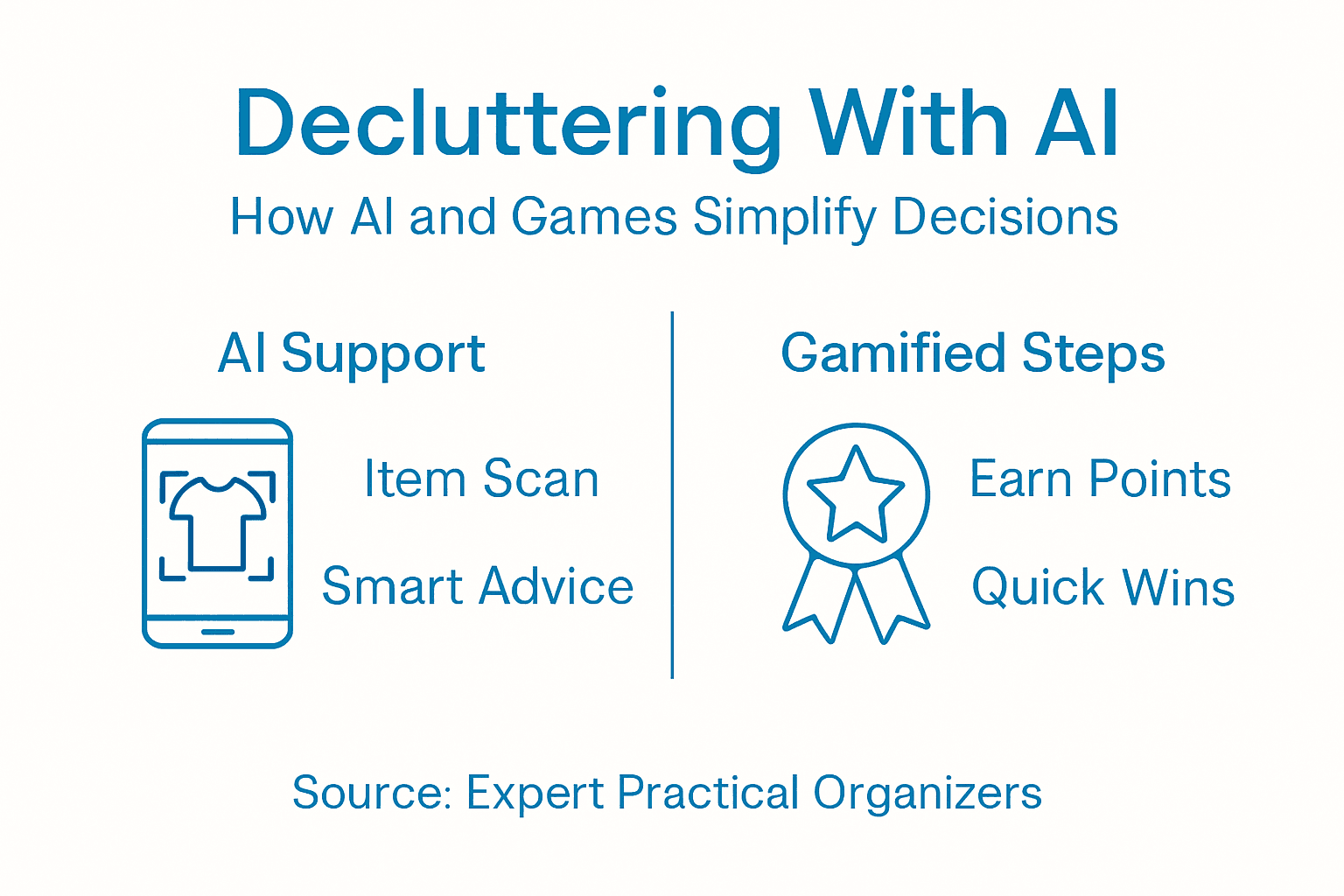
Where AI and gamification enhance this process is by removing guesswork. Instead of wondering if something is worth selling, an AI system analyzes condition, current market demand, and effort required to list it online. You get a clear recommendation rather than having to research comparable items yourself. For items with good resale potential, knowing what sells quickly helps you make faster decisions about the sell category versus donate. This accelerates the entire process while reducing the cognitive load.
Use this table to quickly decide what to do with each item:
| Item Condition | Sentimental Value | Best Action |
|---|---|---|
| Excellent, unused | Low | Sell or Donate |
| Good, rarely used | Low to Moderate | Donate |
| Fair, used often | High | Keep if useful |
| Poor, broken | Any | Trash |
Pro tip: Set a timer for 30 minutes and work through one small section at a time, making snap decisions without overthinking, then take a break before moving to the next area to avoid decision fatigue.
Common Pitfalls and How to Overcome Them
Most people start decluttering with unrealistic expectations. They imagine they’ll tackle their entire bedroom in one Saturday afternoon or clear out years of accumulated stuff in a single weekend sprint. Then reality hits. You get tired. You start second guessing decisions. You find items that trigger emotional memories and suddenly you’re sitting on the floor reminiscing instead of sorting. The project stalls. Weeks pass. Your clutter remains exactly where it was, except now you feel worse about yourself for failing. This cycle repeats because many declutterers underestimate how persistent clutter actually is and overcommit to quick fixes that don’t address the underlying habits creating the mess.
Another common pitfall is treating decluttering as purely a physical sorting task. You focus on removing items without examining why you accumulated them in the first place. You donate the sweater you never wore, feel temporarily good, then buy three new sweaters next month because the habit remains unchanged. The clutter returns because you never addressed the decision making patterns that created it. Emotional struggles involving attachment and identity complicate this further. That bread maker represents a version of yourself who cooks homemade meals. Those expensive shoes symbolize aspirational goals. Getting rid of these items feels like rejecting those identities. Without acknowledging this emotional component, you’ll keep pulling items out of the donate pile and putting them back, making no progress.
The solution is accepting that successful decluttering requires both practical systems and emotional support. You need realistic timelines measured in weeks or months, not days. You need to work in short sessions rather than marathon efforts. You need to address the habits and beliefs driving your acquisition patterns, not just the physical stuff. This is where a structured approach combined with gamification and AI assistance becomes genuinely valuable. The system removes emotional decision making by providing objective analysis. The gamification keeps you engaged across the weeks required for actual change. And the habit awareness built into the process helps you understand why you buy and keep things, breaking the cycle that recreates clutter.
Perfectionism is another silent killer. You become obsessed with finding the perfect home for every donation or maximizing resale value on items you’re selling. You spend three hours researching prices for used items when you could have donated them in thirty minutes. You hunt for the perfect charity instead of just dropping things off. This perfectionism turns decluttering from progress into procrastination. Give yourself permission to be good enough. Items go to charity, not necessarily the optimal charity. Things get donated even if you could theoretically sell them for money. Progress matters more than perfection.
Pro tip: When you feel the urge to keep something out of guilt or “just in case,” ask yourself honestly if you’ve used it in the past year and whether you actually like it, then honor your answer instead of rationalizing why you might need it someday.
Overcome Decision Fatigue and Emotional Overload With Intelligent Decluttering Support
If you found yourself stuck in the decision paralysis and emotional weight described in “The Decluttering Journey: Tackling Overload With AI” you are not alone. Many busy professionals struggle with the mental exhaustion caused by too many choices and attachment to possessions. At DeclutterNow.ai we understand this challenge and offer an AI-powered behavioral technology platform designed to simplify your decluttering process. Our system reduces decision fatigue by analyzing each item based on condition value and personal usage to help you quickly decide whether to keep donate sell or trash. This takes the burden off your mind and replaces guesswork with clarity.
Start your decluttering journey with tailored AI assistance combined with motivating gamification elements like points streaks and achievements to keep you engaged and moving forward even when emotions run high. For extra insights listen to our Podcast – Declutter Now where we explore success stories and strategies related to behavioral change and mental well-being through decluttering. Don’t wait for the mental fatigue to deepen—take control today at DeclutterNow.ai and transform clutter from a source of stress into a path toward personal growth.
Frequently Asked Questions
What is the decluttering journey?
The decluttering journey is a personal transformation that combines physical organization with emotional reflection. It’s about not just removing excess items from your space but also understanding your consumption patterns and how your possessions affect your mental well-being.
How can decision fatigue impact the decluttering process?
Decision fatigue can make it difficult to effectively evaluate your possessions, leading to overwhelming feelings and emotional overload. This can result in poor decision-making, such as keeping items out of guilt or feeling stuck on decisions, ultimately halting your decluttering efforts.
What role does AI play in the decluttering process?
AI can assist by analyzing items based on condition and usage patterns, simplifying the decision-making process. By providing clearer choices and less emotional guesswork, AI helps reduce decision fatigue and keeps you engaged throughout the decluttering journey.
How can gamification improve motivation during decluttering?
Gamification introduces elements like points, achievements, and visual progress tracking to make the decluttering process more engaging. Rewarding small successes and creating a sense of achievement helps maintain motivation and keeps you moving forward, even when faced with challenging decisions. Hopefully, this article helped answer the question, What is the delcuttering journey?