
How to get rid of clutter? Those boxes that have been sitting for years? That room you can’t face? Getting rid of clutter starts with one simple idea: start with trash, build momentum. Instead of trying to tackle everything at once, focus on the easiest decisions first. This small shift is the key to turning clutter paralysis into genuine progress.
Why It Feels Impossible to Start Decluttering
Have you ever stood at the doorway of a room, looked at all the piles, and just turned around and walked away? That feeling of being completely stuck isn’t a personal failing. It’s not laziness—it’s a real psychological roadblock I call “clutter paralysis.”
This paralysis is fueled by decision fatigue. Every single item in your home, from an old magazine to a gifted sweater you never wore, demands a decision. Keep it? Donate it? Toss it? Where does it even go? When you multiply that mental effort by hundreds or thousands of items, your brain gets exhausted and simply hits the brakes. You feel paralyzed by decisions.
The Psychology Behind Being Stuck
The link between our stuff and our stress is stronger than most people realize. In fact, an incredible 80% of Americans feel overwhelmed by the clutter in their homes, and most say it directly causes them anxiety. The flip side is encouraging: studies from places like Princeton have shown that the act of decluttering can actually lower cortisol levels—your body’s main stress hormone. It’s not just about a tidy space; it’s about a calmer mind.
This is exactly why so many popular organizing methods fall flat. We don’t start with “does this spark joy?” because when you’re already paralyzed by choice, that’s like asking someone who’s afraid of water to jump into the deep end of the pool. It’s just too much, too soon.
A Gentler Way to Begin
So, what’s the alternative? Instead of forcing complex decisions, we start with the simplest ones imaginable. This is the heart of the “Trash First” methodology. We’re not going to begin by sorting through sentimental photos or deciding the fate of that expensive gadget you never use.
Nope. We start with what is actually trash. Think expired food, old receipts, junk mail, and things that are clearly broken.
Key Takeaway: You don’t have to tackle the hardest items first. In fact, you shouldn’t. By clearing out the easiest things—the trash—you create instant visual progress and get a quick win. This small victory provides a dopamine hit that fuels your motivation for the next set of decisions.
This psychology-backed decluttering approach is all about turning clutter paralysis into progress. It’s about building momentum, not expecting perfection overnight. If that feeling of being stuck sounds familiar, our guide on the five steps to start decluttering your home dives even deeper into these strategies. The goal is simple: finally make progress, one easy decision at a time, until you’re ready to face those boxes that have been sitting for years.
Building Your Decluttering Momentum
Before you even touch a single pile, let’s hit pause. The secret to successful decluttering isn’t about diving in headfirst. It’s about setting the stage for a series of small, empowering wins. This prep work involves gathering a few simple tools and, just as importantly, getting your head in the right space.
The goal here isn’t to perfectly organize your entire home in one weekend. It’s about making real, visible progress today, even if it’s just for 15 minutes. Shifting your focus from perfection to progress is the little trick that turns “I’m totally overwhelmed” into “Hey, I can actually do this.”
The Four-Box Method: Your Physical Toolkit
First things first, let’s get your physical space ready. The absolute cornerstone of this whole approach is the Four-Box Method. Go find four sturdy boxes, bins, or even just designated piles in the corner of the room. Whatever you have on hand will work.
Label them clearly:
- Trash: Anything broken, expired, or otherwise unusable. This box is your best friend for quick wins.
- Donate/Sell: Items in good shape that you no longer need but someone else could definitely use.
- Relocate: For all those things that have mysteriously migrated to the wrong room. Think coffee mugs in the bedroom or kids’ toys in the home office.
- Keep: This is for the stuff you actively use, genuinely love, and that actually belongs in the space you’re clearing.
Having these boxes ready before you start means you have a destination for every single item. No more second-guessing, just quick, decisive action.
The Decluttering Sprint: Your Mental Reset
Now, let’s talk about the mental toolkit. The single biggest enemy of getting rid of clutter is burnout. Staring at a massive project is draining before you even begin, which is exactly why we’re not going to do that. Instead, we’re going to use what I call “decluttering sprints.”
A decluttering sprint is just a short, highly focused burst of activity. Set a timer for 15 minutes. That’s it. During that time, your only job is to make decisions about items in one tiny, manageable area—a single junk drawer, one shelf on the bookcase, or just the top of your nightstand.
This simple technique is powerful because it taps into the psychology of quick wins. When you complete a small task, your brain gives you a little hit of dopamine, which feels great and builds motivation. One successful 15-minute sprint makes you far more likely to tackle another one tomorrow, creating the momentum you need to keep going.
By working in short bursts, you sidestep the decision fatigue that so often leads to giving up. It’s a strategy that values consistency over intensity, and from my experience as someone who had boxes sitting for years, that’s what truly gets results.
To make sure your sprints are as effective as possible, a little preparation goes a long way. Here’s a quick checklist to run through before you hit “start” on that timer.
Your Decluttering Sprint Checklist
| Item | Why You Need It | Pro Tip |
|---|---|---|
| Timer (on your phone) | Keeps you focused and prevents burnout. The deadline is the magic. | Put your phone on “Do Not Disturb” so notifications don’t derail you. |
| Your Four Labeled Boxes | Gives every item an immediate destination, preventing “maybe” piles. | Place them just outside the area you’re working on for easy access. |
| Cleaning Cloth & Spray | To quickly wipe down newly cleared surfaces for an instant feeling of clean. | A simple all-purpose cleaner is all you need. |
| A Specific, Small Target | A single drawer or shelf is perfect. “The kitchen” is too big. | Pick something you can realistically finish in 15 minutes. |
With these items ready, you’re set up for a focused, satisfying session every single time.
Your Digital Partner in Progress
Even with the best plan, there will be moments when you feel stuck. Having some backup can make all the difference, and this is where a digital tool can act as your personal decluttering coach. AI breaks through decision fatigue by making the small choices easier.
The DeClutter Now app, for instance, was designed specifically to break through that decision-making gridlock.
Instead of agonizing over whether to keep or toss something, you can just snap a photo and let the app’s AI help you categorize it based on the Four-Box Method. It turns a chore into more of a game, with points and streaks that create momentum. If you’re curious about integrating technology into your routine, you might find our guide on the best home organization apps helpful. Having a partner, whether it’s a friend or an app, ensures you never have to face those boxes alone again.
A Practical Room-by-Room Action Plan
Alright, let’s turn theory into action. This is your blueprint for making real, visible progress, one small victory at a time. The secret to getting unstuck is to start small and build momentum, which is why we’re absolutely not starting with the most emotionally charged room in your house.
Instead, we’ll break this down into manageable zones. We’ll begin with low-stakes areas to give you those crucial quick wins. Only after you’ve built up your decluttering muscle will we move on to the spaces that feel a bit more daunting. This guide will walk you through applying the Four-Box Method in the real world, showing you exactly how to get rid of clutter and finally turn that feeling of paralysis into progress.
Starting Point: The Bathroom
The bathroom is the perfect place to kick things off. Why? Because the items in here are almost always functional, not sentimental. This makes the decisions quick and painless. You’re not debating whether to keep a family heirloom; you’re looking at a half-empty bottle of shampoo.
Your mission, should you choose to accept it, is to be ruthless with anything that falls into these categories:
- Expired products: Check the dates on makeup, sunscreen, and medications. If it’s past its prime, it’s automatic trash. No second thoughts.
- Unused hotel toiletries: Be honest—are you really going to use those tiny shampoos? If they’ve been sitting there for more than a few months, let them go.
- Products you tried and disliked: That face mask that made your skin feel weird? The conditioner that weighed your hair down? It’s okay to admit it was a bad purchase and clear the space.
- Old towels and linens: Anything frayed, stained, or no longer soft can be retired to your rag pile or donated to a local animal shelter. They’ll be thrilled to have them.
Spend just 15 minutes in here, and you can likely clear an entire cabinet. That first taste of success is a powerful motivator, proving you’ve got what it takes to tackle bigger challenges.
This simple workflow—gather your tools, set a timer, and start sorting—is the foundation we’ll use for every single room.
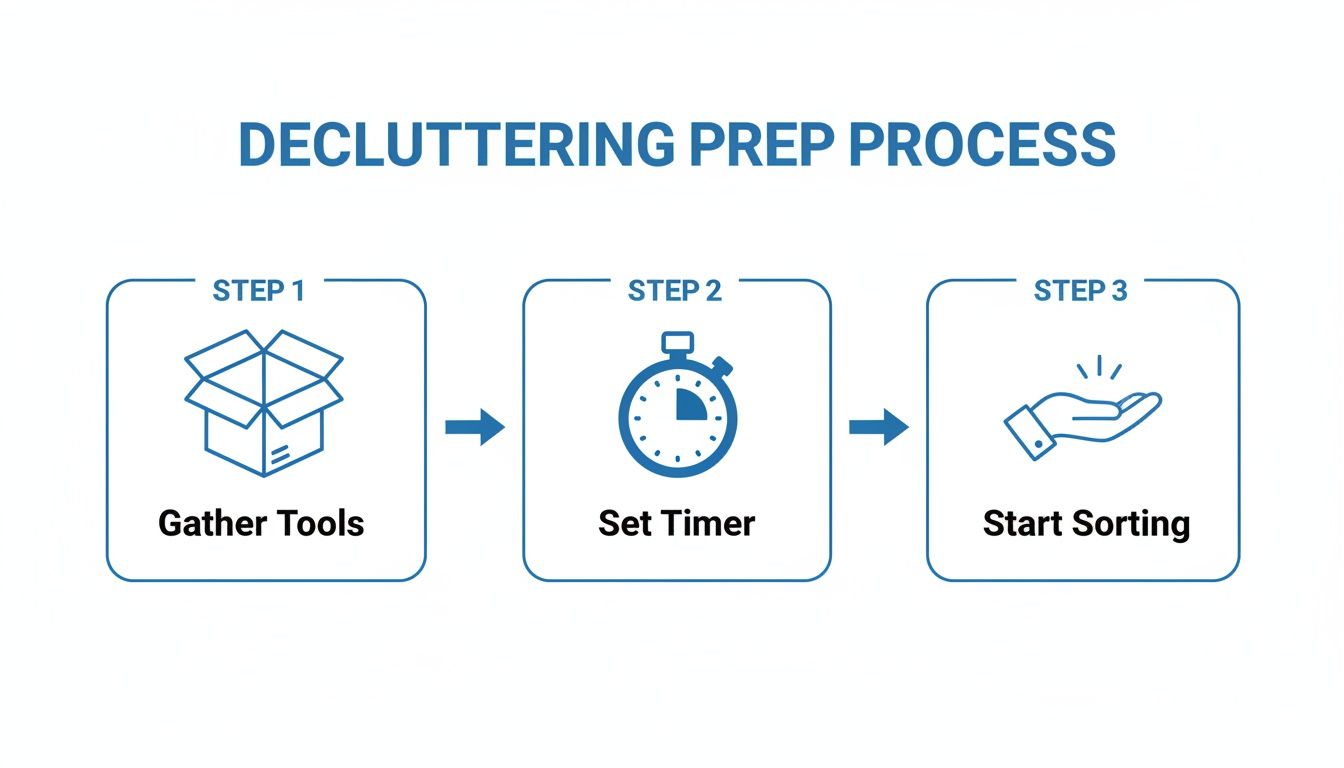
As you can see, the process isn’t complicated. It’s all about having a simple, repeatable plan before you even start.
Next Up: The Kitchen
With your first win under your belt, let’s head to the kitchen. This area can be a minefield of “just in case” items and gadgets that seemed like a brilliant idea at the time. We’ll ignore the sentimental mugs for now and focus purely on function.
Start with a single drawer or cabinet—don’t try to conquer the whole room at once. Look specifically for duplicates. Do you really need three can openers, five wooden spoons, or two melon ballers? I see this all the time. Keep the best one and toss the others in the “Donate” box.
Your goal isn’t just to clear out items but to reduce the mental load. Every object in your home contributes to your “inventory,” and the human brain simply isn’t built to track hundreds of thousands of items. By getting rid of duplicate kitchen tools, you’re not just creating space; you’re freeing up valuable mental bandwidth.
Next, check your pantry for expired foods. Canned goods, spices, and sauces that are past their use-by date are easy “Trash” items. Don’t think of it as being wasteful; the waste already happened when the item wasn’t used in time. Right now, it’s about reclaiming your shelf space.
Tackling The Living Room
The living room often becomes a dumping ground for clutter from other areas of the house. Your main focus here will be on two things: stuff that doesn’t belong and media you no longer consume. Grab your “Relocate” box and do a quick sweep.
- Are there coffee mugs, jackets, or kids’ toys that need to be returned to their proper homes?
- Do you have stacks of old magazines or newspapers? Recycle them. If there’s an article you desperately want to save, tear it out or just snap a photo with your phone.
- Take a hard look at your collection of DVDs, CDs, or old video games. In an age of streaming, are you ever going to use them again? Be realistic.
This is also a great place to apply a handy little decision-making shortcut. If you could replace an item for less than $20 in under 20 minutes, give yourself permission to let it go. That dusty decorative vase you’re not in love with? The stack of outdated tech books? They’re taking up valuable real estate in your home and, more importantly, in your mind.
Moving to The Bedroom and Closet
Now that you’ve built up your decision-making muscle, you’re ready for the bedroom and closet. This space is far more personal, so the choices can feel tougher. The key is to move past the simple question of “Does this fit?” and ask more insightful questions instead.
When sorting through your clothes, ask yourself:
- Would I buy this today? If you saw it in a store right now, at full price, would you purchase it? If the answer is no, it’s time for it to go.
- How does this make me feel? Ignore the size on the tag. Does wearing it make you feel confident and comfortable, or does it bring up negative feelings? Ditch anything that doesn’t make you feel good.
- Have I worn it in the last year? The “one-year rule” is a classic for a reason. If an item hasn’t made it into your rotation through all four seasons, it’s highly unlikely you’ll wear it again.
This room-by-room approach is basically a psychology-backed decluttering system. You start with easy wins to build momentum, which provides the dopamine hits you need to stay motivated. You’re turning the overwhelming task of getting rid of clutter into a series of small, achievable steps. It’s not about perfection; it’s about finally making progress.
Navigating Sentimental Items and Other Tough Clutter
Sooner or later, every decluttering project hits a wall. After you’ve cleared the low-hanging fruit, you’re left with the stuff that really stumps you: sentimental treasures, mountains of paperwork, and that closet full of clothes you might wear someday. This is where the momentum can screech to a halt.
It’s completely normal. These categories are tough because they’re tangled up with our memories, obligations, and even our identity. The trick is to have a gentle but practical strategy that respects the emotion without letting it paralyze you. Let’s get through these final hurdles without the guilt.
Handling Sentimental Items with Care
Sentimental clutter is the hardest, hands down. It’s not about the object; it’s about the memory it holds. When you pick up your grandfather’s old watch or your child’s first finger painting, you’re holding a piece of your past. We hang onto these things because we’re terrified of losing the memory.
But the goal isn’t to erase your history—it’s to curate it. Here’s how to do it:
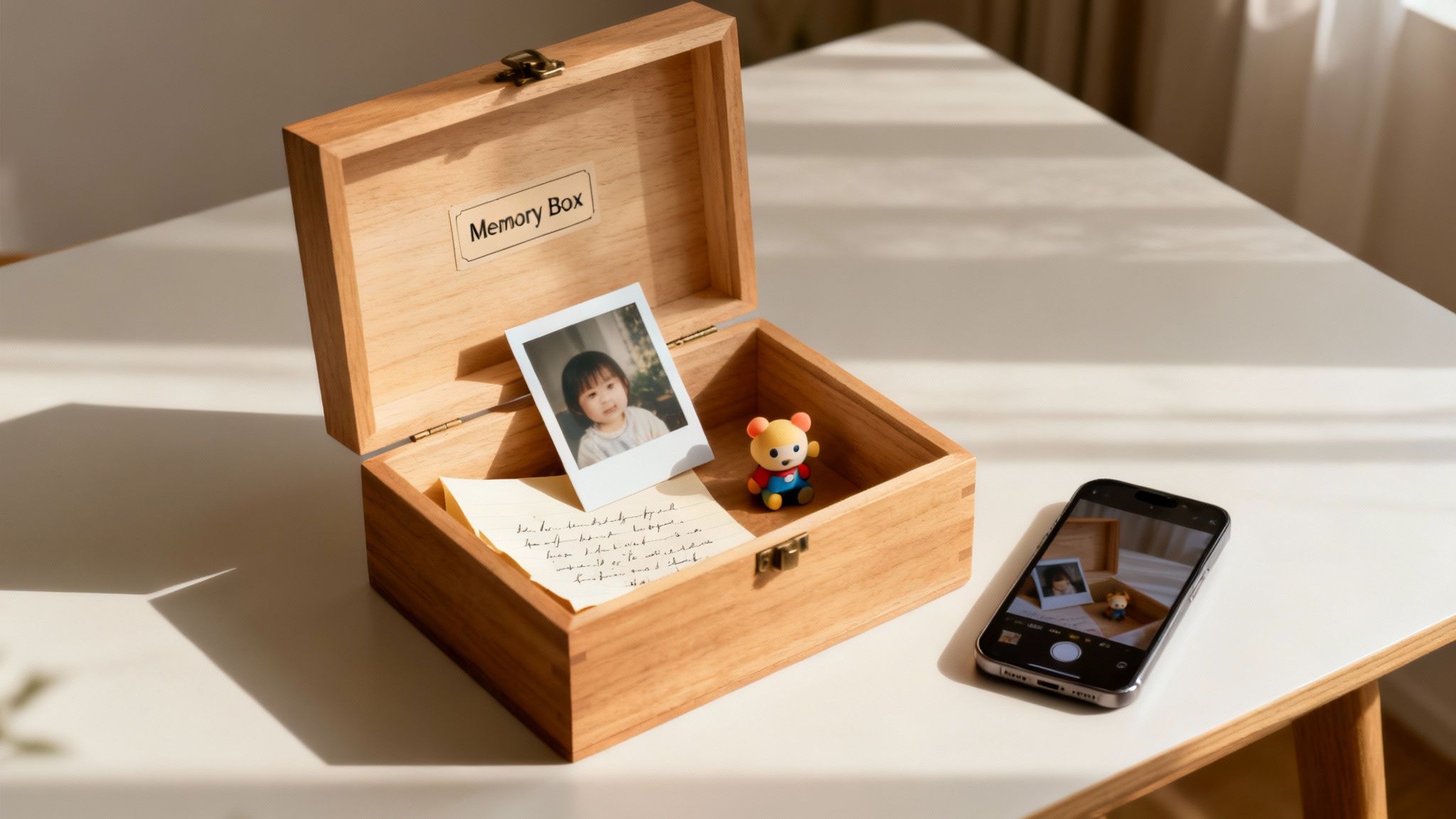
- Create a Single Memory Box: This is a game-changer. Get one beautiful box and dedicate it to your most precious keepsakes. The physical limit forces you to be selective, ensuring you only keep the items that truly represent your most important memories.
- Take a Picture, Keep the Memory: For bulky things you just don’t have room for—like your grandmother’s old vase or a piece of furniture—snap a few high-quality photos. You’d be surprised how often the visual reminder is all you need to feel connected to the memory.
- Honor, Don’t Hoard: Ask yourself, is this item really being honored sitting in a dusty box in the attic? Sometimes, the best way to honor a memory is to let the item go to someone who can use and love it today.
This isn’t about getting rid of your memories. It’s about giving your most precious memories a place of honor instead of letting them get lost in a sea of clutter. One curated box is more powerful than ten forgotten ones in the attic.
A Simple System for Paperwork
Paperwork is the silent killer of clean surfaces. Mail, bills, old tax forms, and your kids’ school art can quickly create an overwhelming mess, leading to serious decision fatigue. The best way I’ve found to tackle it is with a dead-simple, three-category system.
Grab three folders or trays and label them:
- Action: Anything that needs something from you goes here—bills to pay, forms to sign, RSVPs. Handle these as soon as you can, then get them out.
- Archive: This is for important documents you have to keep but rarely need, like tax records, deeds, and medical histories. File them away properly so you can forget about them.
- Shred/Recycle: Let’s be honest, the vast majority of your paper clutter belongs here. Junk mail, old statements, expired coupons—let them go immediately and without a second thought.
This simple workflow turns a chaotic pile into a manageable process, whether you’re clearing your office desk or the kitchen counter.
Rethinking Your Wardrobe
When it comes to clothes, asking “Does this fit?” is almost always the wrong question. Most of us have closets packed with clothes that technically fit but never see the light of day. They represent a person we used to be, or a lifestyle we thought we’d have.
To break the stalemate, you need to ask better questions:
- Would I buy this today? If you saw this exact item in a store right now, would you hand over your money for it? This question cuts right through any guilt you feel about what you originally paid.
- How does this make me feel? When you put it on, do you feel great? Confident? Comfortable? Or do you feel a little insecure or just “not you”? Your closet should be a collection of clothes that make you feel good.
It’s easy to feel like you’re the only one drowning in stuff, but the scale of this problem is huge. The average American home contains over 300,000 items. This has fueled a massive self-storage industry with more than 50,000 facilities nationwide—more than five times the number of Starbucks. Even more telling, research shows that 80% of items people keep are never used.
You can discover some truly surprising clutter statistics that put this all into perspective. This data isn’t meant to shame you; it’s to show you’re not alone. By thoughtfully navigating these difficult categories, you’re taking back control and making incredible strides toward a calmer, more functional home.
Turning Your Clutter Into Cash and Space
You’ve made it through the tough part—sorting, deciding, and clearing out your space. But what about that “Donate/Sell” box? For so many of us, this is where the momentum dies. It’s easy to see this final step as just one more chore, but I want you to reframe it. This box isn’t a burden; it’s the payoff for all your hard work.
Letting these items go for good is how you finally reclaim your space and cement your progress. Better yet, it’s where you can get a tangible reward, whether that’s cash in your pocket or the good feeling that comes from giving to someone in need.
Efficient Donations for Quick Wins
For items that are in good shape but probably aren’t worth the time and effort to sell, donation is your fastest route to a clutter-free home. The key is to get them out of your house quickly. Please, don’t let these bags live in the trunk of your car for weeks!
Here’s a simple system to make it happen:
- Create a Donation Station: Pick one spot—a corner of the garage, a box by the back door—for all outgoing donations. Once it’s full, that’s your signal to schedule a drop-off.
- Check Policies First: Before you load up the car, take two minutes to check the donation center’s website. They’ll tell you what they’re currently accepting, which can save you from a wasted trip.
- Schedule a Pickup for Big Stuff: Got furniture or other large items? Many charities offer free pickup services. A quick search for “furniture donation pickup near me” will show you local options that come right to your door.
This isn’t just about making space; it’s a smart financial move. The hidden costs of clutter are staggering. Americans spend $2.7 billion a year replacing things they own but can’t find. Clutter can also torpedo your focus, reducing productivity by as much as 40%. You can see the full research on these surprising costs—it really shows that decluttering is an investment in both your time and money.
Selling Your Items Without the Stress
So, what about the items that feel too valuable to just give away? Selling them doesn’t have to be some massive, time-sucking project that halts your decluttering journey in its tracks. The trick is to be smart about it and use tools that do most of the work for you.
This is where a little bit of technology can make all the difference. The DeClutter Now app, for instance, has an eBay selling assistant built right in to take the pain out of the process. You just snap a few pictures, and the app’s AI helps you figure out what’s actually worth selling.
It then creates an optimized title, writes a solid description, and even suggests a smart starting price. A task that used to take me 20 minutes of research and guesswork now takes about two. It completely changes the game from a dreaded task into a few simple, rewarding clicks.
Nailing the right price is often the biggest mental block. Our guide on how to price items for resale is a great place to start. Remember, the goal isn’t to become a professional reseller. It’s about making some extra cash with minimal fuss, which feels great and reinforces the value of all the work you’ve put in.
By turning your unwanted stuff into either a quick donation or easy money, you officially close the loop. You’re not just clearing out physical space; you’re converting that old, stuck feeling into real, tangible rewards.
Keeping the Clutter from Creeping Back In
You’ve done the hard work and your space finally feels like your own again. That sense of calm is priceless. But how do you keep it that way? The secret isn’t another huge cleaning project. It’s all about weaving a few small, almost effortless habits into your daily life.
This is where you shift from thinking of decluttering as a one-time marathon to a series of easy, quiet routines. You’re not aiming for a sterile, museum-like home, just a space that’s easy to maintain so clutter never gets the upper hand again.
Give Everything a “Landing Zone”
Think about what causes most of the mess on your flat surfaces. It’s usually the stuff you bring inside with you: mail, keys, that package from the porch, your sunglasses. These things need a dedicated home the moment they cross the threshold.
Find one specific spot—a small tray by the door, a hook on the wall, a single drawer in your entryway table—and make that your official landing zone. Everything that comes into the house goes there first, no exceptions. This simple habit corrals the chaos, stopping it from spreading all over your kitchen counter and becoming a much bigger job later.
Master the “One In, One Out” Rule
This is an old-school rule for a reason: it works wonders. The concept is incredibly simple. When a new item comes into your home, a similar item has to go out. Buy a new sweater, an old one gets donated. Get a new book, one comes off the shelf to be passed along.
This isn’t about depriving yourself. It’s about being more intentional with what you own. It forces a little moment of reflection before you buy, helping you decide what you truly need and love. This one habit is your best defense against the slow, sneaky accumulation that got you into this mess in the first place.
Do a 10-Minute “Clutter Sweep” Every Week
Consistency beats intensity every single time. You don’t need to block off your entire Saturday for cleaning. Instead, just schedule a recurring 10-minute “clutter sweep.” Seriously, set a timer.
Grab a basket and do a quick walkthrough of your home. The only goal is to pick up anything that’s not in its proper place and return it. Socks in the living room? Back to the hamper. Mugs on the nightstand? Back to the kitchen. This tiny investment of time stops small messes from snowballing into overwhelming projects, protecting the peace you worked so hard to create.
Common Decluttering Questions Answered
When you’re starting out, it’s natural to have questions. Here are the answers to a few of the most common ones I hear from people just getting started on their decluttering journey.
So, How Long Does It Really Take to Declutter a Whole House?
This is probably the number one question, and the honest answer is: there’s no magic number. It’s so easy to get overwhelmed by looking at the entire house as one massive project.
Instead, let’s reframe this. Forget the finish line for a minute and just focus on making steady, consistent progress. Can you find 15 minutes a couple of times a week? That’s all you need to start. Clearing a single shelf or one messy drawer is a victory. The goal is to build momentum, not to sprint through a marathon. A single room might take you a few weekends, and a whole home could take a few months. That’s not just okay; it’s completely normal.
What if I’m Trying to Declutter but My Partner/Roommate Isn’t on Board?
This is a tricky one, but you’re not alone. The key is to lead by example, not by force.
Start with the spaces and things that are undeniably yours—your side of the closet, your nightstand, your office desk. You’d be surprised how often your own progress can subtly inspire others to take a look at their own clutter.
For shared spaces, try to frame the conversation around a mutual benefit. Instead of saying, “You need to get rid of your junk,” you could try, “I think we’d both feel so much calmer in the living room if we could just get this one tabletop cleared off.” Focus on the shared goal of a more peaceful home, and never, ever criticize their belongings.
I’m Terrified I’ll Get Rid of Something I’ll Regret Later. What Do I Do?
Ah, the “what if I need it someday?” fear. It’s the number one cause of what I call clutter paralysis, and it’s a powerful obstacle.
For those items you’re really stuck on—the ones that aren’t trash but you just can’t decide on—try using a “decide later” box. Here’s how it works: put the items in the box, seal it up, and write a date on it for six months from now. Store it somewhere out of sight.
If you haven’t even thought about, let alone needed, anything in that box by the time the date rolls around, you have your answer. You can donate the entire box, sight unseen, with total confidence.
Ready to turn that clutter paralysis into real, tangible progress? You can stop wrestling with every single decision and start building the momentum that makes it all feel possible. Give DeClutter Now a try for free and see how a psychology-backed approach can finally make decluttering feel easy.