
Selling unwanted items online is a fantastic way to turn clutter into cash, but let’s be honest—the whole process can feel so overwhelming that most of us never even start. You know those boxes that have been sitting for years? The secret to tackling them isn’t some magic wand; it’s about breaking through that initial paralysis with a simple, psychology-backed method that prioritizes momentum over perfection.
How to Break Through Clutter Paralysis
Those boxes piling up in your garage or the back of a closet? They’re not there because you’re lazy. They’re a monument to a very real and exhausting problem: clutter paralysis.
Every time you look at that pile, your brain gets hit with a hundred tiny decisions. What even is this? Is it worth anything? Where would I sell it? How do I ship it? This mental avalanche triggers decision fatigue, leaving you feeling stuck and so drained that doing anything feels impossible. It’s not laziness—it’s your brain being overwhelmed.
This is a huge hurdle that most decluttering advice completely misses. The goal isn’t to become a minimalist overnight or to have a perfectly organized house by Sunday. It’s about taking one small, manageable step to turn that feeling of being overwhelmed into actual progress. You can find more strategies on how to declutter quickly when you’re feeling stuck.
The Real Cost of “Waiting to Sell”
Deciding to sell your things is a great start, but it often just creates a new kind of clutter: the infamous “to-sell” pile. This pile can linger for months, still hogging physical space and, more importantly, your mental energy. Every item in it is another task on your to-do list: take photos, write a description, figure out shipping. It’s a classic momentum killer.
The truth is, just getting unwanted stuff out the door is often more valuable than the few extra dollars you might make from it. The real win is progress, not squeezing every last cent from every single item.
Start with a Single, Empowering Decision
Instead of seeing this as one giant, soul-crushing project, reframe it. Think of it as a series of small, satisfying quick wins.
Don’t try to clear out the entire attic. Just pick one box. If you’re decluttering because of a big life change, learning how to sell furniture when moving can be a great way to tackle the biggest items first and break that initial inertia.
The psychology here is simple. A quick win gives your brain a little hit of dopamine, which motivates you to keep going. By focusing on just a few easy decisions, you start building momentum. This guide is designed to help you do exactly that—turn the daunting task of selling unwanted items online into a manageable, and maybe even enjoyable, process.
Your First Step: Escaping Decision Fatigue
Before you can even think about snapping photos or writing clever descriptions, you have to conquer the biggest hurdle of all: deciding what’s actually worth selling. This is the exact moment where “clutter paralysis” sets in and all your good intentions grind to a halt. It’s a real thing—psychology research from Princeton has shown that too much visual clutter can literally overwhelm your brain.
So, instead of staring at an entire room and letting that wave of dread wash over you, we’re going to shrink the problem. The goal isn’t perfection; it’s progress. Don’t even try to sort everything at once. Just pick one box. One corner of the room. Or even just five things on a single shelf.
This is where a tool like the DeClutter Now app can be a game-changer. You just snap a quick photo of an item, and its AI helps kickstart the sorting process for you. It’s a simple way to short-circuit that decision fatigue before it ever takes hold.
The “Trash First” Spin on the Four-Box Method
You’ve probably heard of the Four-Box Method for sorting. It’s a classic for a reason, but we’re giving it a tech-assisted, psychology-backed update. As you pick up each item, it goes into one of just four categories. No overthinking allowed.
- Keep: This is the easy stuff. These are things you actively use, genuinely love, or that have a real purpose in your life right now. Making this call feels good.
- Relocate: This box is for anything that’s simply in the wrong room. That coffee mug on your nightstand? The dog’s toy that ended up in the office? Putting things back where they belong is a quick win that builds instant momentum.
- Donate/Sell: Here’s our money-making pile. For now, just toss in anything that’s in good shape but you no longer need or want. We’ll sort through this one more time in a minute.
- Trash: Time to be ruthless. We start with trash, because it’s the easiest decision. Anything expired, broken, stained, or truly unusable goes straight in the bin. This is often the easiest category to fill and feels fantastic.
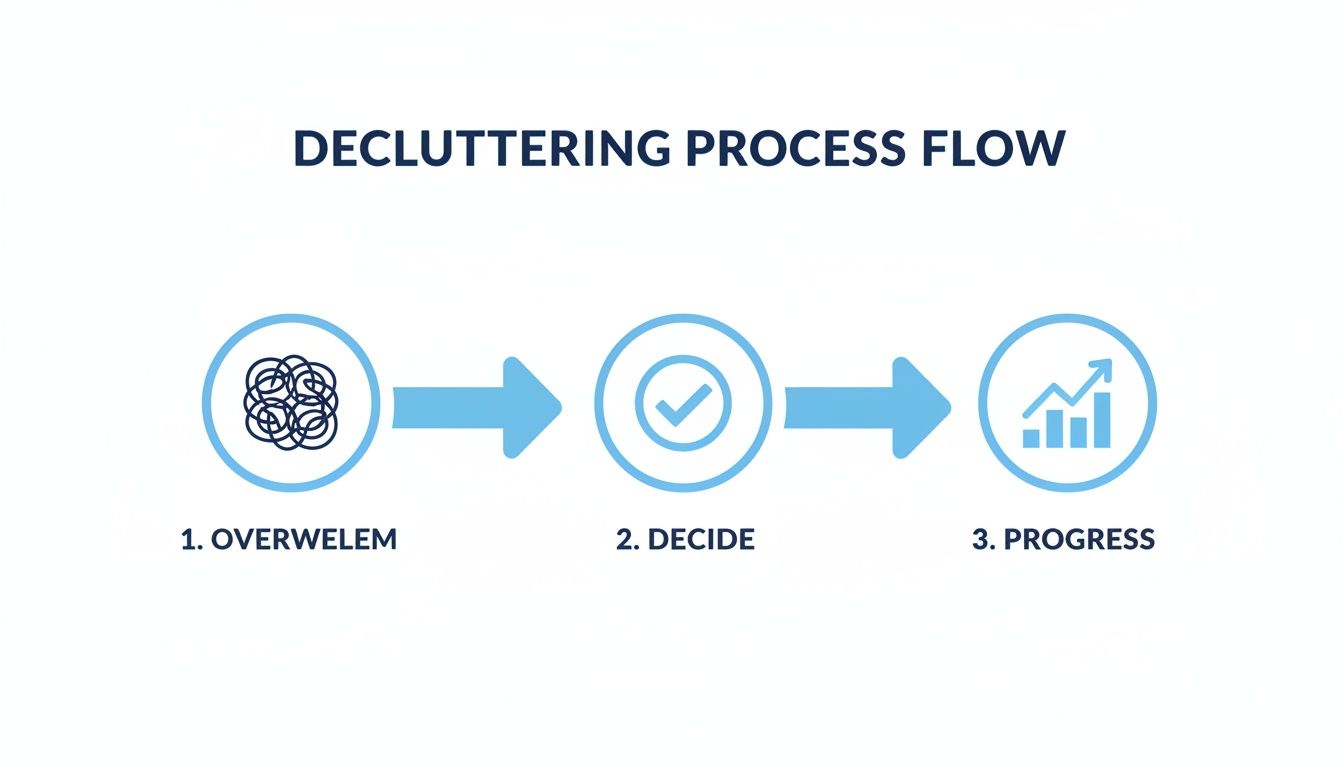
This simple flow is how you break the cycle. You go from feeling paralyzed by the mess to making real, tangible progress with one small decision at a time.
Spotting Resale Gold in Your “Sell” Pile
Okay, you’ve got a “Donate/Sell” pile. Now comes the next micro-decision: figuring out what’s actually worth the effort of selling online. Let’s be honest, not everything is. Listing, packing, and shipping take time, so you want to focus on items that will give you a decent return.
The most important question you can ask is: “Will the time I spend selling this be worth the money I’ll make?” Sometimes, getting an item out of your house today is far more valuable than the few dollars you might earn next month.
Here are a few examples of things I always look for that tend to have real resale value:
- Brand-Name Clothing & Accessories: Don’t just think luxury designers. Everyday brands like Lululemon, Patagonia, Madewell, or popular sneakers from Nike and Adidas hold their value surprisingly well, especially if they’re in great shape.
- Functional Electronics: That old iPhone, a previous-generation gaming console, or a good pair of headphones can be hot sellers. Even if they’re a few years old, there’s a strong market for them.
- Vintage or Niche Decor: That quirky ’70s lamp in the attic or a set of mid-century modern glassware could be exactly what a collector is hunting for. Unique pieces almost always sell better than generic, mass-produced decor.
- Hobby-Related Gear: Think about high-quality tools, specialty sports equipment (like a nice golf club or a barely-used yoga mat), musical instruments, or craft supplies. Hobbyists are always looking for a deal on good gear.
By zeroing in on these types of items, you can make quick, confident choices and build a “to-sell” pile that actually promises a reward for your efforts. That’s how you turn that initial sense of overwhelm into the excitement of making some extra cash.
Choosing the Right Online Marketplace
Alright, you’ve sorted your items and have a pile ready to go. Now for the million-dollar question: where do you actually sell this stuff?
This decision matters more than you’d think. Picking the wrong platform is a fast track to frustration—items that never get views, lowball offers, and that familiar feeling of being stuck. The real key to successfully selling unwanted items online is matching your stuff with the right audience.
Think about it this way: you wouldn’t sell a rare comic book at a garage sale. The same logic applies online. Every marketplace has its own vibe, its own audience, and its own sweet spot. Your goal is to find the path of least resistance to turn that clutter into cash.
Matching Your Items to the Marketplace
Not all platforms are created equal. Some are built for quick, local sales, while others are teeming with collectors who will pay top dollar for that one specific thing they’ve been searching for. A little bit of strategy here will save you a ton of time.
Here’s a practical breakdown I use to decide where an item goes:
- For the Big and Bulky Stuff: That old treadmill, the armchair that doesn’t fit your new decor, or your kid’s giant play kitchen? Shipping these is a nightmare. This is where Facebook Marketplace shines. It’s all about local sales, which means the buyer comes to you. No boxes, no postage, no hassle. You just have to be comfortable coordinating a pickup.
- For Brand-Name Fashion: If you have a stack of clothes and accessories from brands like J.Crew, Madewell, or Coach, there’s a specific place for that. Poshmark is a community built almost entirely for fashion. People are actively searching for those labels. Yes, they take a 20% commission on sales over $15, but their pre-paid shipping labels and hyper-focused audience make it incredibly easy to get things sold and out the door.
- For Collectibles, Electronics, and Weird Niche Things: Got old video games, vintage cameras, or that one-of-a-kind concert tee? eBay is still the king. Its global reach is massive, connecting you with millions of potential buyers. The auction format can be a game-changer for in-demand items, often driving the price higher than you’d expect. It takes a bit more effort to pack and ship, but for the right item, the payoff is absolutely worth it.
Where to Sell Your Stuff: A Quick Comparison
Trying to keep it all straight can be tough. I’ve put together this simple table to help you see at a glance which platform might be the best fit for what you’re selling.
| Platform | Best For | Pros | Cons |
|---|---|---|---|
| Facebook Marketplace | Furniture, appliances, large local goods | No fees, local pickup (no shipping), simple to list | Requires managing meetups, potential for no-shows |
| Poshmark | Brand-name clothing, shoes, and handbags | Huge fashion-focused audience, pre-paid shipping labels | High commission fees (20% over $15) |
| eBay | Collectibles, electronics, vintage items, parts | Massive global audience, auction and ‘Buy It Now’ options | More complex fees, requires careful packing and shipping |
| Etsy | Handmade crafts and unique vintage goods | Niche audience willing to pay for quality and uniqueness | Listing fees and transaction fees can add up |
Ultimately, picking a platform comes down to what you’re selling and how much time you want to invest. Don’t overthink it at the start—just get moving!
Pro-Tip: Don’t let this decision paralyze you! If you’re feeling overwhelmed, just pick the one that feels easiest to you right now. The goal here is to build momentum. Selling one thing on Facebook Marketplace is a thousand times better than having five perfect, unsent drafts sitting on eBay.
How to Create Listings That Actually Sell
Alright, you’ve sorted your items and picked your marketplace. Now for the make-or-break part: creating a listing that actually gets clicks and, more importantly, makes sales.
This is where so many people get it wrong. A rushed, vague listing can leave a great item sitting for months, while a thoughtful one can get it sold in hours. The goal isn’t just to list an item; it’s to build trust and answer every question a buyer might have before they even think to ask.
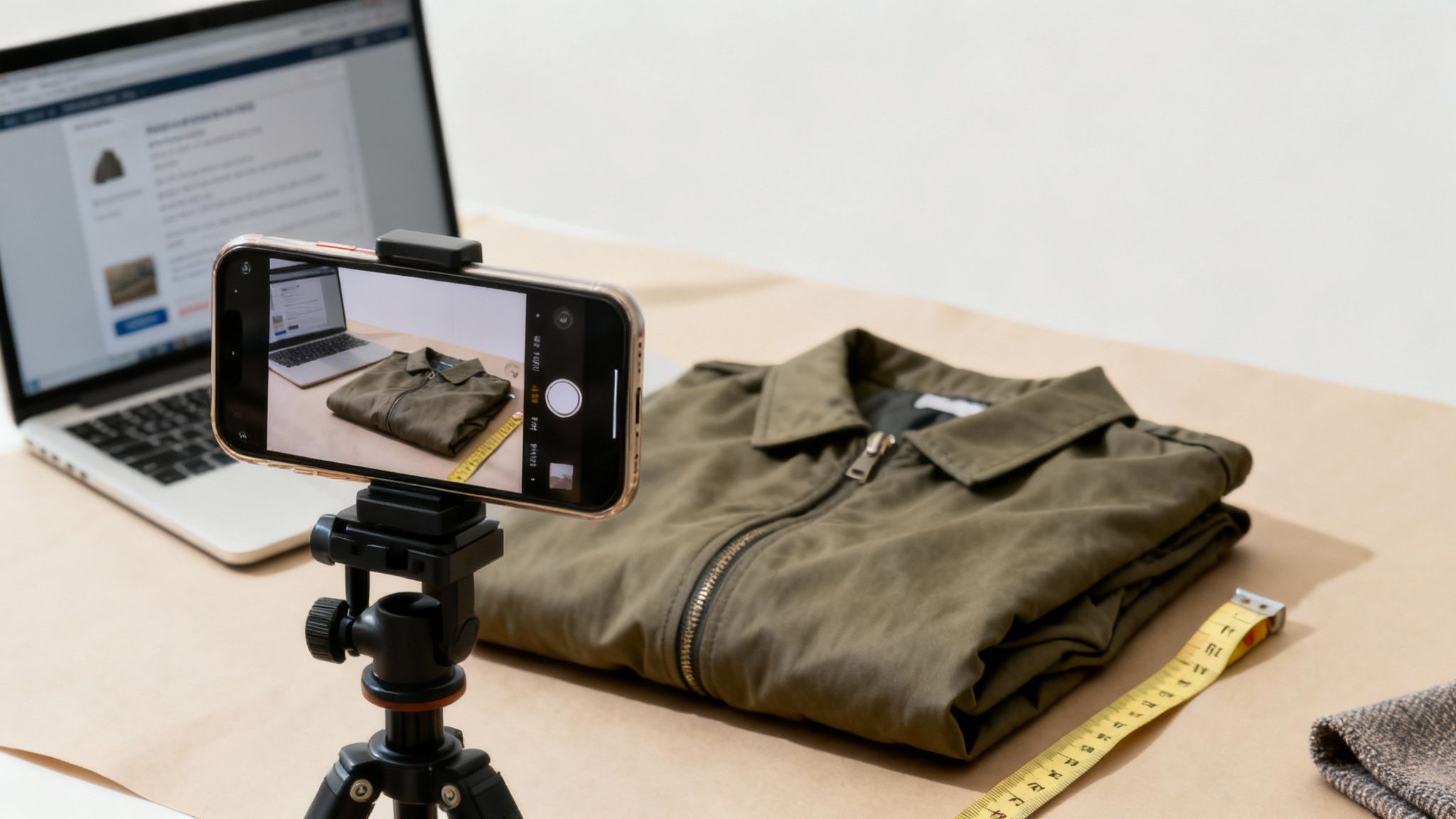
You don’t need to be a pro photographer or a marketing copywriter to do this well. You just need to nail two things: clean, honest photos and a genuinely helpful description.
Taking Photos That Stop the Scroll
Let’s be real: photos are 90% of the battle. Your main image is what makes someone stop scrolling. Forget the fancy DSLR; your smartphone is more than powerful enough. What truly matters is how you use it.
First, find good light. Natural light is your secret weapon. Set up near a window on a slightly overcast day—this gives you soft, even light that shows the item’s true color without creating ugly, harsh shadows. Whatever you do, turn off your phone’s flash. It almost always washes out colors and makes things look cheap.
Next, find a clean, neutral background. A plain wall, a clean patch of floor, or even a simple piece of white poster board works wonders. The idea is to eliminate all distractions. When a buyer sees clutter in the background, they might subconsciously think the item itself isn’t well-cared for.
Remember: Your photos aren’t just showing an item; they’re telling a story about its condition and the care you took. A clean shot inspires confidence.
Finally, think like a buyer and capture everything they’d want to inspect in person.
- The Hero Shot: Start with a clear photo of the entire item.
- Every Angle: Don’t hide anything. Show the front, back, and sides.
- The Details: Zoom in on brand tags, logos, cool patterns, or unique hardware.
- The Flaws: This is the most important one. Be radically transparent. Show any scuffs, small stains, or signs of wear. Pointing out the imperfections builds a massive amount of trust and prevents headaches and returns down the road.
When you’re this thorough, you’re not just selling a product; you’re selling yourself as a trustworthy person to buy from.
Writing Descriptions That Convert
Once your photos have done their job, the description seals the deal. The single biggest mistake I see is vague, lazy copy like “Used shirt, good condition.” This tells a buyer absolutely nothing useful.
Your mission here is to anticipate and answer every possible question. The more details you provide upfront, the less hesitation a buyer feels about hitting that “Buy Now” button.
Structure your description for easy scanning. Nobody wants to read a giant paragraph. Use short sentences and bullet points to make the important info pop.
Your title is your hook—pack it with keywords. Think about what you would type into the search bar if you were looking for your item.
Instead of “Blue Jacket,” write “Patagonia Better Sweater Fleece Jacket Men’s Size Large Blue.” Always include the brand, item name, gender, size, and color. For more pro tips on what sells, check out our guide on what sells fast on eBay.
In the description itself, make sure you cover these bases:
- Condition: Be specific and honest. Use phrases like, “Excellent pre-owned condition with no flaws,” or “Gently used with some light wash wear,” or “Small scuff on the left side, please see last photo.”
- Measurements: Size tags lie. Sizes can vary wildly from brand to brand. Lay the item flat and provide key measurements like chest (pit to pit), length, and sleeve inseam. For other items, list the height, width, and depth.
- Key Features: What makes this item special? Mention the material (“100% Merino Wool“), a key feature (“Waterproof GORE-TEX lining“), or its story (“Vintage 1980s Levi’s Trucker Jacket“).
Let AI Do the Heavy Lifting for You
Feeling a bit overwhelmed? I get it. This is the point where momentum dies. Trying to write unique, detailed descriptions for a pile of items is a fast track to burnout.
This is precisely why we built the eBay assistant right into the DeClutter Now app. It’s designed to transform this tedious grind into a quick, two-minute task.
Here’s how it works. You just take your photos of the item from within the app. Our AI immediately gets to work.
- It Recognizes the Item: The AI figures out exactly what you have, from a specific model of headphones to a particular style of designer handbag.
- It Writes an Optimized Title: It instantly generates a keyword-rich title that’s built to get seen in search results.
- It Creates a Detailed Description: The AI drafts a solid, well-structured description for you, pulling in the item’s key features. All that’s left for you is to pop in your notes on the condition and add the specific measurements.
What used to be a 20-minute chore for each item becomes a simple review-and-edit job. It smashes through writer’s block and ensures every single one of your listings has the professional touch needed to sell fast.
Pricing, Shipping, and Getting Paid Without the Headaches
You’ve done the heavy lifting—you sorted, photographed, and listed your items. Now comes the part that can feel like running a tiny business: figuring out pricing, dealing with shipping, and actually getting paid. This is where a lot of people hit a wall, but it doesn’t have to be a drag.
Think of this as the final lap. With a few smart strategies, you can wrap up the logistics smoothly and turn all that hard work into cash, not just another half-finished project cluttering up your to-do list.
It’s easy to forget just how big the opportunity is here. You’re not just selling old stuff; you’re tapping into a massive global marketplace. Picture this: by 2025, an estimated 2.77 billion people worldwide will be shopping online. A huge slice of that pie comes from regular people like us selling pre-owned goods on platforms like eBay, turning clutter into cash. With the U.S. resale market alone hitting $53 billion in 2023, it’s pretty clear your unwanted items have real value. If you’re curious about these trends, you can explore the latest online shopping statistics to see the full picture.
Set Your Price Without the Guesswork
Pricing can be the biggest mental block. It’s so easy to get attached to things, remembering what we paid for them. But the resale market runs on current demand, not sentiment. If you price too high, your item will just sit there, collecting digital dust and killing your momentum. Price too low, and you’re leaving money on the table.
The absolute best way to sidestep your own bias is with data. Before you list anything, do a quick search on your platform for the exact item you’re selling. Here’s the key: don’t just look at what’s currently for sale. That’s what people hope to get. The real truth is in the sold listings. On eBay, you can easily filter your search to show only “Sold Items,” which reveals what buyers have actually been willing to pay recently.
Your item is worth what someone is willing to pay for it today. Let the market, not your memories, set the price.
This is another spot where the DeClutter Now app’s eBay assistant can save you a ton of time. It analyzes current market data and suggests a competitive price range, helping you find that perfect sweet spot between a quick sale and a fair profit. It turns a stressful guessing game into a simple, data-backed suggestion. If you really want to get into the weeds, we have a complete guide on how to price items for resale that breaks down more advanced strategies.
Demystifying the Shipping Process
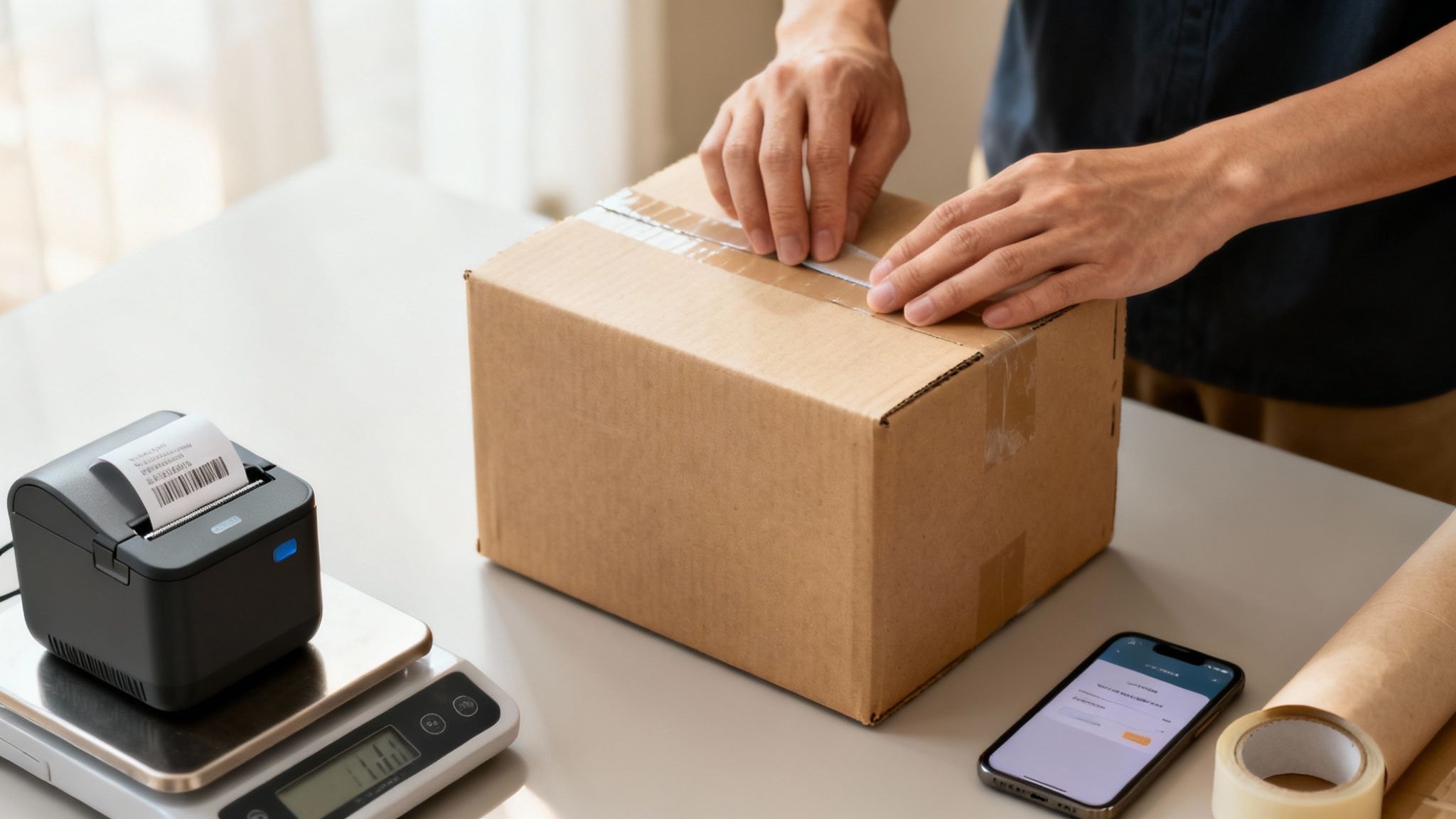
Shipping seems like a huge hassle, but it’s really just three simple steps: pack, weigh, and label. That’s it.
- Pack it up securely. You don’t need to run out and buy expensive supplies. I save boxes and packing materials from my own online orders all the time. A small kitchen scale is perfect for weighing packages. The only goal is to make sure your item gets there in one piece.
- Figure out the postage. Most platforms, like Poshmark and eBay, have fantastic built-in shipping calculators. You just punch in the package weight and dimensions, and it spits out the cost. My one non-negotiable rule: always choose an option that includes tracking. It protects both you and the buyer.
- Print your label. Once the item sells, the platform generates a shipping label for you. Just print it at home, tape it on the box, and drop it off with the mail carrier. Done.
Handling Offers and Getting Paid
When you start selling, you will get offers below your asking price. It’s inevitable. Don’t take it personally—it’s just part of the marketplace dance. My best advice is to decide on your “rock-bottom” price before you even list the item. That way, when an offer comes in, you can respond quickly and confidently without second-guessing yourself.
Finally, don’t forget about the platform fees. Marketplaces take a percentage of the final sale price (including shipping!) in exchange for giving you access to their millions of buyers. This fee is usually taken out automatically before the money hits your account. Knowing about these costs upfront means no disappointing surprises when you see your final payout.
Common Questions About Selling Your Stuff Online
Even with a solid game plan, you’re bound to run into a few questions when you start selling unwanted items online. It can feel a little tricky the first time you navigate a buyer dispute or wonder if an item is even worth your time. Let’s clear up some of the most common concerns you’ll face.
What Items Are Not Worth the Effort to Sell Online?
A huge part of gaining momentum is knowing what to let go of. Some things just aren’t worth the hassle. I’m talking about low-value, heavy, or super generic items where the shipping costs and your time completely wipe out any profit.
Think about things like used coffee mugs, cheap decor from a big box store, or basic, no-name clothing. As a general rule, if you see similar items consistently selling for under $10-$15, your energy is much better spent elsewhere.
- Try bundling: You can group similar low-value items together, like a “lot” of baby clothes or a stack of paperback books. This makes the listing more appealing and worthwhile.
- Just donate it: Remember, the real goal here is progress. Donating these items gets them out of your home right away, freeing up both physical and mental space.
How Do I Handle a Difficult Buyer or a Dispute?
The first rule is to stay calm and professional. Don’t ever let a frustrating message bait you into an emotional response. Platforms like eBay have a built-in resolution center for a reason—it’s your best friend in these situations, so use it.
Your original listing is your defense. If you were upfront about the item’s condition and had clear photos showing any flaws, you’re in a good position. Always respond quickly to any claims and provide all the evidence you have. Honestly, the fastest way to make the problem go away is often to offer a small partial refund for a minor complaint or to accept a return (as long as your policy states the buyer pays for return shipping). This usually protects your seller rating and lets you move on.
Is It Safe to Sell Online and How Do I Avoid Scams?
Absolutely, selling online is safe—as long as you stick to the rules of the platform you’re using. Scammers almost always succeed by convincing you to go outside the official process.
The golden rule of online selling is simple: Keep all communication and payments on the platform. Anyone asking you to text them, email directly, or accept payment through Zelle or Venmo is almost certainly trying to scam you.
If you’re selling locally on a platform like Facebook Marketplace, always meet in a public, well-lit place. Many police stations even have “safe exchange zones” in their parking lots specifically for this purpose. For those of you selling more unique or valuable pieces, this guide on how to sell antiques online has some excellent, specialized advice.
Feeling ready to turn your own clutter paralysis into progress? DeClutter Now uses AI to help you make those tough first decisions and even helps you list items on eBay in minutes. Try DeclutterNow free → https://app.declutternow.ai