

That overflowing sink and the passive-aggressive text about taking out the trash? It’s rarely just about the chores. A solid roommate cleaning schedule template is the tool that ends these silent standoffs, turning simmering resentment into actual teamwork with a system everyone can get behind.
Why Most Roommate Cleaning Plans Fail
Let's be real for a second. The tension over a sink full of crusty dishes isn't truly about the dishes. It’s about that sinking feeling that you're the only one who cares, trapped in an endless cycle of cleaning up after others while your frustration just quietly builds.
That feeling has a name: "chore paralysis." It’s that sense of being so overwhelmed by the shared mess that you don’t even know where to start. You look at the disaster, feel completely stuck, and just walk away. It’s not laziness—it’s decision fatigue.

This isn't just in your head; it has a real impact on home life. Cleaning habits actually became the number one source of roommate tension during the pandemic, a time when we were all stuck at home more than ever.
The good news? Despite the squabbles, 81.5 percent of renters who spent a lot of time with their roommates still said they were happy with their living situations. This tells us one thing: harmony is totally possible when you have the right systems in place. You can dive deeper into these roommate dynamics in the full survey.
Most cleaning schedules flop because they don't get to the root of the problem. They just assign tasks and completely ignore the human element of feeling overwhelmed.
The Pitfalls of a Bad System
A poorly designed plan can honestly create more drama than it solves. Here are the most common reasons a roommate cleaning schedule template falls flat on its face:
- It's Way Too Vague: A chore list that just says "clean the kitchen" is useless. Does that mean wiping counters? Mopping the floor? Scrubbing the microwave? Ambiguity is a direct path to conflict.
- It Ignores Personal Preferences: Let's face it, one person might not mind scrubbing the bathroom, while another would rather do literally anything else. Forcing people into chores they genuinely hate is just a recipe for procrastination and resentment.
- It Lacks Flexibility: Life happens. A rigid schedule that doesn't account for a slammed work week or final exams is doomed to fail. It just makes one person feel guilty and the other feel bitter.
The goal isn’t just to get the chores done. It's to eliminate the mental energy spent worrying about them, negotiating them, and feeling resentful over them. A good system creates peace of mind by building momentum, not demanding perfection.
Most plans fail because they feel unfair. What looks perfectly balanced on paper can feel like a huge burden in practice. This guide moves beyond those generic charts to help you build a system based on real human psychology—one that acknowledges everyone's frustrations, builds momentum with quick wins, and creates genuine teamwork for a cleaner, happier home.
Here’s a quick look at the most frequent issues with roommate cleaning plans and the simple, psychology-backed solutions this guide will help you implement.
Common Cleaning Schedule Problems And Their Solutions
| Common Problem | Why It Happens | The Solution |
|---|---|---|
| The "It's Not My Turn" Standoff | Tasks feel unfairly distributed or forgotten due to decision fatigue. | Create a clear, visual rotation system so everyone knows exactly what's expected and when. No more guessing games. |
| The Vague Chore List | "Clean bathroom" means different things to different people, causing paralysis. | Use a detailed checklist that breaks down large tasks into specific, non-negotiable actions (e.g., "Wipe sink and counter"). |
| Burnout and Procrastination | The schedule is too rigid and doesn't account for real life. | Build in flexibility. Offer chore-swapping options and don't tie tasks to exact days of the week. Focus on progress, not rigid timing. |
| Lack of Accountability | No one wants to be the "chore police," so things slide. | Establish agreed-upon consequences upfront and use a public chart or app to track progress, making accountability a shared responsibility. |
By addressing these core issues head-on, you can design a system that actually works for the long haul instead of just causing another fight.
Building Your Cleaning System Together
Alright, this is where you turn all that talk and frustration into a real, workable plan. Forget just printing a generic chart and taping it to the fridge—that’s a recipe for failure. Instead, you're going to create a custom system that actually works for your specific home and the people living in it. Think of it as a team strategy, not a list of demands.
The first step isn't about assigning chores. It's about getting crystal clear on a single question: what actually needs to get done around here?
Map Out Every Chore, Big and Small
Before you can divide up the work, you have to know what the work is. Grab a whiteboard, a notebook, or open a shared Google Doc and start brainstorming every single cleaning task that keeps the place from descending into chaos. Don't hold back; list everything.
- Daily Quick Wins: These are the small things that take less than 5 minutes but make a huge difference. We're talking about wiping down kitchen counters, taking out the recycling, or squeegeeing the shower door after you use it. These quick wins give you a hit of dopamine, building momentum.
- Weekly Resets: This is the stuff that really keeps the home feeling fresh. Think vacuuming the living room, scrubbing the toilets and sinks, and dusting the main furniture.
- Monthly or Quarterly Deep Dives: These are the bigger, less frequent jobs. Things like cleaning out the oven, wiping down all the baseboards, or finally tackling that junk drawer in the kitchen.
Breaking it down like this is a game-changer. "Clean the kitchen" feels like a massive, overwhelming project. But "wipe stovetop," "load dishwasher," and "sweep floor" are distinct, manageable tasks. This kind of detailed breakdown is a fantastic starting point if you need to figure out how to organize a cluttered home in general, because it turns an overwhelming job into bite-sized pieces and helps you make progress.
Have The Low-Stress Chore Talk
With your master list in hand, it's time to have "The Chore Talk." The key is to frame this as a team huddle, not a confrontation. The goal is to figure out who likes (or at least doesn't despise) doing what, and when they can realistically get it done.
Kick things off with a few easy, open-ended questions:
- "Looking at this list, are there any chores you actually don't mind doing?"
- "On the flip side, what's a task you absolutely dread?"
- "When do you usually have the time and energy for this stuff—weekends? Late at night?"
You'll probably be surprised by what you hear. Your roommate might find vacuuming weirdly satisfying, while you get a kick out of making the bathroom sparkle. Maybe one of you is a night owl who's happy to handle the kitchen cleanup long after everyone else has gone to bed.
The goal isn't a perfectly even split of time—it's about creating a perceived fair distribution of effort. When people get to do tasks they don't hate, they're far more likely to actually do them without being nagged.
When you treat this like a collaborative project, you’re building a foundation of respect and clear communication. The cleaning schedule stops being a source of tension and becomes what it should be: a shared tool for making your home a better place to live for everyone.
Choosing The Right Schedule For Your Household
Let’s be honest: a one-size-fits-all cleaning schedule is a guaranteed recipe for failure. Every household has its own rhythm, personalities, and tolerance for chaos, and your plan needs to reflect that reality.
Choosing the right framework from the start is what prevents the whole system from collapsing after just a couple of weeks. Instead of just grabbing the first printable you find online, think about how you and your roommates actually live. The goal is a system that feels fair and manageable, not like a second job.
The Weekly Rotation Model
This is the classic for a reason. With a Weekly Rotation, chores are assigned to a person, and those assignments shift every week. It’s built on the simple principle of shared misery—and shared responsibility.
- Best For: Households where everyone keeps a fairly consistent schedule and has a similar definition of "clean." It’s great for making sure no one gets stuck with the dreaded bathroom scrub for more than a week at a time.
- How It Works: Just list out the weekly tasks (vacuuming, kitchen deep clean, bathroom blitz, etc.). Each week, the assignments simply shift down one person on the list.
The biggest pro here is fairness; everyone eventually does every job. The main downside is its rigidity. If someone gets slammed with a crazy work week, their chores can pile up fast and create a ton of tension.
The Zone Defense Model
Think of this as assigning "ownership." Each person claims a specific area or "zone" of the home. One roommate is always in charge of the kitchen, another handles the living room and entryway, and a third is responsible for all the bathrooms.
This model works wonders when people have strong preferences. If your roommate is a stickler for a spotless kitchen and you couldn't care less, letting them own that zone can lead to a surprisingly peaceful dynamic.
Zone Defense builds expertise. The person responsible for a zone knows exactly what needs to be done and when. But be careful—it can lead to resentment if one zone, like the kitchen, demands way more daily upkeep than another.
Comparing Roommate Chore Schedule Models
To help you figure out what might work best, let's break down the pros and cons of these common systems. There’s no perfect answer, just the best fit for your specific group of people.
| Model Type | Best For… | Pros | Cons |
|---|---|---|---|
| Weekly Rotation | Households with consistent schedules and similar cleanliness standards. | Ensures fairness; everyone shares the good and bad chores equally. | Inflexible; can be tough when someone has a busy or unpredictable week. |
| Zone Defense | Roommates with different cleaning priorities or skills. | Fosters ownership and expertise; can lead to a higher standard of clean in each zone. | Can feel unbalanced if one zone requires much more work than another. |
| Flexible Points | Groups with mismatched or chaotic schedules (students, freelancers, shift workers). | Highly flexible and "gamified"; people contribute when and how they can. | Requires more setup and tracking; can be complex if not managed well. |
Ultimately, the best model is the one you can all agree on and stick with. The key is talking it through before a mountain of dirty dishes does the talking for you.
This flowchart maps out a simple way to approach the decision-making process together. It’s all about collaboration.
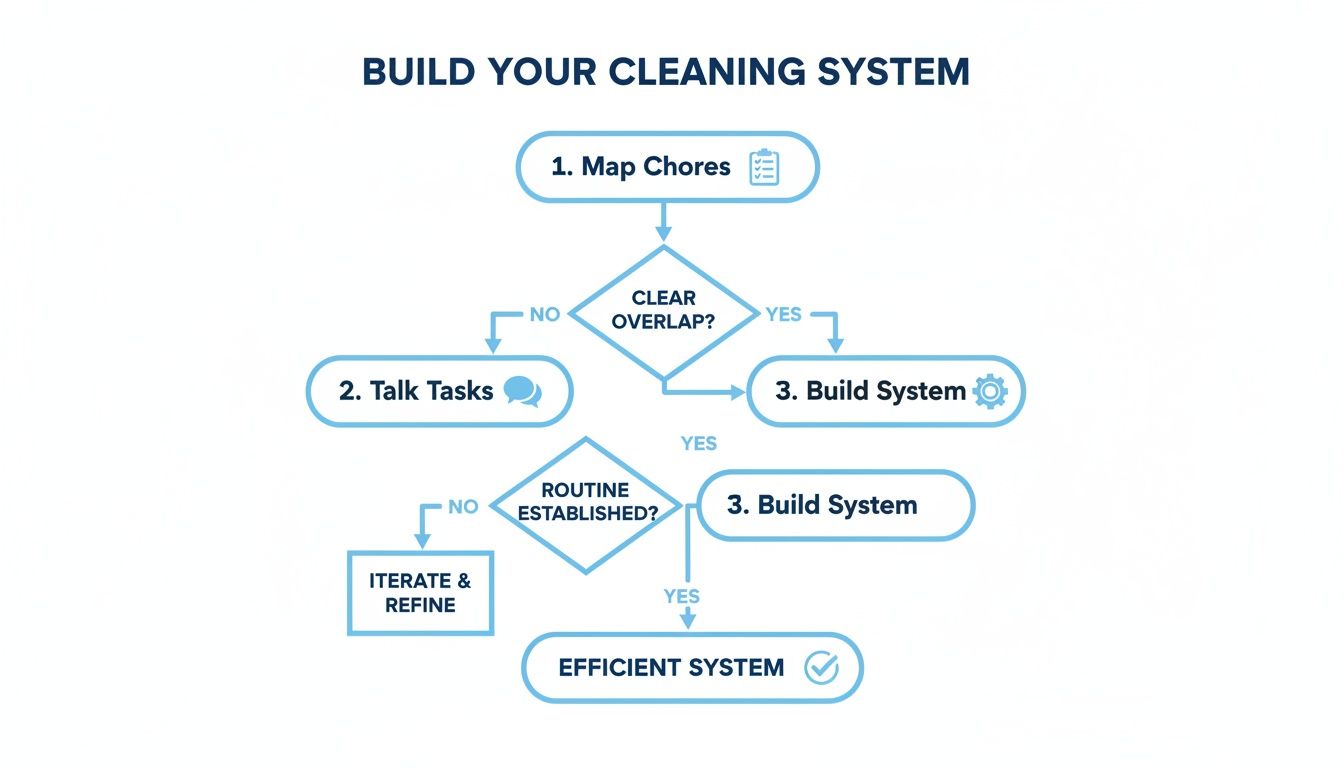
The big takeaway here is that a system that works is one you build together, not one that’s forced on people. This is especially true when you're navigating a tight space, a common challenge that these small apartment organization ideas can definitely help with.
The Flexible Points System
For households where schedules are all over the place—think students, freelancers, or shift workers—a points-based system offers incredible flexibility. Every chore gets a point value based on how difficult or time-consuming it is.
For example, taking out the trash might be 5 points, but a full bathroom deep clean could be worth 50 points. Each roommate has to hit a minimum number of points by the end of the week or month. This gamified approach lets people pitch in when they have time, choosing chores that match their schedule and energy level. It’s a great way to sidestep the resentment that builds when a rigid schedule crashes into a chaotic life.
Download Your Roommate Cleaning Schedule Template
Having the "who cleans what" conversation is a great start, but a plan on paper (or on screen) is what really makes it stick. To help you get moving, we've put together three different, ready-to-use templates. These aren't just generic grids; they're designed to give you structure right out of the gate so you can build good habits and finally make progress.
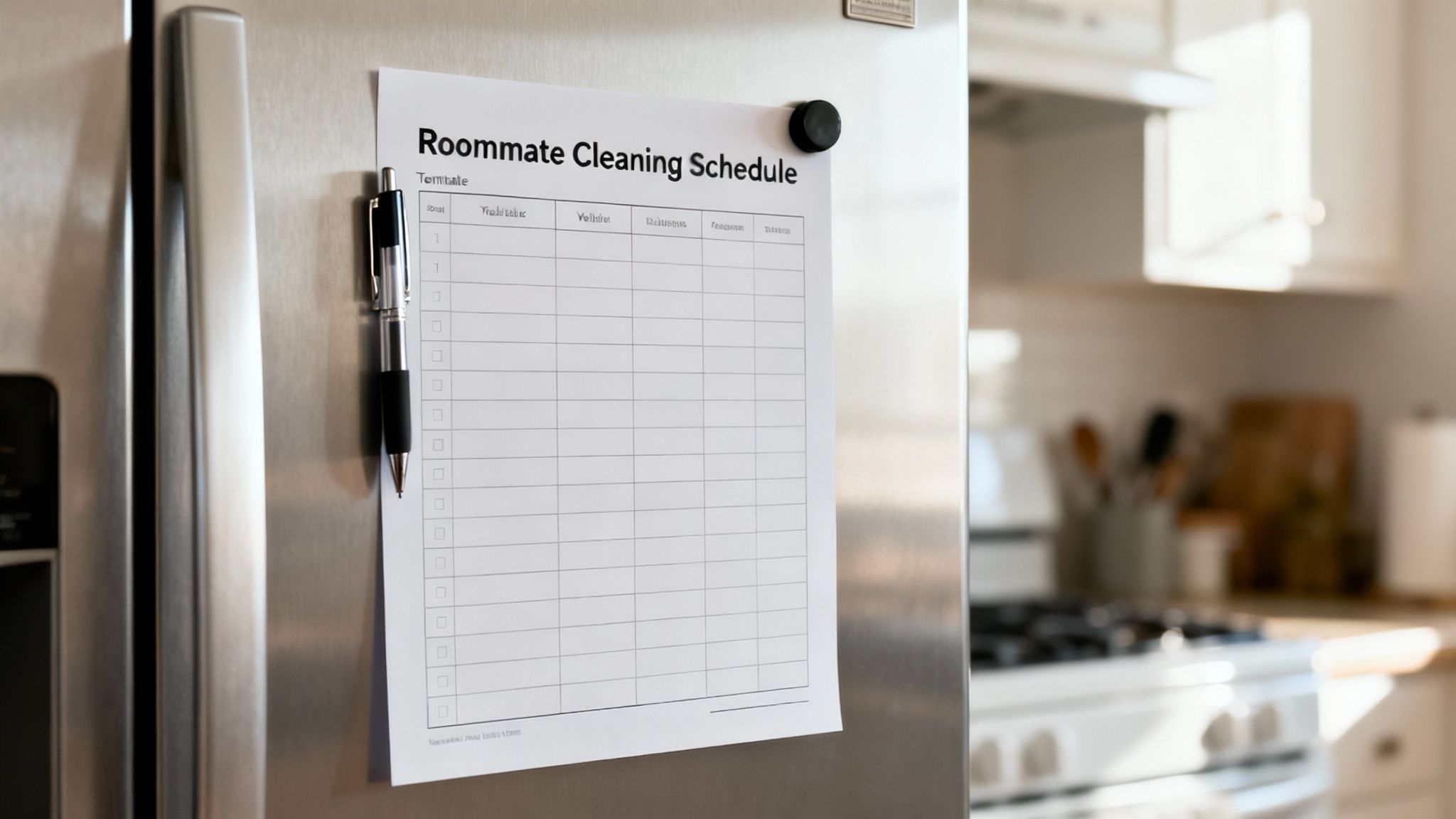
Each roommate cleaning schedule template comes as a fillable PDF. That means you can type in your roommate’s names and specific chores, save it, and share it digitally. Or, you can go old-school and print a copy to stick on the fridge—sometimes having a physical reminder is exactly what everyone needs.
Classic Weekly Rotation Chart
If you're looking for something simple and fair, this is it. The weekly rotation chart is perfect for making sure everyone pulls their weight over time. It clearly lays out the chores for the week and assigns them to a different person each time, so there’s no confusion about whose turn it is to scrub the toilet.
Monthly Deep Clean Checklist
Let’s be honest, cleaning the oven or wiping down all the baseboards doesn't need to happen every week. This checklist is for those bigger, less frequent jobs. It helps break down daunting deep-cleaning projects into smaller, more manageable tasks that you can tackle together once a month or every quarter.
Daily Duties Dashboard
This one is all about preventing small messes from becoming big problems. For those high-traffic zones like the kitchen or living room, a little daily upkeep goes a long way. The dashboard focuses on quick habits—like wiping down counters after cooking or loading the dishwasher before bed—to keep shared spaces consistently tidy without any nagging.
Remember, the best template is the one your household will actually use. Pick the one that fits your living situation, fill it out as a group, and get ready for a cleaner, less stressful home. Think of these as a launchpad to get you started and build some real momentum.
Keeping Things Fair And Staying Accountable
Let's be real: a cleaning schedule is only as good as the people who follow it. You can tape the most beautiful, color-coded chart to the fridge, but if no one looks at it after day one, it’s just another piece of paper. The real trick is keeping that initial momentum going without anyone having to be the "chore police."

The goal here isn't blame; it's about fostering mutual respect. You want to build a system where everyone pitches in because they feel like part of a team, not because they’re dreading a passive-aggressive text.
Gentle Accountability Tools
Nobody wants to micromanage their friends. That's a fast track to a tense, awkward living situation. Instead, think about accountability as a shared, transparent process. With the right approach, it feels collaborative, not confrontational.
- Shared Digital Boards: Apps like Trello or Asana are brilliant for this. You can create simple columns like "To Do," "Doing," and "Done." Each chore becomes a little card that someone can physically drag from one column to the next. It’s a super visual, low-pressure way for everyone to see what’s been handled without a single reminder text.
- The Five-Minute Weekly Check-In: This is not a formal house meeting. Seriously. It's a quick chat over coffee on a Sunday morning. "Hey, how's the schedule working for everyone? Anything we need to shuffle around for the week?" This gives someone the perfect opening to say they’ve got a huge exam coming up and need to trade tasks.
The focus is always on teamwork. This proactive mindset works for more than just cleaning—our guide on decluttering tips for beginners shows how small, consistent habits can build unstoppable momentum in keeping your whole home in order.
Addressing Unspoken Imbalances
Even with the most well-thought-out system, old habits die hard. It’s worth acknowledging that unspoken expectations, often shaped by societal norms, can sneak in and throw things off balance. Research consistently shows that women tend to shoulder more of the household cleaning burden.
A Gallup poll found that 51 percent of women in partnerships say they're the main person responsible for cleaning the house, compared to just 7 percent of men. That gap is shrinking—up to 45 percent of households now share cleaning equally—but it underscores why a conscious, deliberate plan is so important for true fairness.
Just being aware of this dynamic can help you and your roommates ensure the chore list is genuinely equitable. If you start to notice an imbalance, it’s a good reason to revisit the plan. You can see more on these household task dynamics in the full study.
How To Talk About It When Someone Slips
Okay, so what happens when someone just isn't pulling their weight? Confrontation is uncomfortable for everyone. But ignoring the problem only lets resentment fester and grow, which is way worse in the long run. The key is to approach the conversation with empathy, not accusation.
Try starting with phrases that assume good intent:
- "Hey, I noticed the trash has been piling up. Is everything okay? You seem like you've got a lot on your plate lately."
- "I was thinking the schedule might need a refresh. Do the chores we picked still work for you, or should we look at swapping some things around?"
This approach frames the issue as a problem with the system, not the person. It’s a way to protect your friendship while still solving the actual problem. At the end of the day, the best roommate cleaning schedule is one that can bend without breaking, keeping your home clean and your relationships strong.
Your Biggest Roommate Cleaning Questions, Answered
Even with the best template in hand, life happens. Questions pop up, unique situations arise, and unspoken frustrations can quickly sour the household vibe. Let's tackle some of the most common hurdles roommates face when trying to keep things clean.
Think of this as your troubleshooting guide for the tricky, real-world scenarios that no chart can fully predict.
How Do We Handle Different Standards of Clean?
This is the big one, isn't it? One person’s “clean” is another’s “disaster zone.” The secret is to stop debating subjective feelings and start defining objective tasks.
Instead of a vague chore like "clean the bathroom," get specific. Your schedule should list tangible actions: "Wipe down sink and faucet," "Scrub toilet bowl," and "Clean mirror." This way, the focus shifts from a personal opinion of "clean" to a simple checklist. If the mirror is streak-free, the job is done. End of story.
The goal isn't to force everyone to adopt the same personal standards. It’s about agreeing on a baseline for shared spaces that everyone can maintain. Specificity is your best friend.
What Happens When Someone Has Guests?
Guests are great, but the mess they leave behind? Not so much. The golden rule here is simple: you are responsible for the mess your guests create.
A quick chat before a friend comes to stay can prevent a world of pain. Lay down some simple ground rules together:
- The Host Cleans Up: If you have people over, you’re on the hook for the cleanup, even if it’s not your kitchen week.
- Long-Term Guests Pitch In: If a partner or friend is staying for more than a night or two, it’s fair to expect them to help with daily stuff, like loading the dishwasher or wiping down counters after they cook.
What if Someone Is Too Busy and Falls Behind?
Life gets crazy. A brutal exam week or a crunch time at work can throw anyone’s schedule off. A good system is flexible enough to handle this. The worst thing you can do is let the resentment simmer in silence.
Create a culture where it’s okay for a roommate to say, "Hey, this week is an absolute nightmare for me. Can anyone swap chores?" You'd be surprised how often someone is willing to step up, knowing they can ask for the same favor down the line. It's about being a team, not just a group of people paying rent.
When Is the Best Time to Actually Clean?
Figuring out when to clean can be just as challenging as deciding who cleans. A good starting point is looking at when people generally have more downtime. The Bureau of Labor Statistics’ American Time Use Survey found that about 41 percent of Americans do housework on weekends, while only 36 percent tackle it on weekdays.
What does this tell us? It suggests a pretty practical strategy: use weekdays for quick, daily upkeep and save the bigger, deep-cleaning jobs for the weekend. Structuring your schedule this way works with people's natural energy levels, not against them. You can dive into how Americans spend their time in the full survey for more insights.
Thinking through these common sticking points ahead of time will help you build a cleaning plan that’s not just effective, but resilient enough to handle real life.
When the mess in shared spaces feels overwhelming, it's easy to get stuck in "clutter paralysis"—that feeling that you don't even know where to begin. It’s not your fault; decision fatigue is real. DeclutterNow is designed to break that cycle. We start with the easiest decisions first (like trash) to help you build momentum. Our AI-powered app helps you make quick, simple decisions, turning that feeling of being overwhelmed into real, tangible progress.