
Organizing an office closet is about more than just making it look neat. It’s about getting your focus back by eliminating the friction and decision fatigue that a cluttered space inevitably creates. The best way I've found to tackle this is by starting with the easiest decisions first—like grabbing obvious trash—to build momentum. This simple trick turns a monster of a project into a series of small, manageable wins.
Why That Office Closet Keeps You Stuck (It's Not Laziness)
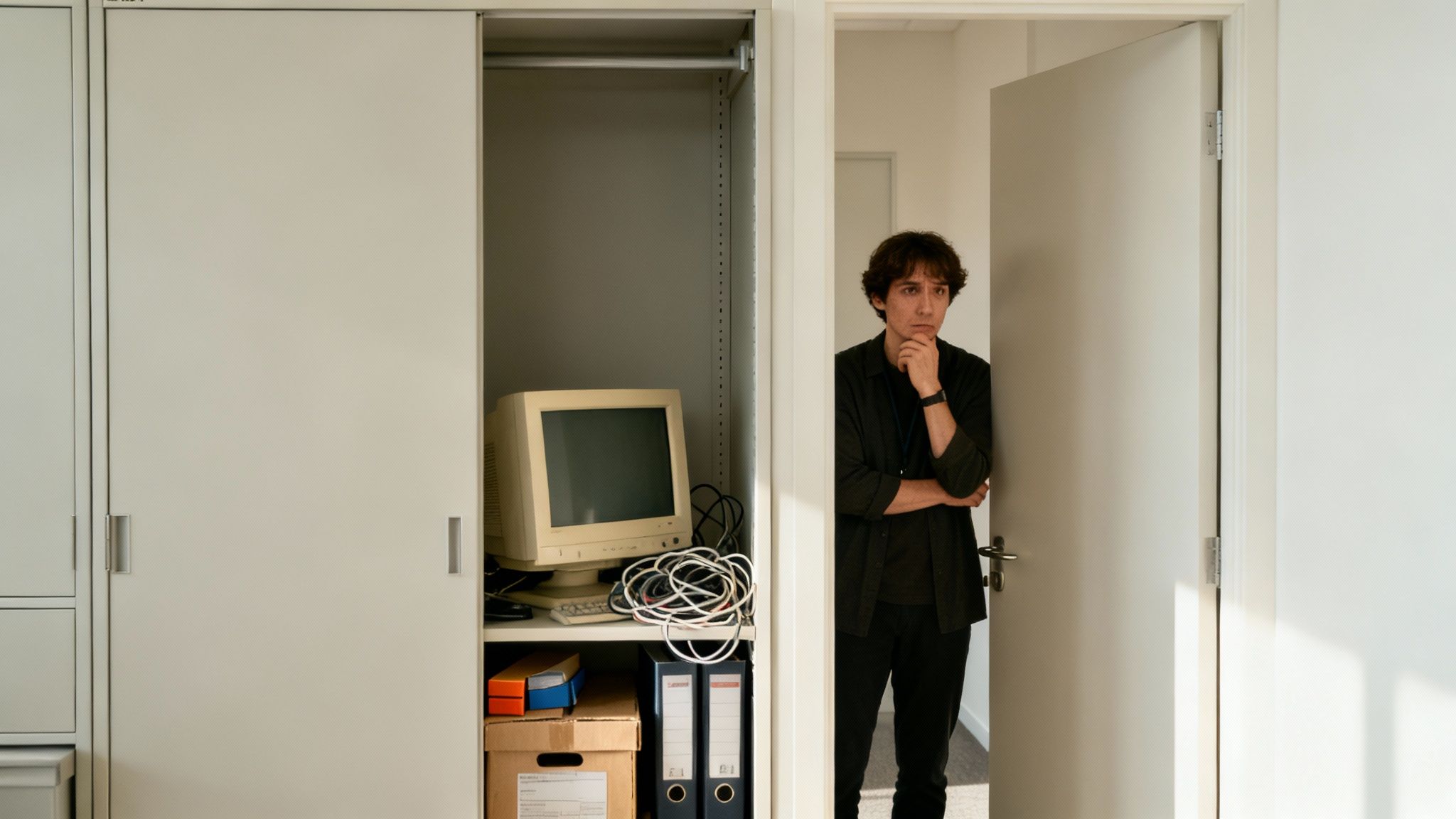
Let's be honest, that office closet isn't just a messy space. It's a daily source of friction that silently chips away at your focus. Every time you open that door, you're hit with a wall of decisions—old tech, half-used supplies, and papers from projects you barely remember.
If you've ever found yourself just staring at those same boxes that have been sitting there for years and then just shutting the door, you get it. This isn't a character flaw or a sign of laziness. It’s a classic, textbook case of "clutter paralysis."
The Real Cost of a Cluttered Workspace
The sheer number of things to sort through feels so overwhelming that doing nothing seems like the path of least resistance. But that mental drain has a real, tangible effect on your productivity. In fact, research from Princeton University has shown a clear link between a disorganized environment and higher stress levels.
This isn't just a feeling; it creates measurable inefficiency. In one survey, 28% of professionals said they could reclaim over an hour each day if their office storage was properly organized. Just think about that—what could you accomplish with an extra hour, every single day?
Breaking Through the Paralysis
So many traditional tidying methods fall flat because they ask you to make the hard, emotional decisions right off the bat. When you're already feeling stuck and asking "does this spark joy?" it’s just a recipe for giving up. What you really need is a practical, psychology-backed approach that prioritizes progress, not some unattainable ideal of perfection.
The goal isn't a flawless closet overnight. It’s about turning that feeling of being overwhelmed into actionable progress by building momentum, one small win at a time.
I'm going to walk you through a method that begins with the easiest choices first, giving you the confidence to see the project through. It’s the same core principle we teach in our guide on how to declutter your home—it works anywhere.
Your 15-Minute Pre-Organization Game Plan
Before a single thing comes out of that closet, a successful project needs a game plan. This isn’t about some grand, perfect strategy. It’s about setting yourself up to win so you can avoid that classic mistake: pulling everything out, making an even bigger mess, and then just giving up.
This quick, 15-minute routine is my personal go-to for turning that feeling of overwhelm into focused action. It's all about finding clarity before you create chaos.
What Is This Closet’s Job?
First, take a moment and ask one simple question: What is this closet really for? Seriously. Is its main job to hold the office supplies you use every day? Is it supposed to be an archive for critical documents? Or has it just become a graveyard for old tech and random equipment you don't know what to do with?
Defining its core purpose is a game-changer. It gives you a clear filter for every single sorting decision you'll have to make. You'll instantly know the difference between "yes, this belongs here" and "nope, this needs to find a new home."
This single step is your best defense against the decision fatigue that so often kills an organizing project before it even gets going.
Knowing the closet's mission transforms it from a random dumping ground into a functional asset. If its purpose is active supplies, then long-term archive boxes are just getting in the way. Clarity is your best tool.
Set Up Your Sorting Stations
Next, grab a few simple containers. Don't overthink it—laundry baskets, empty cardboard boxes, or even just designated spots on the floor will do the trick. Just make sure to label them clearly:
- Keep: For everything that fits the closet's new job description.
- Relocate: For useful things that just don't belong here.
- Donate/Sell: For items in good shape that you simply don’t need anymore.
- Trash: The easiest category to start with and a great way to build momentum.
This setup is crucial because it stops you from just shuffling piles from one spot to another. It forces a concrete decision for every single item you touch, which is how you make real, tangible progress.
Get It on the Calendar
Finally, open up your calendar and block out a realistic, non-negotiable chunk of time to begin. Maybe it's just 45 minutes this Saturday morning. The goal is not to finish the entire project; it's simply to start. Putting a specific time on the calendar makes it real and holds you accountable.
And here’s a pro tip from my own experience: snap a quick ‘before’ photo on your phone. It might feel a little silly at the moment, but trust me, having that visual proof of where you started is incredibly motivating. When you hit a wall and feel like you're not getting anywhere, a quick look at that photo can give you the exact boost you need to push through.
Build Momentum by Tackling the Trash First
This is where the real work begins, but I want to make sure you don't get stuck before you even start. So many people fall into the trap of asking big, overwhelming questions like, "Should I keep this?" That question is a recipe for decision paralysis.
Instead, we're going to flip the script and use a simple but powerful technique I call the "Trash First" method. It's all about building instant momentum by making only the easiest, most obvious decisions first. We're not starting with sentimental items or things that require deep thought. We're starting with what is undeniably, unequivocally trash. This simple psychological trick creates quick wins and gives you the energy to tackle the tougher decisions later on.
This flowchart lays out the simple path for getting your space ready before the sorting even starts.
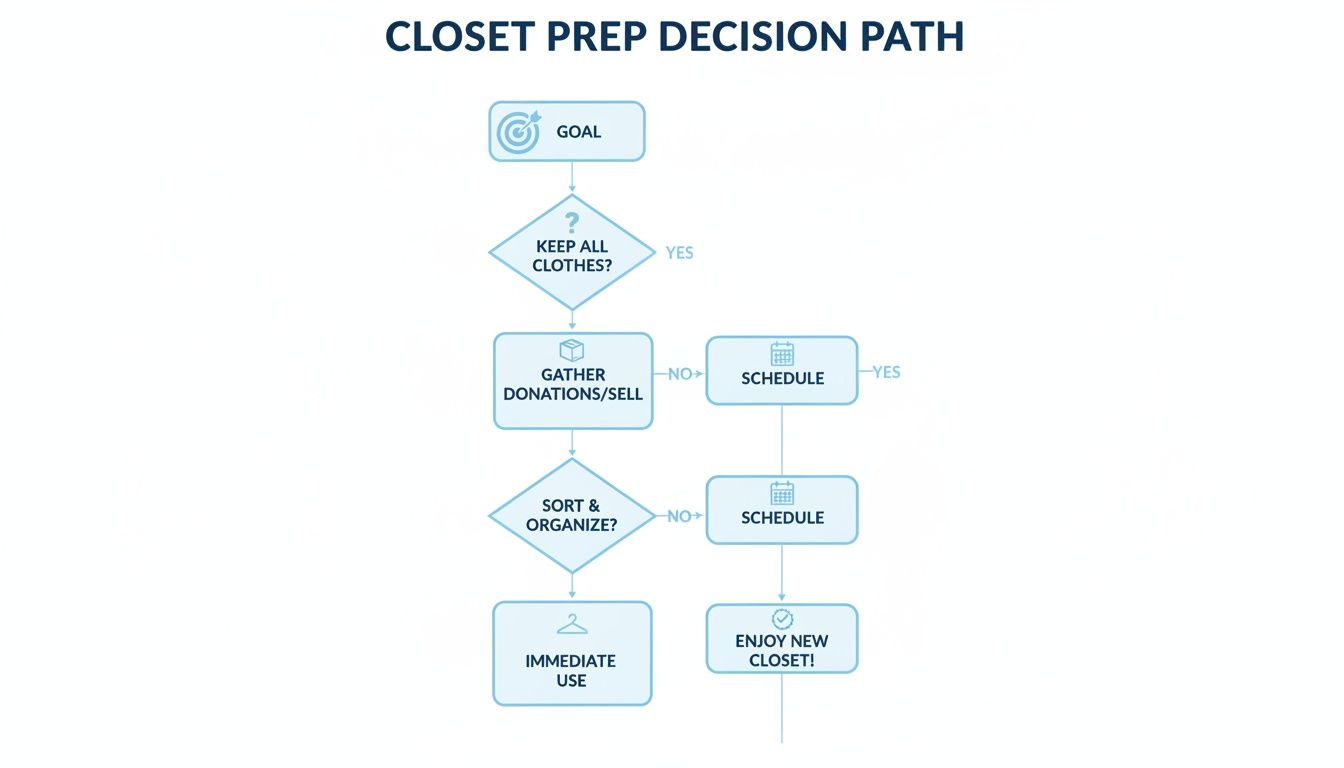
As you can see, figuring out your goals and getting your tools together before you start is the key to avoiding that all-too-common feeling of being overwhelmed.
Identify the Quick Wins
Your first pass through the closet should feel fast and almost mindless. Grab a trash bag and scan for anything that falls into these "no-second-thought" categories. Don't overthink it—just act.
- Expired Items: Dried-out pens, ancient ink cartridges that probably don't fit any printer you own, and promotional flyers from a 2018 conference.
- Broken Equipment: That old scanner that stopped working years ago, a mouse with a jumpy cursor, and that giant tangle of mystery cables you've been saving "just in case." If it’s broken, it’s clutter.
- Obsolete Paperwork: Old utility bills, manuals for software you haven't used in a decade, and drafts of reports from five years ago. Just be sure to shred anything with sensitive information.
- Actual Garbage: This sounds almost silly to mention, but you'd be surprised what you'll find. Empty boxes, old packaging, used-up sticky note pads, and stray snack wrappers have a way of hiding in corners.
Focusing on these easy targets removes the emotional friction and decision fatigue that can derail an organizing project. Every single item you toss is a small victory that makes the closet visibly clearer.
To make this even faster, here's a quick cheat sheet for making those snap decisions.
A Quick Sorting Guide for Your Office Closet
Use these simple rules to make fast, effective decisions on common office closet items and build decluttering momentum.
| Item Category | Trash Immediately If… | Consider Donating/Selling If… | Keep If… |
|---|---|---|---|
| Electronics | It's broken, non-functional, or the charging/power cables are missing. | It works perfectly but you've upgraded or no longer use it. | It’s used regularly, is a critical backup, or holds archival data you need. |
| Office Supplies | Pens are dry, glue is hardened, paper is yellowed or damaged. | You have a massive surplus of functional items (e.g., 500 pens). | You use it consistently and it's in good, working condition. |
| Documents | It's an old draft, an outdated manual, or a past-due bill that's been paid. | It's a book or manual that someone else might find useful. | It's a tax document, legal contract, or an important archival record. |
| Decor/Misc. | It's broken, chipped, or you genuinely dislike looking at it. | It's in good condition but no longer fits your style or office function. | It serves a purpose, inspires you, or is a cherished personal item. |
Think of this table as your decluttering co-pilot. Refer to it whenever you feel a moment of hesitation, and you'll keep your momentum going strong.
Why This Simple Approach is So Effective
Starting with the easy stuff is about more than just clearing out junk; it's a way to rewire your brain for progress. Each time you toss a dried-up marker, your brain gets a tiny hit of dopamine—its natural reward chemical. This creates a positive feedback loop that makes you want to keep going.
Clutter paralysis is a real thing, and it has nothing to do with being lazy. The "Trash First" method is our secret weapon to break through it. We start with trash to build momentum, turning a monumental task into a series of small, satisfying wins.
This forward motion is what will carry you through the entire project. After you’ve cleared the obvious garbage, you’ll find that sorting items for donation or finding new homes for things feels so much less intimidating. You've already proven to yourself that you can do this, and the path forward is clearer because you’ve eliminated all the noise.
Designing a Smarter Space for Your Supplies
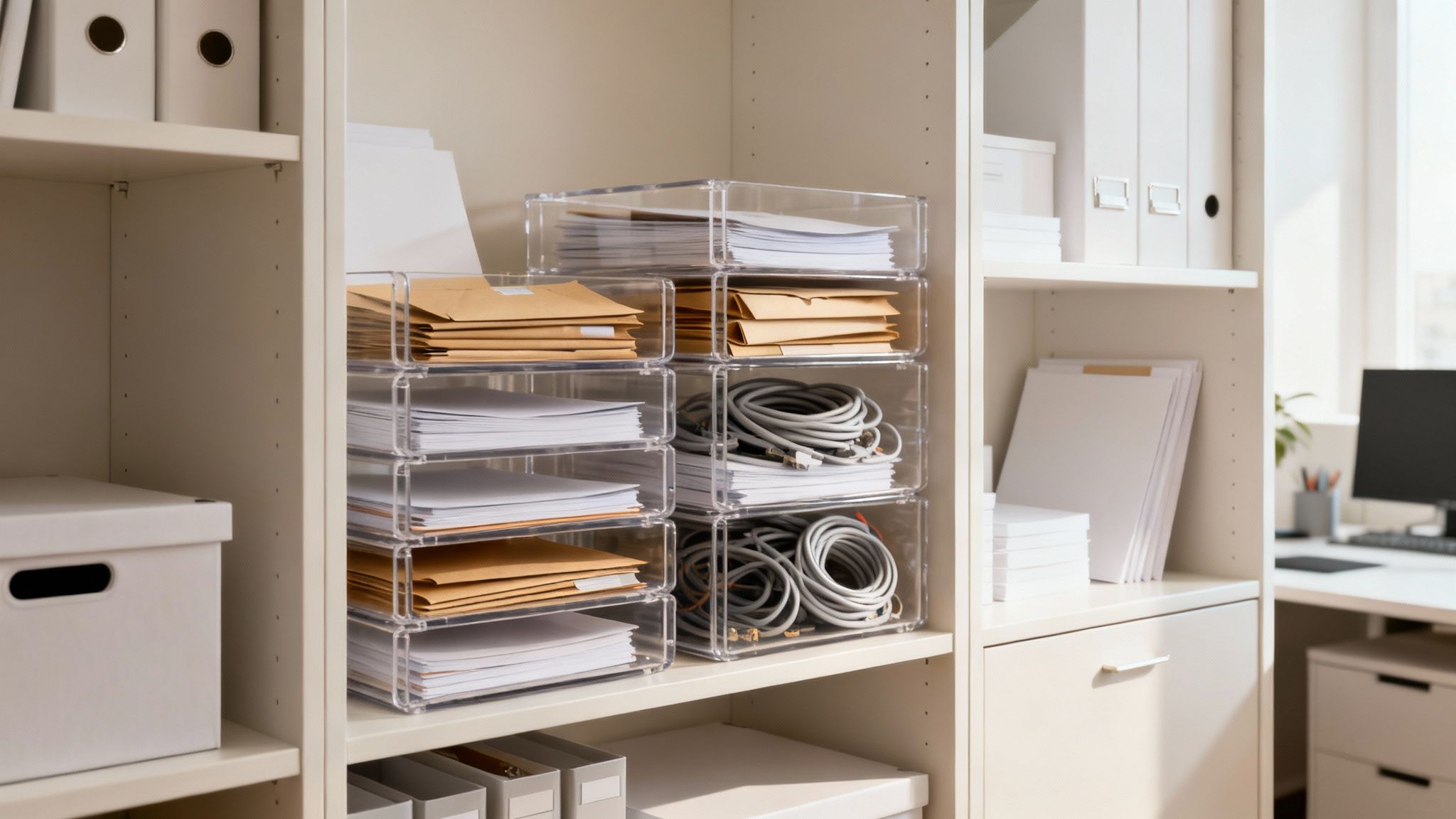
With all the clutter finally gone, you're looking at a clean slate. This is the fun part—designing a system that genuinely works for you instead of against you. An organized office closet isn't about buying a ton of expensive bins; it's about intentional design that makes your daily workflow smoother.
The real goal here is to create a space so logical that you could practically find what you need blindfolded. Let's turn that empty closet into a powerhouse of productivity.
Create Zones for Everything
If there's one strategy I've seen work time and time again, it's "zoning." All this means is grouping similar items together in their own designated areas. It sounds incredibly simple, but it’s the secret sauce to preventing future chaos.
Think about how you work and create zones that match:
- Printing Zone: This is where you'll keep all your printer paper, extra ink cartridges, and any specialty photo paper.
- Mailing Zone: Group envelopes of all sizes, stamps, return address labels, and packing tape in one easy-to-grab spot.
- Supply Zone: Pens, highlighters, sticky notes, paper clips, and other daily-use items should live together here.
- Archival Zone: Dedicate a specific shelf, probably up high, for long-term document boxes or old files you can't toss just yet.
This approach puts a stop to the frantic search across three different shelves just to find a single envelope. When everything has a logical home, cleanup takes seconds, not half an hour.
Maximize Your Vertical Space
Look at most closets, and you'll see a ton of wasted air between the shelves. Don't let that valuable real estate go to waste. You can easily double, or even triple, your storage capacity with a few clever additions.
- Shelf Risers: These are fantastic for creating a second level on a deep shelf. You can store smaller items on top without burying what's behind or below.
- Stackable Bins: I always recommend clear, stackable containers. They let you see everything at a glance while using the full height of your shelving space.
- Under-Shelf Baskets: These slide right onto your existing shelves, creating a handy little drawer for lightweight items like charging cords, labels, or rolls of tape.
These tools help you use every inch of the closet, which is a lifesaver in shallow or reach-in closets where floor space is at a premium. If you're looking for inspiration, checking out some creative home office cabinet ideas can spark some great solutions tailored to your unique space and needs.
Choose Containers Wisely and Leave Breathing Room
My biggest piece of advice for containers is this: use clear ones whenever possible. Out of sight really is out of mind. When you can easily see what's in a bin, you’re much more likely to remember you have it and—more importantly—put things back where they belong.
As you start placing your organized bins back on the shelves, fight the urge to pack them in like sardines. I always recommend leaving about 20% of "white space" on each shelf. This isn't wasted space; it’s crucial breathing room that allows your office to grow without instantly descending back into clutter.
This strategic buffer prevents that classic "one in, one falls out" problem. It makes your system flexible enough to absorb new supplies without completely falling apart.
This focus on smart storage reflects a huge cultural shift toward making our spaces work smarter, not just look tidier.
How to Turn Your Unwanted Office Items Into Cash
That box you've labeled "Donate/Sell" is more than just a checkpoint in your decluttering journey—it's a hidden source of income. That old printer collecting dust, the spare monitor, or that stack of high-quality binders you never used? They don't have to be destined for the landfill. In fact, you can flip this chore into a rewarding way to fund your next office upgrade.
This isn't just about finding a few loose dollars. Believe it or not, research shows the average American home has about $1,600 worth of unused stuff just sitting around. That’s a significant financial opportunity hiding right in your closet.
Identifying What Sells
Let's be real: not all clutter is created equal. Some items are practically guaranteed to find a new home, while others might be a tougher sell. Before you start snapping photos and writing descriptions, scan your pile for these easy wins:
- Electronics in Good Condition: I'm talking about old tablets, monitors, printers, and even those fancy ergonomic keyboards. If it still works, there’s a good chance someone is looking for exactly that.
- Quality Office Furniture: A spare ergonomic chair, a small filing cabinet, or a sturdy bookshelf can be a fantastic find for someone setting up a home office on a shoestring budget.
- High-End Supplies: Think branded items like Moleskine notebooks, nice pens, or professional-grade binders that are still in good shape. These often sell well when bundled together.
Prepping Items for a Quick Sale
The secret to selling anything online fast comes down to one thing: presentation. You don’t need a professional photo studio—your phone and a few minutes of effort will do the trick.
First, give everything a thorough cleaning. A simple wipe-down to get rid of dust and smudges makes a huge difference in photos and shows the buyer you took care of your stuff. Next, find a spot with good natural light and a clean background, like a plain wall or a simple floor.
Take clear, well-lit photos from several different angles. Be sure to capture any important details, like brand names, model numbers, and even minor scuffs or scratches. Honesty is key here; it builds trust with buyers and saves you from headaches down the road.
A great listing photo does more than just show an item; it tells a story of a well-cared-for product. A few extra seconds of staging can dramatically increase both the selling price and the speed of the sale.
Finally, write a simple, honest description. Include the brand, model, its condition, and any important dimensions. For electronics, confirming that all the necessary cables are included is a huge selling point. If you want a complete rundown on how to turn old gadgets into money, you might want to look into how to recycle old electronics for cash. It’s a great way to make your decluttering efforts pay off in a tangible way.
Keeping Your Office Closet Organized for Good
You’ve put in the work to get your office closet organized—that's a huge win. But the real victory? Keeping it that way for the long haul. The secret isn't about scheduling another massive, weekend-long clean-out. It’s about building a simple, sustainable habit that prevents clutter from ever taking over again.
Forget the all-or-nothing approach. What you need is the "10-Minute Tidy."
Your Weekly Maintenance Checklist
Pick a consistent time each week—say, Friday afternoon before you clock out—and dedicate just ten minutes to a quick closet reset. This isn't about deep cleaning or reorganizing. It's about maintenance, the kind that stops tiny messes from snowballing into overwhelming chaos.
Here’s what that quick walkthrough looks like:
- Put Things Back: Spot a stapler on your desk or a stack of folders that never made it back? Return them to their designated homes in the closet.
- Deal With New Arrivals: That box of new supplies from Amazon? Don't let it sit on the floor for a week. Unpack it and put everything away immediately.
- Restock Your Go-To Items: Notice you're down to the last ream of printer paper or your favorite pens are running low? Add it to your shopping list right then and there.
- Do a Quick Purge: Break down empty boxes, toss out junk mail, and shred any old documents that have piled up during the week.
This small, consistent effort is what truly creates lasting organization. You're shifting from a mindset of massive, exhausting projects to one of tiny, effortless habits that maintain order. This is how your office closet stays a functional, stress-free asset instead of a source of dread.
Building these habits is even easier when you have a little help from technology. Setting a recurring calendar reminder is a great start, but you can also explore some of the best apps for home organization to help track your progress and turn maintenance into a more rewarding part of your routine.
Alright, let's get into some of the questions that always seem to come up when you’re staring down an office closet that’s seen better days. Even with the best intentions, it's easy to get stuck. Here are a couple of the big ones I hear all the time, along with some real-world advice to get you unstuck and moving.
"I'm So Overwhelmed, Where Do I Even Begin?"
I get it. Looking at the entire closet at once can feel like trying to boil the ocean. So don't. Just for a moment, ignore the big picture entirely.
The trick is to start with the easiest wins imaginable. I call it the "Trash First" method. Grab a garbage bag and give yourself one single, simple mission: find the obvious junk.
- Pens that died months ago
- That stack of promotional mail from last year
- The keyboard with the sticky 'E' key you swore you'd fix
This isn't about making tough decisions; it's about building momentum. Seeing a bag fill up with useless stuff provides a quick, visible victory. It’s that little psychological boost that breaks through the "clutter paralysis" and makes the real work feel possible.
"What Are the Absolute Must-Have Organizers?"
Before you run out and spend a fortune at The Container Store, let me stop you. You probably need a lot less than you think, especially at the beginning. Focus on three high-impact basics that will solve 80% of your problems.
- Clear, Stackable Bins: This is non-negotiable. If you can't see what's inside, you'll end up tearing everything apart just to find one cable. Seeing the contents at a glance is a game-changer.
- A Decent Label Maker: This little gadget is your secret weapon for long-term success. Label every single bin, box, and shelf. It removes all guesswork and makes it painfully easy for you (or anyone else) to put things back where they belong.
- Shelf Dividers: Simple, yet so effective. These are lifesavers for keeping neat stacks of paper, binders, or even things like reams of printer paper from slumping into one giant, messy pile.
Start with just these three. Once you’ve sorted through everything and know exactly what you’re keeping, then you can think about buying more specialized containers if you actually need them.
Feeling paralyzed by decisions is the biggest hurdle. DeclutterNow uses AI to break through that fatigue, helping you make fast choices and build momentum.
Try DeclutterNow free →