
Organizing an entryway isn't about finding the perfect bin or bench. It's about creating simple systems for the things you use every single day—keys, mail, shoes—and building a quick, consistent habit of tidying up. A five-minute reset each day is all it takes to prevent those overwhelming piles from ever forming in the first place, turning overwhelm into action.
Why Your Entryway Is Always a Mess
That jumble of shoes, mail, and mystery items by your front door isn’t a personal failing. It's your brain on overload. Every time you walk in, you're faced with dozens of tiny decisions: Where does this coat go? Is this mail junk? Should these shoes stay here? This is classic "clutter paralysis," and it’s genuinely exhausting. I've been there, staring at boxes that have been sitting for years, feeling totally stuck.
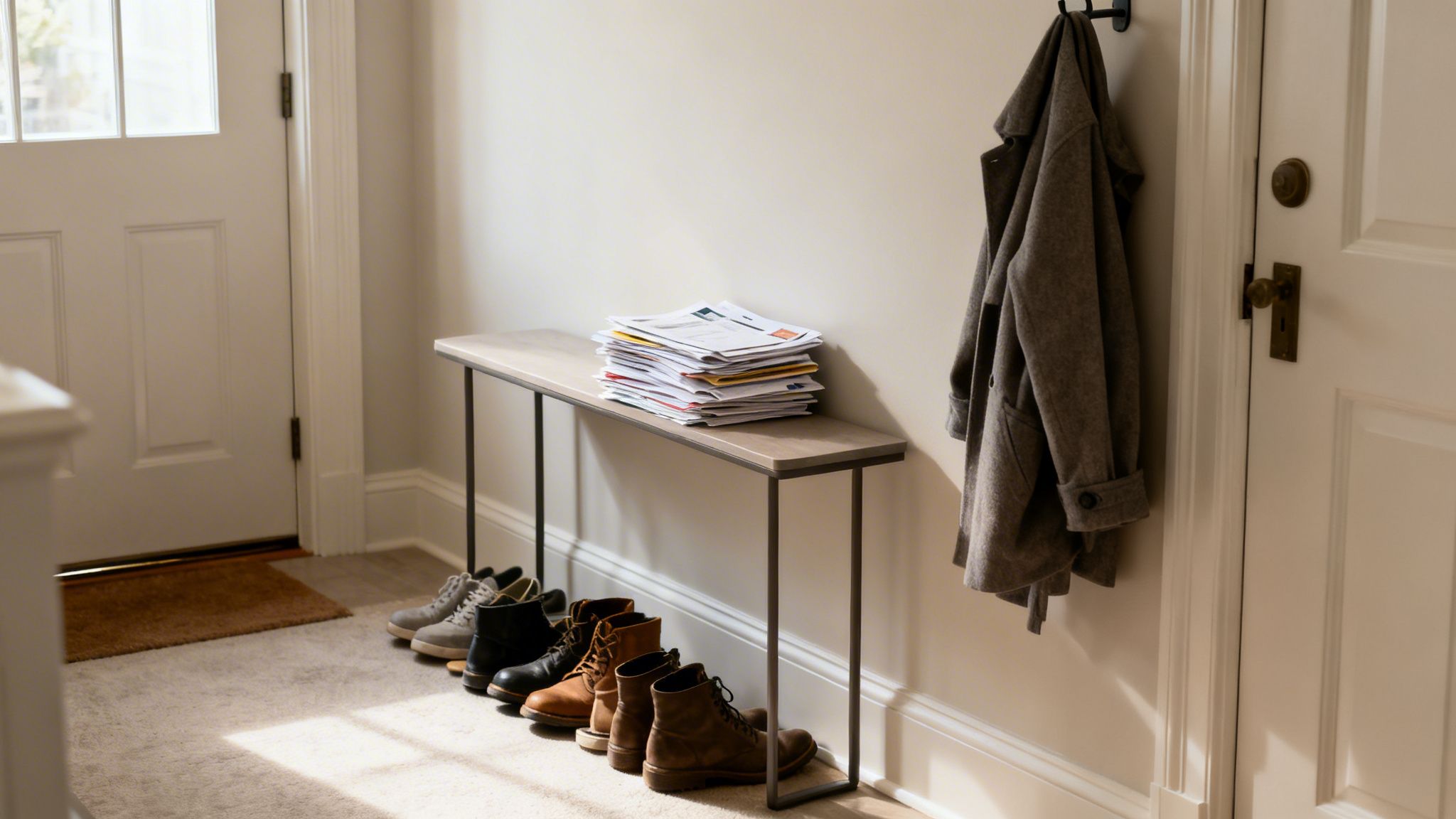
Let’s reframe the problem. This isn't laziness—it's decision fatigue. The constant stream of stuff flowing through this one small space makes it a natural magnet for clutter. Before we get into specific organizing methods, it helps to understand the bigger picture so you can solve clutter issues once and for all.
The Psychology Behind an Overwhelming Entryway
Your entryway is the first and last space you interact with each day. When it’s chaotic, it sets a stressful tone for both leaving and returning home. This pile-up usually happens for a few key reasons:
- Decision Overload: Every single item requires a choice. When you’re tired after a long day, your brain defaults to the easiest option: dropping it on the nearest surface.
- Lack of Designated Homes: If your keys, wallet, or sunglasses don't have a specific, assigned spot, they will always become clutter. It's that simple.
- High-Traffic Volume: The sheer number of items passing through this zone daily makes it incredibly easy for things to accumulate if you don't have a solid system in place.
We often try to solve this by buying more furniture, but more storage won't fix the core issue if you're still paralyzed by decisions every time you walk in the door. The goal is to build momentum, not perfection.
The goal is to build momentum, not achieve perfection. A functional, mostly-tidy entryway is far more sustainable than a magazine-worthy one that's impossible to maintain. This approach turns overwhelm into action.
That feeling of being stuck is completely normal. If you want to dig deeper into this mental state, you can learn more about it in our guide on how to overcome analysis paralysis. The good news is that breaking through doesn't require a weekend-long overhaul. It just starts with one small, easy decision.
Build Momentum with the Trash First Method
Let's be honest. When you’re facing a mountain of entryway clutter, asking if a crumpled receipt "sparks joy" is the fastest way to get completely stuck. Forget the philosophical questions for now. The most effective first move you can make is to grab the obvious trash.
This is our “Trash First” methodology. It’s a simple, psychology-backed way to sidestep that feeling of being overwhelmed before it even starts. We don't start with "does this spark joy?" – we start with "is this actually trash?".
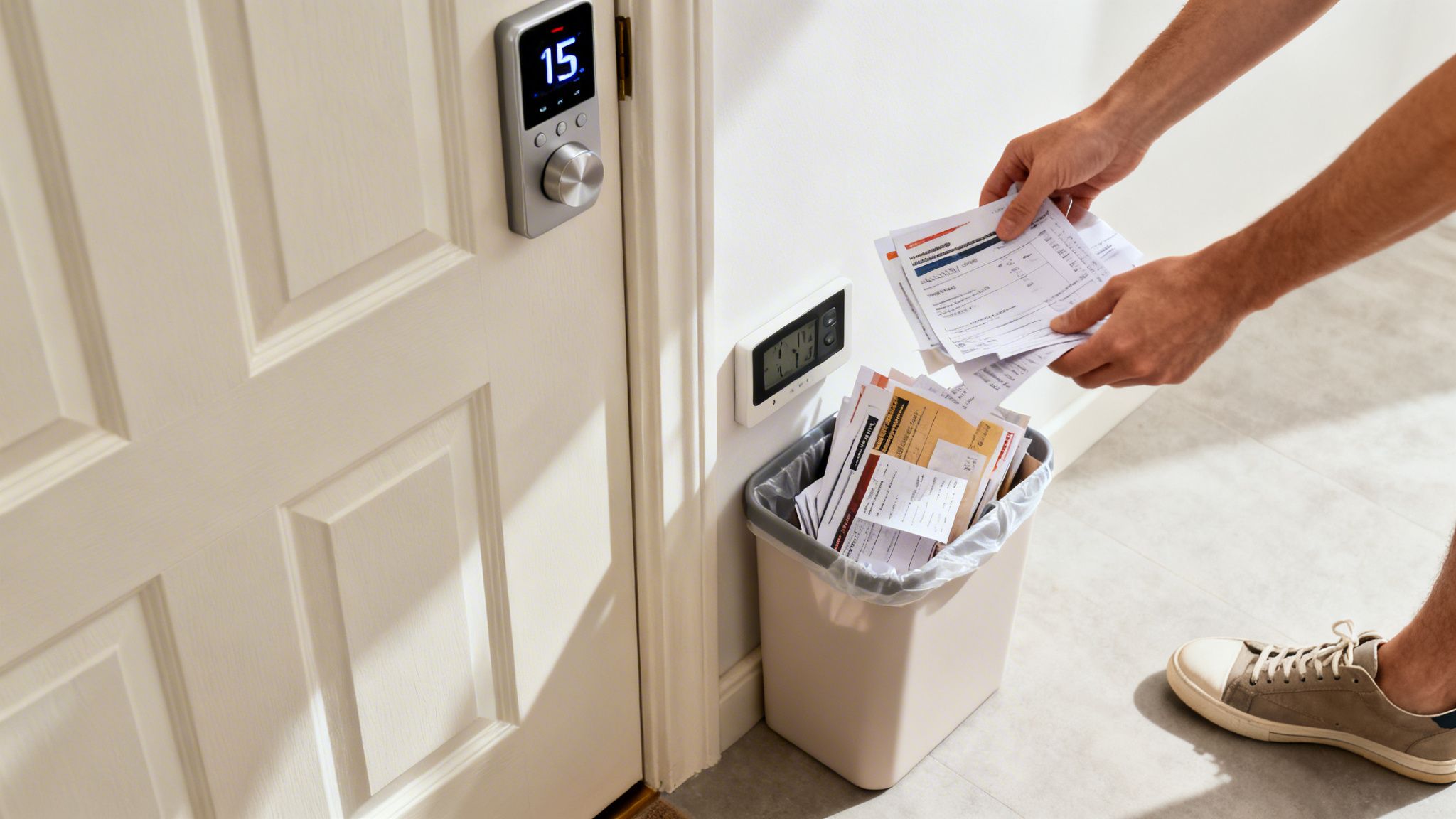
Right now, this isn't about deep organizing. We’re not finding a permanent home for that rogue mitten or figuring out which shoes stay. We're just creating immediate breathing room and, more importantly, a little bit of momentum. Think of it as building a small mountain of victory in your recycling bin.
Your 15-Minute Trash Sweep
Set a timer. Just 15 minutes. Your only job is to hunt down and get rid of anything that requires zero brainpower to identify as junk. You aren't deciding what to keep—you're just finding the garbage. This is all about getting a quick, satisfying win.
Grab a bag and look for the easy stuff:
- Junk mail, pizza flyers, and old catalogs
- Expired coupons and crumpled receipts from last month
- Empty shipping envelopes and Amazon boxes
- That broken umbrella you swear you'll fix (but won't)
- Old newspapers or magazines
Every single piece of junk you toss is a task completed. That quick win gives your brain a little hit of dopamine, the chemical that fuels motivation. Psychology research on habit formation backs this up: small, rewarding actions are the secret to building routines that actually stick. You’re literally training your brain to see decluttering as an accomplishment, not a chore.
The goal is to turn "I don't know where to start" into "I already started." By focusing only on trash, you're making progress before your brain even has a chance to feel overwhelmed.
Why This Works When Other Methods Fail
So many organizing methods push you to tackle the hardest decisions first—the sentimental stuff, the "just in case" items. For most of us, especially anyone feeling burnt out or dealing with ADHD, that’s a surefire recipe for paralysis.
The Trash First method completely flips the script. By starting with the easiest possible wins, you build a foundation of success that makes the next steps feel so much more manageable. This idea of choosing action over perfection is a game-changer that goes way beyond your entryway, something we explore in our guide to minimalist lifestyle tips. You’re not just cleaning up; you’re warming up your decision-making muscle for the slightly tougher choices ahead.
Sorting Everything Else With the Four-Box System
Alright, you've cleared out the obvious junk, and you've got some momentum. Let's keep it going. The next move is to tackle what’s left using a tried-and-true technique I swear by: the Four-Box Method. This isn't about agonizing over every little thing; it's a way to make quick, logical decisions so you can get your space back without getting bogged down.
Go grab four boxes, bins, or just designate four clear spots on the floor. Label them: Keep, Relocate, Donate/Sell, and Trash. The game plan is simple: pick up one item at a time and, without overthinking it, put it into one of these four categories.
This method stops you from falling into the classic trap of just moving stuff from one pile to another. You’re making a series of small, definite choices instead of getting stuck in that "but what if I need this someday?" quicksand.
The Four-Box Method for Entryway Sorting
To make this process fly by, you need to be crystal clear on what each category means. This is the secret to turning a mountain of clutter into organized, manageable piles.
This table is your cheat sheet. Use it to make confident decisions for every single item you pick up.
| Box Category | What Goes Inside | Key Question to Ask |
|---|---|---|
| Keep | Only items that truly belong in the entryway and are used daily. | Do I need this right as I'm walking in or out the door? |
| Relocate | Anything that has a proper home somewhere else in the house. | Where would I look for this item first if it wasn't here? |
| Donate/Sell | Items in good shape that you no longer want, need, or use. | Will someone else get more use out of this than I am? |
| Trash | Anything that is broken, expired, or too worn out to be donated. | Is this item truly past its prime and unusable? |
Think of this as a rapid-fire sorting game. Your goal is to touch each item just once and decide its fate. Once you get in the groove, you'll be surprised at how fast the clutter disappears.
Getting Unstuck With a Little Help
Sooner or later, you're going to pick up something that stumps you. It’s not trash, you don't use it every day, but you can’t quite decide what to do with it. This is where most people get derailed and lose steam.
Don't let one tricky item kill your progress. Instead, let technology give you a nudge. I created the DeClutter Now app for these exact moments. Just snap a photo of the item, and our AI breaks through the decision fatigue. It might suggest that old vase is a popular resale item or that the gadget in your hand really belongs in the garage.
The most powerful question you can ask yourself is this: "Where would I look for this first?" If your immediate answer isn't "the entryway," it belongs in the Relocate box. That one simple question cuts through so much of the indecision.
This little tech assist turns a frustrating stall into a quick, two-second action. You’re not just sorting; you're making smart, confident decisions that help you clear the clutter for good and keep that forward momentum strong.
Choosing Smart Storage for Your Real Life
Okay, you’ve sorted through the clutter, and now for the fun part: choosing storage that actually works for your life, not the life you see in a magazine. A system is only as good as its ability to fit your real habits. We're aiming for progress here, not some picture-perfect entryway that’s impossible to keep up.
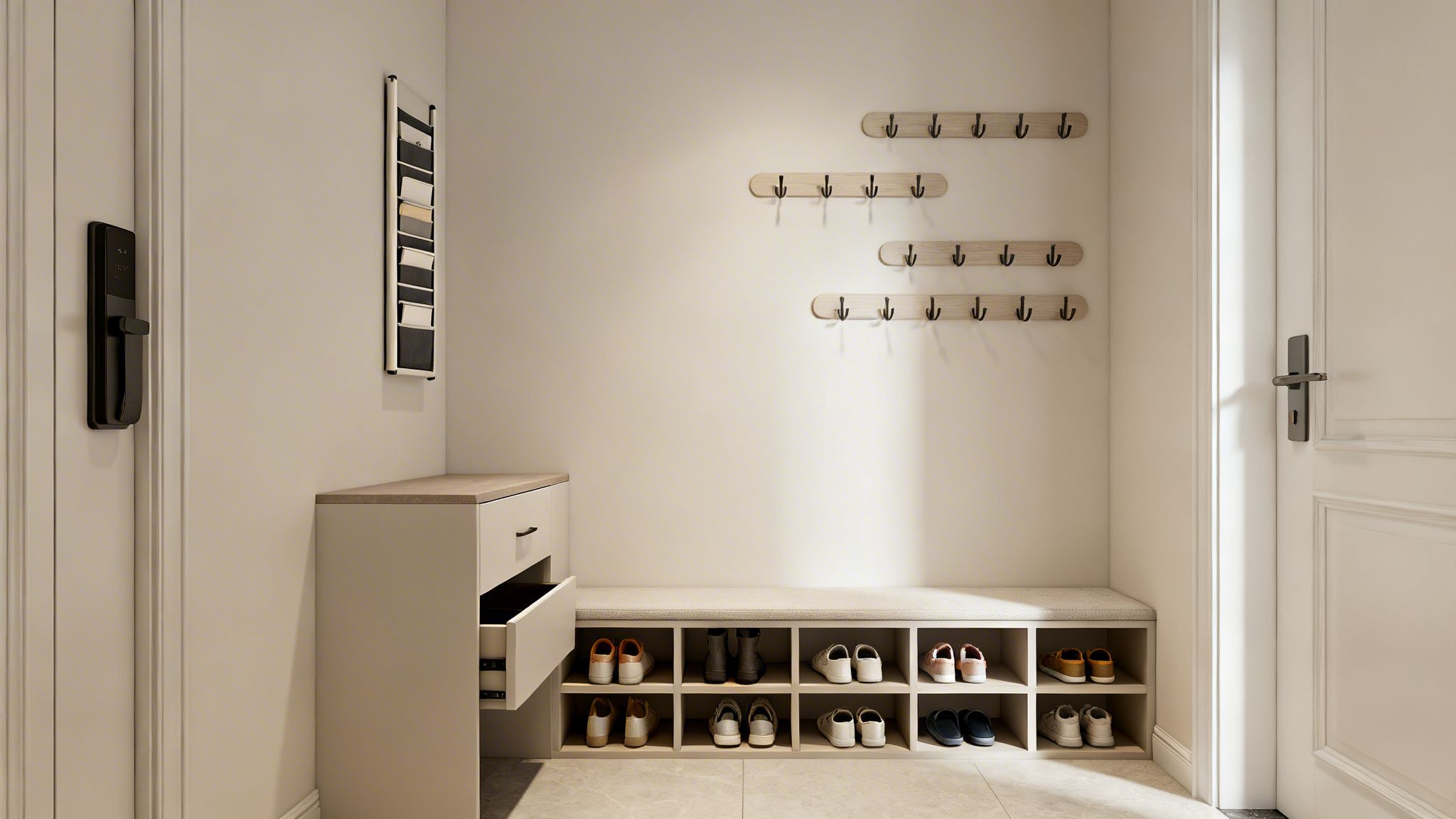
This is all about function first, form second. For instance, if your kids dump their backpacks on the floor the second they walk in, don't fight it. You'll lose that battle every time. Instead, work with that instinct. Placing a few low, sturdy hooks right in that "drop zone" is so much more effective than asking them to use a closet down the hall.
Map Your Entryway Drop Zones
Before you even think about buying a single basket, pause and watch how your entryway is used. Where do things naturally land when people walk in the door? That's your drop zone, and it holds the secret to your whole setup.
- Keys and Mail: Do they always end up on the first flat surface they see? A small console table with a drawer or even a simple decorative bowl can give them a proper home.
- Shoes: Is there a permanent pile of shoes right by the door? A low bench with shoe cubbies or a basic shoe rack makes putting them away just as easy as kicking them off.
- Coats and Bags: Are they constantly draped over the back of a chair? Wall hooks are your new best friend. They take zero effort to use and get bulky items up and off the floor.
Figuring out these patterns is everything. As you shop around, understanding the elements of an entry table can also help you find a piece that’s both stylish and incredibly useful.
Solutions for Every Space and Habit
Your storage needs to solve your specific clutter problems. If your entryway is tiny, think vertically. Wall-mounted shelves and slim cabinets can add a ton of storage without hogging valuable floor space. If you have more room to play with, a dedicated entryway cabinet can be a complete game-changer. Functional furniture is a smart investment that can truly improve your home's first impression.
The Golden Rule: The best storage system is the one you'll actually use. If it takes more than two steps to put something away, it’s too complicated and it will fail. Keep it simple, open, and easy to access.
Ultimately, making smart choices here makes staying tidy feel almost effortless. When you match your storage to your family's natural tendencies, you’re not just organizing your entryway once; you’re building a sustainable system that keeps clutter from coming back.
For more ideas on creating systems that stick, check out our guide on finding the perfect closet organization system—many of the same principles apply.
Keeping It Tidy: The Daily Reset That Actually Works
You’ve put in the effort to declutter and set up a smart system for your entryway. Fantastic. But the real challenge? Keeping it that way. The secret to a permanently organized entryway isn't a massive clean-out every few months—it's a simple daily habit that stops the clutter from ever taking hold again.
This isn’t about achieving flawless perfection. It's about a quick, five-minute routine that turns maintenance from a chore you dread into an automatic part of your day.
The Five-Minute Tidy-Up
Think of this as your end-of-day shutdown routine for the front of your house. Before you settle in for the evening, just take five minutes. That's it. The whole idea is to make it so quick and painless that it becomes second nature.
Here’s what that looks like in practice:
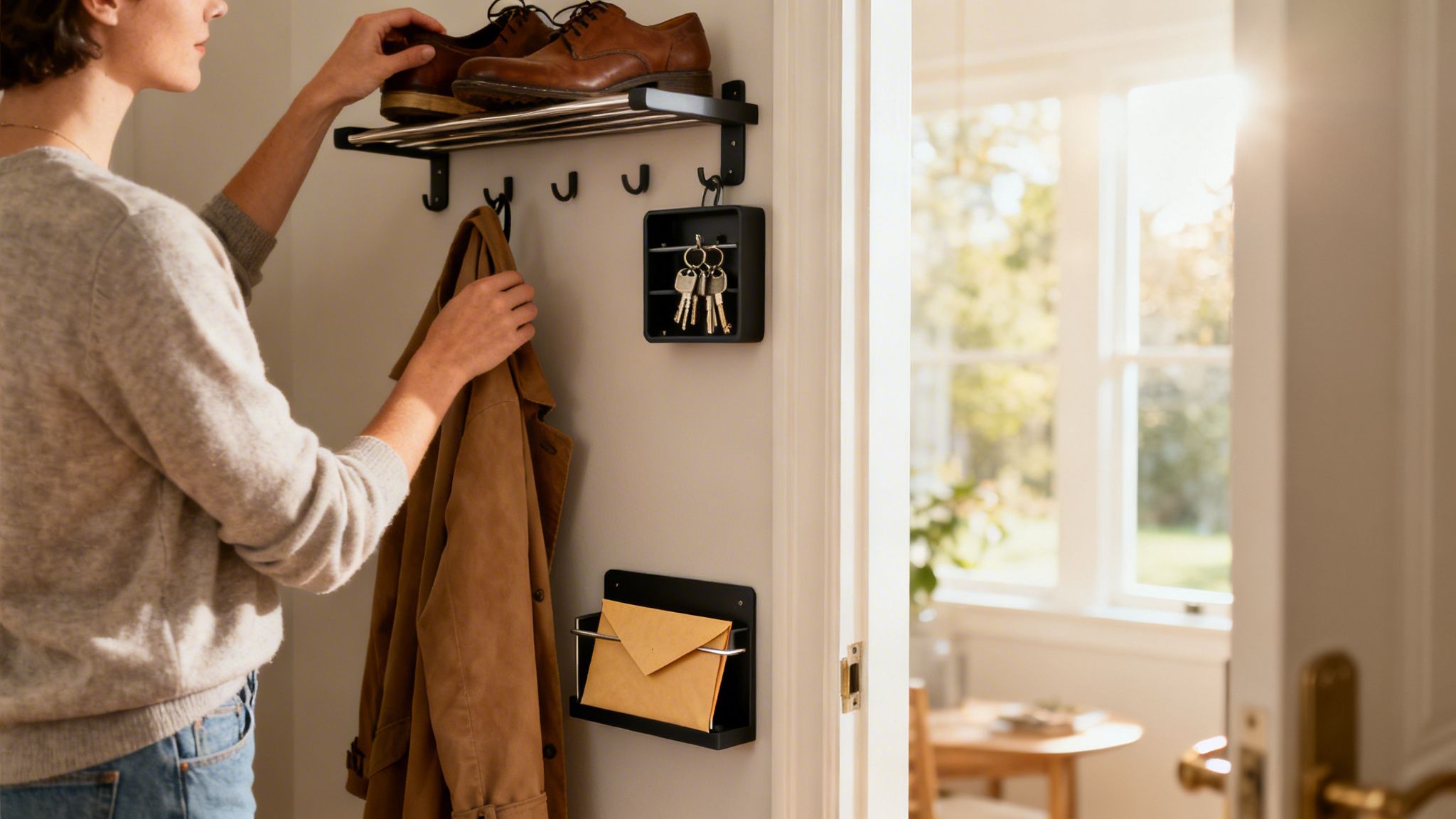
- Shoes Go Home: Grab any shoes that have been kicked off and put them on their rack or in their bin. This one step alone makes a huge difference to how clean the floor feels.
- Coats and Bags on Hooks: Are there jackets slung over a chair or bags dropped on the floor? Hang them up. It takes seconds and instantly clears the visual clutter.
- Deal With the Mail: Sort through today's mail right away. Junk mail goes straight into the recycling, and bills or important papers go to their designated spot. No more paper piles.
- Wipe the Decks: Clear off the console table or bench. Keys, sunglasses, and whatever else came out of your pockets go back into their tray or drawer.
This small, consistent effort is powerful because it taps into how habits are formed. Getting a quick win like a tidy entryway gives your brain a little reward, making it easier to do it again tomorrow. You're not just cleaning; you're wiring in a routine that protects your hard work.
Your entryway is the first thing you see when you get home. A five-minute reset ensures that first impression is one of calm and order, not chaos and another to-do list.
By committing to this small routine, you prevent the clutter from ever piling up to the point where it feels overwhelming. Instead of facing a disaster that takes an hour to fix, you’re just putting away a few things. That’s always manageable. This is the bridge between a one-time project and a home that stays organized for good.
Answering Your Top Entryway Organization Questions
Even the best-laid plans can hit a snag. It's one thing to get your own stuff in order, but it's a whole different ballgame when you're dealing with family chaos in a shoebox-sized entryway. Let's tackle some of the most common hurdles I see people face.
How Do I Organize a Small Entryway with No Closet?
When you're tight on space, you have to think vertically. No closet? No problem. Your walls are your new best friend. The entire goal is to get things off the floor, which instantly makes even the tiniest spot feel more open and under control.
- Wall-Mounted Hooks: Don't just line them up in a row. Stagger sturdy hooks at different heights to maximize your hanging space for coats, bags, and scarves.
- Floating Shelves: A slim shelf mounted above your hooks is a game-changer. It becomes the perfect drop-zone for baskets holding hats, gloves, and all those other little things.
- Slim Furniture: Hunt for a narrow console table or one of those brilliant wall-mounted shoe cabinets that tilt out. They give you a much-needed surface and storage without eating up your walkway.
What's the Best Way to Get My Family on Board?
Getting your family to stick with the program is all about making the system dead simple and personal to them. If it's complicated, it's doomed. Simplicity and a sense of ownership are your secret weapons here.
Start by giving every single person their own hook and their own shoe bin. For younger kids, use fun labels or even their picture so there’s zero confusion. And this part is critical: put their hooks and bins at a height they can actually reach without a struggle.
The key is making the right way the easiest way. If putting shoes in a bin is just as simple as dropping them on the floor, you remove the friction that causes clutter to build up.
Lead by example. Turn the five-minute reset into a quick team challenge every evening—"Let's get our launchpad ready for tomorrow!"—instead of another nagging chore.
Why Do My Organizing Efforts Always Fail?
I hear this all the time, and it's an incredibly frustrating cycle. If you've organized your entryway before only to watch it descend back into chaos, the problem usually boils down to two things: your system is too complicated, or you don't have a maintenance routine.
Think about it—if putting away a single pair of shoes requires opening three different lids, it's just too much work for a space you use constantly. Simplify everything. Go for open bins instead of lidded boxes and hooks instead of hangers.
And second, clutter will always creep back in without a daily reset. That consistent, quick tidy-up is what prevents the small piles from turning into an overwhelming mess that makes you want to give up all over again.
Feeling stuck on those tough "keep or toss" decisions or just need a push to get started? DeClutter Now is designed to break that clutter paralysis. Our AI-powered app helps you make fast, confident decisions, turning the overwhelming task of organizing an entryway into a series of simple, rewarding wins.