
That pile of shoes, mail, and mystery bags by the door isn't a sign of failure. For so many of us, it's a symptom of 'clutter paralysis'—the overwhelming feeling of not knowing where to even start. It’s the same decision fatigue I felt staring at boxes that had been sitting in my garage for years. You look at the pile, your brain freezes, and you walk away. It's not laziness—it's decision fatigue.
Traditional organizing often asks too many hard questions at once. We're going to reframe the challenge. Instead of aiming for a perfect entryway overnight, we’ll focus on psychology-backed organized entryway ideas designed to create quick wins and build momentum. Each idea is a practical, actionable step to make progress, not achieve perfection. This guide provides a curated collection of specific storage solutions, smart layouts, and decluttering routines to help you turn overwhelm into action.
We will break down how to implement everything from multi-zone drop stations to kid-friendly systems that actually work. Let’s give every item a clear home and make entryway decisions almost automatic. It’s time to finally make progress, starting today.
1. Multi-Zone Entryway System with Designated Drop Zones
Instead of viewing your entryway as one chaotic space, this systematic approach divides it into distinct areas for specific purposes or family members. A multi-zone system gives every item a predetermined home, preventing the classic pile-up near the door and turning overwhelm into action. This is one of the most effective organized entryway ideas because it stops decision fatigue before it starts.
The core principle is simple: create a designated spot for everything that comes through the door. This could be a "Parent Zone" with a hook for a work bag and a tray for keys, a "Kid Zone" with low hooks for backpacks and a basket for shoes, and an "Action Zone" for outgoing mail or library books.
How to Implement a Zone System:
- Identify Categories: Start by listing the top 3-5 item types that cause clutter: keys, bags, shoes, outerwear, and mail are common culprits.
- Assign Spaces: Use modular furniture like IKEA's PAX system or Target's Threshold collection to create individual cubbies. For smaller spaces, use wall-mounted hooks and shelves with clear labels.
- Label Everything: Use labels to clearly mark each zone. This removes guesswork and makes it easy for everyone in the household to build the new habit.
- Establish a Reset: Dedicate ten minutes once a week to quickly return misplaced items to their zones, maintaining the system’s integrity.
This method transforms your entryway from a cluttered drop-off point into a functional, low-stress command center. To help you sort through what belongs in these new zones versus what needs to be stored elsewhere, our guide on how to organize a cluttered home provides a step-by-step framework.
2. Vertical Wall Storage with Floating Shelves and Hooks
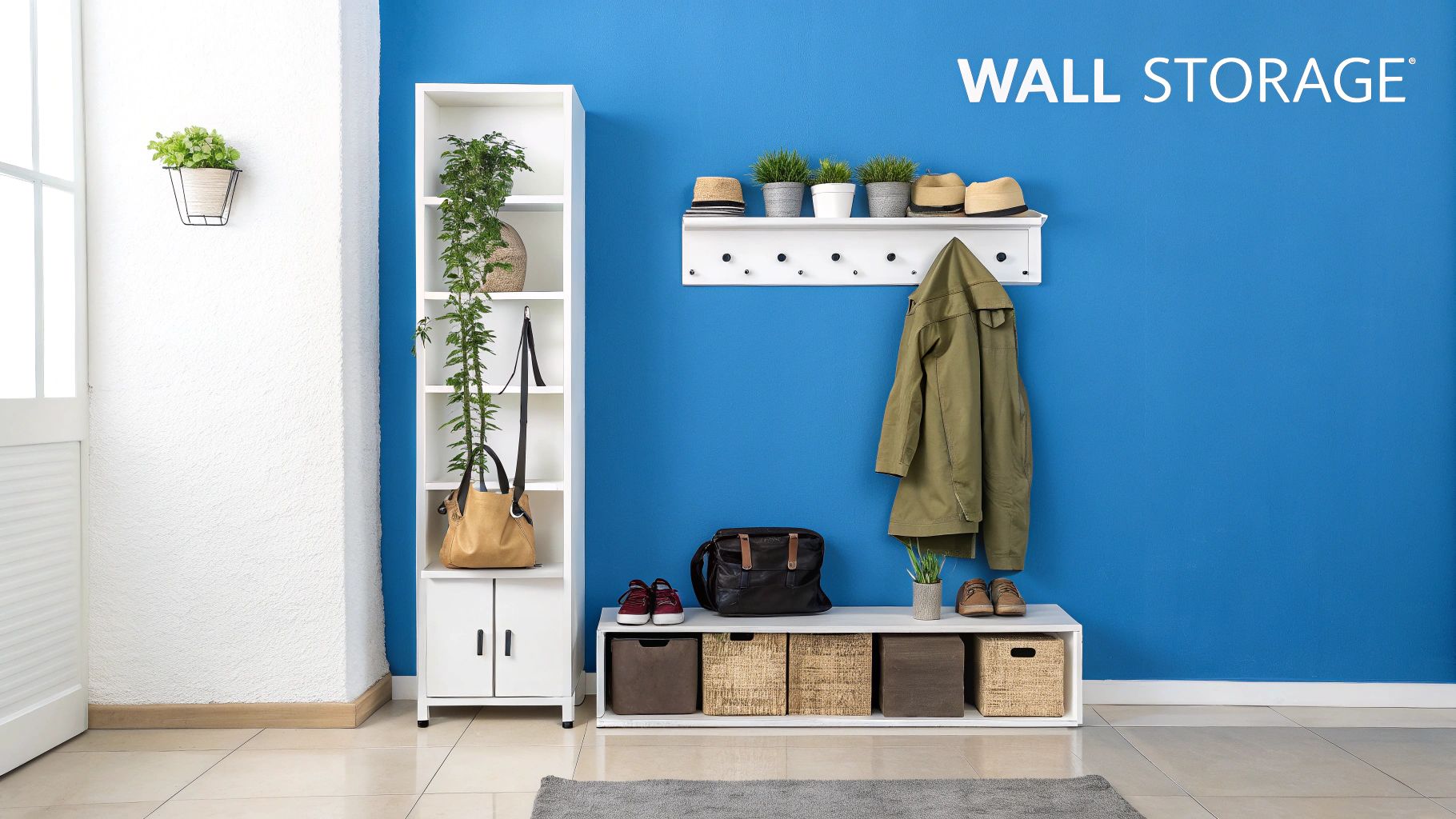
When floor space is limited, the only way to go is up. This approach leverages your entryway’s vertical real estate by installing floating shelves and wall-mounted hooks, turning a blank wall into a highly functional storage hub. It keeps clutter off the floor, makes the space feel larger, and places everyday items within easy reach. This is one of the best organized entryway ideas for small homes or apartments where every square inch matters.
The key to this system is creating a dynamic, layered look that is both practical and visually appealing. Instead of a single, bulky piece of furniture, you get a customized solution that prevents the decision fatigue caused by a chaotic pile-up. By assigning specific spots for bags, keys, and decor, you simplify your daily routine.
How to Implement Vertical Wall Storage:
- Choose Your Style: Select floating shelves and hooks that match your home’s decor. For a modern look, consider sleek metal shelves; for a rustic vibe, opt for reclaimed wood.
- Plan Your Layout: Space shelves approximately 12 to 18 inches apart to accommodate items of varying heights. Mix shelf and hook placement to create a balanced, visually interesting arrangement.
- Install Strategically: Place at least four to six hooks at convenient heights for coats, bags, and scarves. Ensure shelves are securely installed to hold designated items without risk.
- Curate, Don't Clutter: To avoid visual chaos, limit each shelf to five to seven essential or decorative items. The goal is function, not a storage free-for-all.
This method is perfect for transforming a narrow hallway or a small apartment entry into a powerful organizational tool. For more inspiration on maximizing tight quarters, explore our guide on small apartment organization ideas for tips that turn overwhelm into action.
3. Closed-Front Storage Benches with Hidden Compartments
This solution masterfully combines function and form, tackling two entryway needs at once: a place to sit and a place to hide clutter. A closed-front storage bench offers concealed compartments, perfect for stashing shoes, seasonal gear, and pet accessories out of sight. This is one of the most effective organized entryway ideas because it prevents visual clutter, making the space feel instantly calmer and more put-together.
Unlike open cubbies that can look messy, hidden storage gives you permission to be less than perfect while maintaining a pristine look. The bench provides a practical spot to put on or take off shoes, preventing the awkward one-legged hop by the door. It’s an ideal choice for anyone battling "clutter paralysis," as it contains the mess first, giving you the breathing room to sort it out later.
How to Implement a Storage Bench System:
- Measure Your Space: Before buying, ensure the bench won’t obstruct the door swing or create a bottleneck. A standard seating height of 18-20 inches is most comfortable for adults.
- Assign Interior Zones: Use the hidden compartments with purpose. Designate specific sections for each family member’s shoes, or use bins to separate items like winter hats, gloves, and dog leashes.
- Label Internally: Apply labels inside the lid or drawers. This simple step removes guesswork and helps everyone in the household maintain the system without having to ask where things go.
- Use Dividers: Maximize the interior space with drawer dividers or small baskets. This prevents items from becoming a jumbled pile and makes it easier to find what you need quickly.
This method transforms a high-traffic area into a tidy, dual-purpose space. It elegantly hides the reality of a busy household behind a clean facade, offering both seating and sanity.
4. Entryway Command Center with Mail Sorting and Document Organization
An entryway command center is your home's administrative hub, designed to stop paper clutter before it even has a chance to spread throughout your house. This system centralizes incoming mail, crucial reminders, and family schedules into one organized and easily accessible spot. Instead of letting bills and school forms create piles on the kitchen counter, this approach gives every piece of paper a designated home, turning paper chaos into a manageable workflow.
This concept is one of the most effective organized entryway ideas for households dealing with constant "clutter paralysis" from incoming paperwork. It creates a powerful, psychology-backed routine where you process paper immediately upon entry, preventing decision fatigue later. By establishing a central point for all administrative tasks, you eliminate the mental load of remembering where you put that important bill or permission slip.
How to Implement a Command Center:
- Establish Clear Categories: Use a wall-mounted mail sorter with labeled slots like "Bills to Pay," "To-File," "Action Required," and "Outgoing." This removes guesswork and prompts immediate action.
- Go Visual: Install a bulletin board or magnetic whiteboard above your sorter for urgent reminders, kids' artwork, or a family calendar. This keeps time-sensitive items in your line of sight.
- Create a Processing Habit: Dedicate 15 minutes each week to clear out the command center. Pay bills, file documents, and recycle junk mail. Consistency is key to preventing overflow.
- Include a Recycling Bin: Place a small recycling or trash bin directly underneath the command center. This makes it effortless to discard junk mail the moment it comes through the door, following our "Trash First" principle.
This organized entryway idea transforms a major source of clutter into a streamlined system. For more strategies on tackling overwhelming paper piles, check out our guide on how to declutter paper to build momentum and reclaim your surfaces.
5. Modular Baskets & Seasonal Rotation Storage with Clear Labeling
This system tackles entryway clutter on two fronts: daily chaos and seasonal overflow. It combines the flexibility of modular baskets for everyday items with a disciplined seasonal rotation to ensure only what you currently need is taking up valuable space. This is one of the most practical organized entryway ideas because it keeps your main area lean while creating an intentional system for off-season storage.
The core idea is to use visible, accessible baskets for daily-use items like hats, gloves, and scarves, while storing bulky winter coats or summer sandals in clearly labeled bins elsewhere. This prevents the entryway from becoming a long-term storage unit for things you won't use for months, making it easier to find what you need right now.
How to Implement a Basket & Rotation System:
- Select Smart Baskets: Choose baskets that are 2-3 inches shorter than your shelves to allow for easy grabbing. Use clear containers or wire baskets so you can see the contents at a glance.
- Label with Photos: For non-see-through bins, especially those used by kids, take a photo of the contents and tape it to the outside. This removes all guesswork.
- Create Seasonal Bins: Designate 2-4 large, clear bins for each season. Store them in a climate-controlled space like a closet or under a bed, not a damp basement.
- Schedule Your Swaps: Set a recurring calendar reminder (e.g., April 15th and October 15th) to rotate your seasonal items. This turns a dreaded task into a manageable routine.
This method keeps your entryway functional and relevant to the current weather. Before you store items away, it's the perfect time to decide what to keep. Our guide with decluttering tips for beginners can help you make those decisions without feeling overwhelmed.
6. Shoe Rack Organization with Display and Accessibility
Shoes are a primary source of entryway clutter, often creating a tripping hazard and a visual mess. This approach creates a dedicated, accessible storage system that balances aesthetics with function, preventing the classic pile-up near the door. By giving every pair a home, you make footwear easy to find and encourage a quick, tidy drop-off habit.
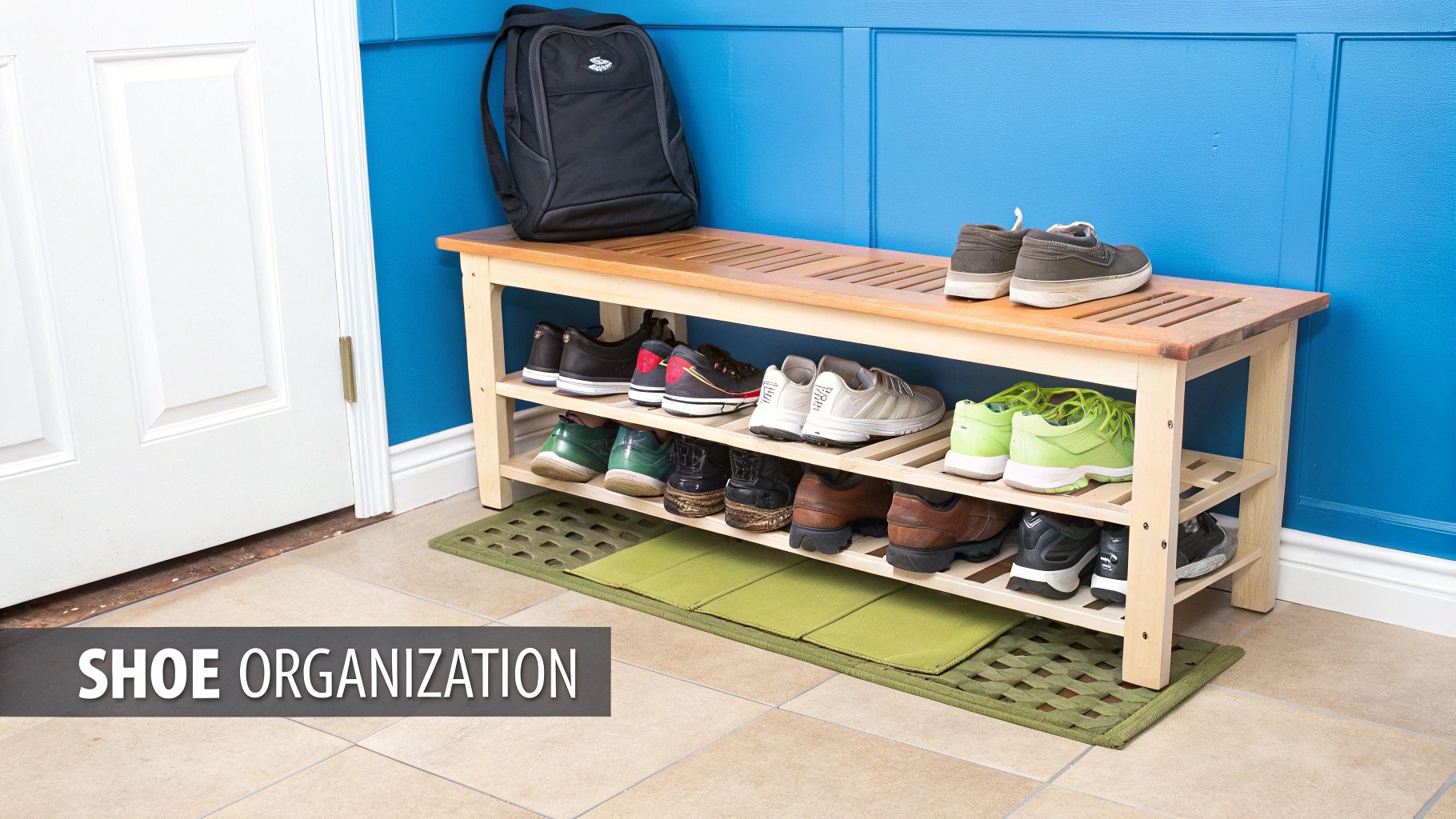
The goal is to create an intentional system, not just a place to dump shoes. This can range from minimalist wall-mounted racks in small spaces to elegant under-bench cubbies or tiered racks. This is one of the most impactful organized entryway ideas because it directly tackles a high-volume clutter category, transforming a chaotic shoe pile into a streamlined, functional display.
How to Implement a Shoe Organization System:
- Limit and Rotate: Keep only 5-7 pairs of frequently worn shoes in the entryway. Store seasonal or special occasion footwear elsewhere to avoid overwhelm.
- Categorize Your Collection: Group shoes by type (e.g., sneakers, work shoes, boots) within the rack. This simple step makes finding the right pair fast and effortless.
- Protect Your Space: Place a durable, waterproof tray or mat beneath your shoe rack. This small addition catches dirt, mud, and moisture, protecting your floors and making cleanup simple.
- Maintain Freshness: Use cedar blocks or charcoal sachets in or near your shoe storage. This helps absorb odors and moisture, keeping your entryway smelling clean.
By establishing a clear system, you eliminate the decision fatigue of figuring out where to put your shoes every time you walk in the door, building momentum for a consistently tidy space.
7. Coat Closet Optimization with Slim Hangers and Category Separation
The coat closet is often the first casualty of entryway chaos, becoming a cramped space where jackets are lost and damaged. This strategy reclaims that valuable real estate by applying simple but powerful organizational principles, transforming it from a cluttered catch-all into a streamlined, functional wardrobe. This is one of the most impactful organized entryway ideas because it directly addresses a primary source of entryway overflow.
The goal is to maximize every square inch and ensure every coat is visible and accessible. By replacing bulky hangers and implementing a zoning system, you prevent the closet from becoming a black hole, which in turn keeps outerwear from piling up on chairs and benches. This method stops the problem before it spills into your living space.
How to Implement Coat Closet Optimization:
- Switch to Slim Hangers: The single most effective change is replacing mismatched, bulky hangers with uniform slim velvet ones. They grip fabric to prevent slipping and can nearly double your hanging space.
- Create Clear Categories: Divide your closet rod into logical zones: everyday jackets, seasonal wear (like heavy winter parkas), formal coats, and a section for kids. Use closet dividers to clearly mark each section.
- Utilize Door Space: Install an over-the-door hook rack or individual hooks on the back of the closet door. This is the perfect spot for frequently used items like hoodies, scarves, or a guest's coat.
- Store Seasonally: During warmer months, place heavy winter coats in vacuum-sealed bags on the top shelf. This frees up prime real estate for the items you’re currently using.
This system ensures that grabbing a coat on your way out the door is a quick, stress-free action rather than a frustrating search, preventing the common problem of entryway clutter simply because the closet is too difficult to use.
8. Daily Essentials Station with Charging Dock and Small Item Storage
This approach tackles the small-item chaos that often overtakes entryway surfaces by creating a single, dedicated home for your daily pocket essentials. A daily essentials station is a compact hub for your phone, keys, wallet, and sunglasses, often featuring an integrated charging dock. This is one of the most effective organized entryway ideas because it prevents decision fatigue by giving these high-use items a non-negotiable home base.
The core principle is to consolidate the items you grab every time you leave and drop every time you return. Instead of scattering them across a console table or kitchen counter, this station acts as a centralized "inbox" for your personal effects, keeping cords tidy and surfaces clear.
How to Implement an Essentials Station:
- Choose a Location: Designate a small, consistent spot for the station, ideally near an outlet and at a comfortable height for easy access.
- Select a Dock or Tray: Use a multi-device charging station or a simple, elegant valet tray. Combine it with small dishes or containers to separate items like keys from sunglasses.
- Manage Cords: Use cable organizers, clips, or spiral wraps to keep charging cables neat and prevent a tangled mess. A clean setup is more likely to be used consistently.
- Build the Habit: Make it a routine to empty your pockets into the station the moment you walk in the door. This simple habit keeps clutter from ever taking root.
This method transforms your entryway from a cluttered drop-zone into a streamlined launchpad, ensuring you always know where your most important items are. For items that don't belong here, our guide on how to declutter your home when you feel overwhelmed offers a simple framework to help you decide what to keep, sell, or toss.
9. Entryway Gallery Wall with Functional Decor and Storage
This approach transforms a purely aesthetic feature into a hard-working organizational tool. Instead of just hanging art, a functional gallery wall combines visual interest with practical storage, using items like mirrors, floating shelves, and decorative hooks. This is one of the best organized entryway ideas for smaller spaces because it utilizes vertical wall space, keeping floors clear while adding personality and function.
The principle is to make your decor do double duty. A large mirror makes the space feel bigger and allows for a final appearance check before leaving. Floating shelves can hold a catch-all bowl for keys, while a piece of art might cleverly hide a wall-mounted key holder. This method turns your entryway into an inviting and efficient space that reflects your personal style.
How to Implement a Functional Gallery Wall:
- Start with an Anchor: Begin with a large statement mirror as the focal point. This visually expands the entryway and serves a practical purpose.
- Add Floating Shelves: Install two or three floating shelves. Space them strategically to hold small, essential items like keys, sunglasses, or a decorative tray for mail. Keep about 30% of the shelf space empty to avoid a cluttered look.
- Curate Functional Decor: Incorporate items you actually use. Choose beautiful bowls, small decorative boxes for trinkets, and perhaps a stylish hook rack integrated into the gallery layout for a guest's coat or a tote bag.
- Balance with Art: Weave in 1-2 pieces of meaningful artwork to express your style. Arrange items in odd numbers (e.g., groups of 3 or 5) for better visual balance. Rotate pieces seasonally to keep the space feeling fresh.
This strategy prevents your entryway from becoming a bland hallway, turning it into a beautiful and useful first impression. The key is thoughtful curation, ensuring every item either serves a purpose or brings you joy, avoiding the decision fatigue that comes with visual clutter.
10. Kid-Friendly Entryway Zones with Accessible Storage and Accountability
This approach transforms the entryway into a functional learning environment for children by making organization accessible and intuitive. Instead of a constant battle over dropped backpacks and stray shoes, this system empowers kids to manage their own belongings, preventing the daily pile-up before it even starts. It’s one of the best organized entryway ideas for families because it builds lifelong habits and reduces parental workload.
The core principle is simple: put everything at a child’s level and use clear visual cues. By creating designated, color-coded, or picture-labeled zones, you remove the guesswork and make it easy for children to participate. This method turns tidying up from a chore into an effortless, independent routine, preventing the decision fatigue that affects kids just as much as adults.
How to Implement a Kid-Friendly Zone:
- Install Accessible Storage: Place hooks at a child's shoulder height, typically between 42-48 inches from the floor. Use low-profile benches with cubbies or oversized baskets that are easy for small hands to pull out and push back in.
- Use Visual Labels: For younger children (age 4+), use large picture labels for bins: a photo of shoes goes on the shoe bin, a picture of a hat on the hat bin. For older children (age 8+), you can combine text with the pictures to reinforce reading skills.
- Color-Code Everything: Assign each child a specific color. For example, Sarah gets the red hook, red bin, and red boot tray, while Leo gets blue. This instantly clarifies ownership and makes cleanup a quick matching game.
- Create Accountability: Post a simple, illustrated responsibility chart near the entryway. A checklist showing "Hang up coat," "Put away shoes," and "Unpack lunchbox" gives children a clear sequence of actions to follow when they arrive home.
10-Item Entryway Organization Comparison
| Item | 🔄 Implementation Complexity | ⚡ Resource Requirements | 📊 Expected Outcomes | ⭐ Ideal Use Cases | 💡 Key Advantages / Tips |
|---|---|---|---|---|---|
| Multi-Zone Entryway System with Designated Drop Zones | Moderate — requires measuring, layout and installation of multiple zones | Medium — hooks, shelves/cubbies, labels; moderate time and cost | Clear reduction in surface clutter; visible overflow indicators | Families or multi-occupant homes needing individualized storage | Encourages ownership and routine; label zones and set a weekly 10‑minute reset |
| Vertical Wall Storage with Floating Shelves and Hooks | Moderate–High — needs secure wall mounting and positioning | Medium–High — shelves, anchors, tools; may require stud finding or pro install | Increased storage capacity and visual openness | Small spaces or renters (if allowed) seeking max vertical use | Maximizes floor space; mix shelf and hook heights and limit items per shelf |
| Closed-Front Storage Benches with Hidden Compartments | Low–Moderate — furniture purchase/placement; minimal install | Medium–High — costlier furniture piece; requires floor space | Strong visual tidiness; concealed storage for seasonal or bulky items | Homes wanting seating + hidden storage in entryway | Provides seating and hides clutter; label insides and avoid using as a dumping ground |
| Entryway Command Center with Mail Sorting and Document Organization | Moderate — install slots, board, and file system; layout planning | Low–Medium — organizers, labels, small shelves; ongoing time commitment | Reduced lost mail/papers; centralized household administration | Households managing bills, schedules, and ongoing paperwork | Establish clear categories and a weekly 15‑minute paper processing routine |
| Modular Baskets & Seasonal Rotation Storage with Clear Labeling | Moderate — buying containers and creating a rotation system | Low–Medium — baskets/bins, labels, occasional vacuum bags | Less seasonal clutter; more accessible current‑season items | Those with seasonal gear or limited permanent storage | Use clear/photo labels and a 4x/year rotation calendar; declutter at swaps |
| Shoe Rack Organization with Display and Accessibility | Low — mostly purchase and placement; occasional mounting | Low–Medium — racks/benches/trays; some wall mounts require tools | Fewer loose shoes, easier selection, prolonged shoe lifespan | Households with multiple daily footwear changes | Limit entryway pairs, group by category, use trays to catch dirt |
| Coat Closet Optimization with Slim Hangers and Category Separation | Moderate — purge, rehang, and add slim hangers/hooks | Low–Medium — slim hangers, hooks, small shelving; time to sort | Better use of closet space; fewer coats overflowing into entry | Homes with an existing closet near entry that needs efficiency | Switch to slim hangers, create zones, and perform quarterly audits |
| Daily Essentials Station with Charging Dock and Small Item Storage | Low — compact setup near outlet; cable management needed | Low — charging dock, trays, cord organizers; outlet access required | Fewer lost items and charged devices ready on departure | Busy adults/families who rush out and need tech/keys centralized | Use separate trays per person, label, and place at eye level for visibility |
| Entryway Gallery Wall with Functional Decor and Storage | Moderate–High — design planning, careful curation, precise mounting | Medium — mirrors, shelves, artwork, lighting; possible pro install | More inviting first impression; functional decor doubles as storage | Design‑focused homes wanting aesthetic and storage balance | Start with a statement mirror, leave negative space, rotate displays seasonally |
| Kid-Friendly Entryway Zones with Accessible Storage and Accountability | High — custom lower hooks, picture labels, and gamification setup | Medium — child‑height fixtures, labeled bins, reward charts; ongoing coaching | Promotes independence and reduces parent pickup tasks | Families with young children who need independent routines | Install lower hooks, use picture labels, and use gamified rewards to sustain use |
Build Momentum, Not Perfection: Your First Step to a Calmer Entryway
You've just explored ten distinct and actionable organized entryway ideas, from creating multi-zone drop stations to optimizing your coat closet with slim hangers. We've covered vertical storage, hidden compartments in benches, and even kid-friendly systems designed for real family life. The common thread isn't about achieving a flawless, magazine-ready space overnight. It's about recognizing that a calm, functional entryway is simply the result of a series of small, manageable decisions.
The sheer volume of ideas can sometimes feel overwhelming in itself, which is a perfect recipe for "clutter paralysis." You see the potential, but the path from your current state to an organized one feels impossibly long. This is where the real secret lies: you don’t have to implement all ten ideas at once. In fact, you shouldn't. The most powerful step you can take right now is to choose just one small, achievable action.
Key Takeaways: From Paralysis to Progress
Let's distill the core principles from this list into your immediate next steps:
- Start Small, Win Fast: Don't try to overhaul the entire entryway. Pick one pain point. Is it the pile of shoes? Focus only on the shoe rack. Is it the mountain of mail? Set up a simple mail sorter. The goal is a quick win that provides a satisfying hit of dopamine, motivating you for the next small step.
- Assign a Home for Everything: A key theme across all these ideas is designation. Coats live on hooks, keys have a dedicated bowl, mail goes into its slot, and shoes rest on a rack. Clutter accumulates when items are homeless. Giving every object a specific resting place is half the battle.
- Make It Visible and Accessible: For items you use daily, out of sight often means out of mind and creates friction. Open shelving for everyday shoes, clear bins for seasonal gear, and wall hooks for frequently used bags make your system intuitive and easy to maintain. Your organization system should work for you, not against you.
Your First Actionable Step
Feeling motivated but still unsure where to begin? Don't get stuck analyzing the pros and cons of every idea. Instead, embrace the "Trash First" methodology. Look at your entryway right now. What is undeniably trash? An old receipt, a broken shoe lace, a junk mail flyer? Tossing that one item is a decision. It’s a tiny victory, but it's a victory that builds momentum.
This principle of starting with the easiest decisions is the foundation of breaking through decision fatigue. You don't have to decide if a sentimental coat "sparks joy" on day one. You just have to decide that an empty Amazon box can be recycled. This single action proves to your brain that progress is possible, making the next decision just a little bit easier. Your journey to a beautifully organized entryway begins not with a grand plan, but with one small, decisive action.
Tired of feeling stuck looking at the same pile of stuff every day? The first step is always the hardest because of decision fatigue. DeClutter Now is a psychology-backed tool designed to help you break through that paralysis by making one simple decision at a time. Snap a photo, get an AI-powered suggestion, and start building the momentum you need to reclaim your space.
Try DeClutter Now for free and take your first step toward a calmer entryway →