
The secret to successfully organizing your dorm closet isn't a magic trick—it's about starting small to build momentum. You've probably stared at that tiny space, feeling completely overwhelmed by all the stuff you need to fit inside. It's a universal "uh-oh" moment, and that feeling of being stuck is totally normal. It's not laziness; it's decision fatigue.
This guide will show you how to move past that paralysis. Using slim hangers, over-the-door organizers, and stackable bins, you can make a notoriously small space work for you from day one.
A Realistic Plan for Taming Dorm Closet Chaos
Moving into a dorm is a huge milestone, but that excitement can quickly turn to dread when you see the closet. You show up with all your favorite clothes, only to find you have about a quarter of the space you're used to. It's a feeling I know well—that sense of being paralyzed by decisions before you've even started.
Let's get one thing straight: feeling overwhelmed isn't a sign that you're messy. It’s a completely normal reaction to a tough design problem. So, forget about creating a Pinterest-perfect space overnight. This guide is all about a real-world, psychology-backed approach to making steady, noticeable progress.

Why Small Spaces Feel So Overwhelming
If you're staring at a tiny closet feeling stressed, you're in good company. Campus housing is packed these days. In fact, approximately 64% of institutions report occupancy rates of 90% or higher, which means more students than ever are learning to live in tight quarters.
This isn't just your problem; it's a rite of passage for hundreds of thousands of students. Mastering a small space is practically an unofficial college course.
The real goal here isn't perfection. It's turning your closet from a source of daily stress into a functional, streamlined part of your routine. It's all about building momentum.
One of the best ways to get ahead of the clutter is to learn how to build a capsule wardrobe before you move. By thoughtfully choosing a smaller collection of versatile items that you absolutely love, you automatically reduce the sheer volume of stuff you need to manage. It's a proactive move that makes the whole process feel less like a battle. You can do this, and we'll walk you through it.
Your Five-Minute Game Plan
Before you even think about hitting "add to cart" on that cute set of storage bins, hold on. The absolute most important thing you can do is understand the space you're actually working with. Trust me, jumping in without a plan is a one-way ticket to frustration, wasted cash, and a pile of organizers that just don't fit.
Taking literally five minutes to map things out will turn this overwhelming chore into a totally manageable project. This isn't about getting it perfect; it's about getting started and scoring a quick win.
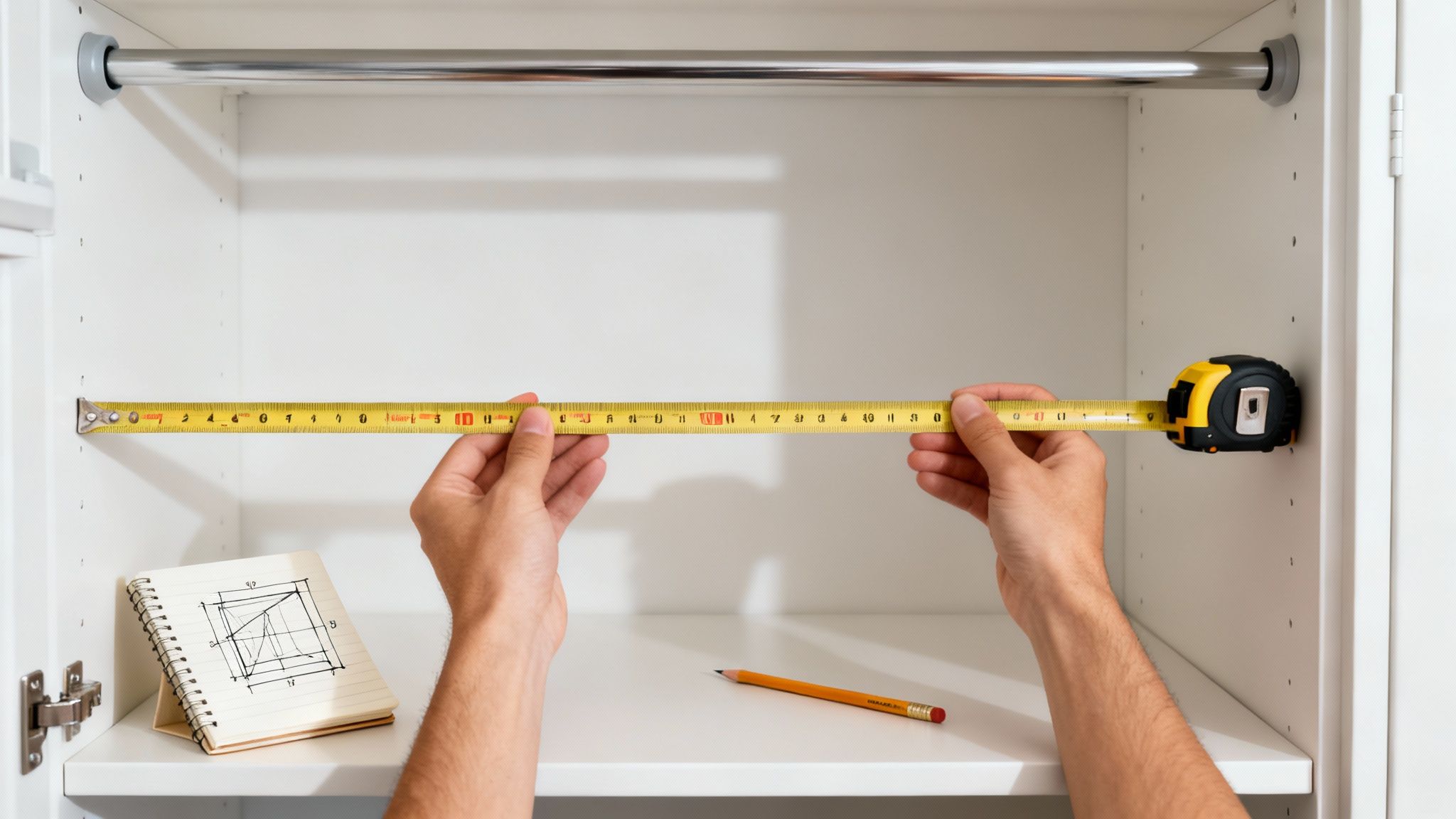
Figure Out Your Starting Point
Okay, grab a tape measure and your phone's notepad. You only need to jot down three simple numbers, but this tiny bit of effort will save you a massive headache later when you're trying to organize your dorm closet.
- Width: How wide is it from wall to wall? This tells you the length of your hanging rod and if you can squeeze in any of those slim, vertical shelving units.
- Height: Measure from the floor all the way up to the ceiling. This is key for knowing if you can pull off a double-hanging rod system or a tall shoe rack.
- Depth: Go from the back wall to the closet opening. This number is crucial—it's the difference between bins that slide in perfectly and ones that keep the door from closing.
Once you have these numbers, you've already transformed a vague, stressful problem into a solvable puzzle. Now you know the exact boundaries you're working within.
Get Ready for a Fresh Start
Next up, give the closet a quick wipe-down. Get rid of the dust, any janky hangers left behind, or random stuff from the last person who lived here. It’s a small thing, but creating that blank canvas mentally prepares you for a fresh start and makes you feel like you're already making progress.
Taking a moment to plan prevents the classic mistake of buying solutions for a problem you don't fully understand. It’s the difference between feeling defeated and feeling in control.
Finally, take a quick inventory of what’s already there. Is there a high shelf perfect for stashing out-of-season sweaters? Just one hanging rod? Knowing what you have to work with is the foundation of a good plan. If you're looking for more quick wins, check out our guide on how to get rid of clutter in 60 seconds.
Time to Sort: The Four-Box Method
Alright, this is where the magic happens. A lot of decluttering advice tells you to pick up each item and ask if it "sparks joy," but let's be real—that's a fast track to decision fatigue when you're facing a mountain of clothes. Instead, we're going to use a much more practical, psychology-backed approach: our "Trash First" methodology.
First things first: pull absolutely everything out of your closet. Yes, everything. Pile it on your bed or the floor. It’s going to look like chaos for a minute, and that’s okay. Seeing the sheer volume of stuff is a crucial first step to getting a handle on it.
Your First Move: Start With Trash, Build Momentum
Before you get lost in memories over that old concert t-shirt, we're going to build some momentum. This is the part I call the "low-hanging fruit" pass. Just scan the pile for the no-brainers—the stuff that is unequivocally trash.
You know what I'm talking about:
- Those wire hangers from the dry cleaner that are probably snagging your sweaters.
- Random receipts, old movie tickets, and forgotten notes.
- Socks that have seen better days (or have lost their other half).
- The graveyard of empty shopping bags and tags you swore you'd keep.
- Expired makeup samples or pens that have long since dried up.
Getting rid of this stuff requires zero emotional energy. Every item you toss is a quick, satisfying win. It's a little dopamine hit that tricks your brain into feeling productive, making it so much easier to tackle the tougher decisions later. We're building momentum, not aiming for perfection right out of the gate.
Sorting Your Stuff Without the Stress
Now that the actual trash is gone, your pile should already feel much more manageable. This is when you can start sorting the rest of your things into a simple, clear system.
To make this step as painless as possible, I always recommend the four-pile system. It helps you avoid getting bogged down and keeps the process moving.
The Four-Pile Sorting System
This simple breakdown forces you to make a clear decision for every single item, which is the key to overcoming that "I don't know what to do with this" paralysis.
| Category | What Goes Here | Actionable Tip |
|---|---|---|
| Keep | Items you love, use regularly, and that fit your current life. | Be honest! If you haven't worn it in a year, it probably doesn't belong here. |
| Donate/Sell | Good-condition items you no longer need, wear, or want. | Your old favorite jacket could be someone else's new treasure. |
| Trash | Anything broken, stained, or beyond repair. | Don't feel guilty. Some things have simply served their purpose. |
| Relocate | Things that don't belong in your closet. | Think textbooks, kitchen gadgets, or sentimental items that need a better home. |
By sticking to these four categories, you're not just moving stuff around; you're making intentional choices about what earns a spot in your limited space.
This isn't about ruthlessly getting rid of everything you own. It's about making smart, conscious choices about what truly deserves to take up valuable real estate in your tiny dorm room.
The goal is to move quickly. If you pick up a textbook from last semester, it obviously doesn’t belong in your clothing closet—that’s an easy Relocate. That perfectly good sweater you bought but never actually wore? A prime candidate for the Donate/Sell pile. You’re building a decision-making muscle.
For those few items that really stump you, an app like DeClutter Now can be a lifesaver. Just snap a photo, and our tool gives you an instant, unbiased recommendation based on its condition and what similar items are selling for. It’s how our AI breaks through decision fatigue so you can keep your momentum going.
Try DeClutter Now free → to make sorting your dorm closet faster and less stressful.
Maximizing Every Inch with Smart Storage
Now that you’ve sorted through everything and know exactly what’s staying, we can get to the fun part: strategically putting it all back. A tiny dorm closet forces you to get creative. The goal here is to think vertically. This isn't just about cramming things in; it's about giving every single item a permanent home to keep your floor clear for good.
With just a few clever tools, you can turn that cramped space into a surprisingly functional wardrobe. It all comes down to picking smart, space-saving products that do double duty for you.
Choosing Your Storage Superstars
The real secret to a sane dorm closet is using items specifically designed for small-space living. The good news? You don’t need a huge budget to make a massive difference.
Here are a few of my favorite game-changers:
- Slim Velvet Hangers: Ditch those chunky plastic and wire hangers immediately. Slim velvet hangers are non-slip and take up about half the space, which can instantly double your hanging capacity. Seriously, it's the single best upgrade you can make.
- Hanging Shoe Organizers: These are the unsung heroes of dorm life. Don’t just limit them to shoes—use the pockets to store snacks, toiletries, rolled-up t-shirts, or even your stash of charging cables.
- Over-the-Door Hooks: This is prime real estate that almost everyone forgets about. Use these hooks for bulky items like your everyday hoodie, a towel, or the backpack you grab on your way out the door. It keeps them off the floor and out of your main closet area.
This concept map is a great visual for how to approach sorting your stuff before you even think about putting it away.
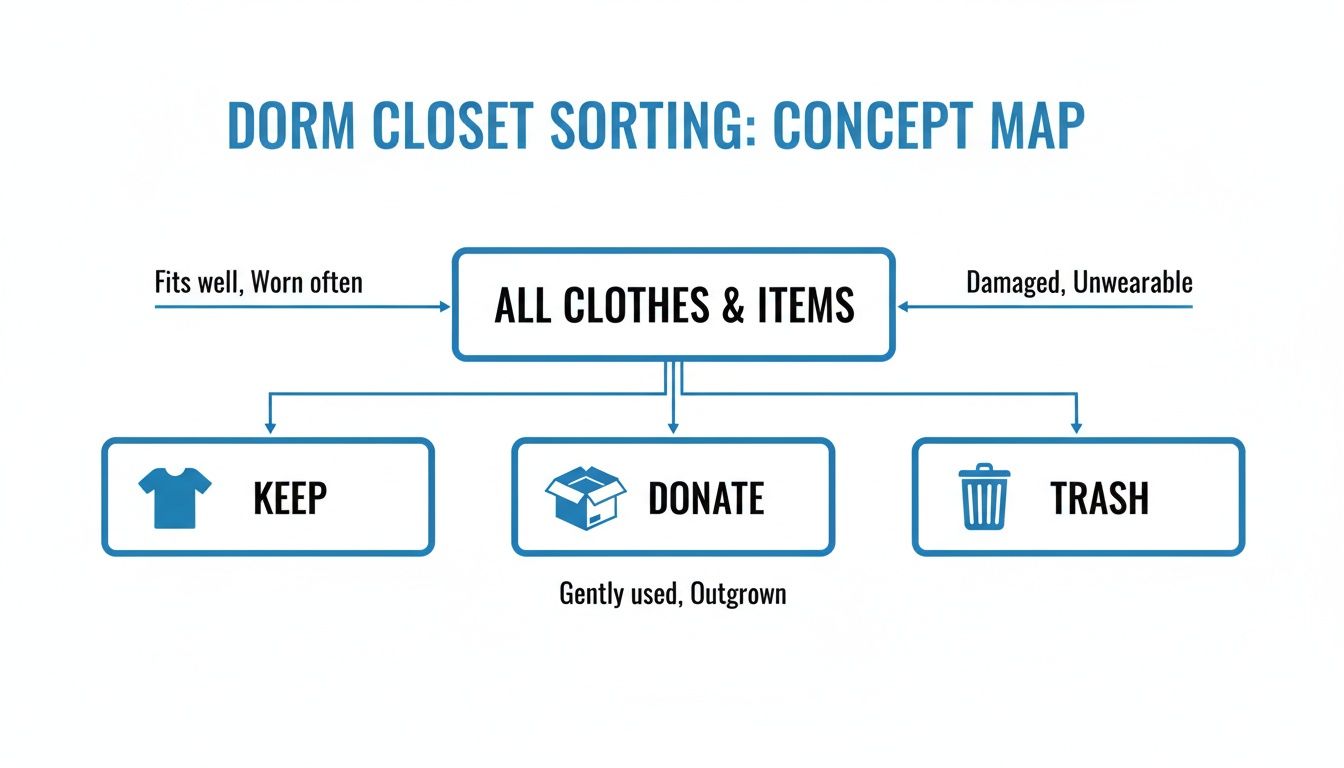
Having a clear path for every item like this makes the final storage step much less overwhelming. You've already made the hard decisions.
Think Vertically and Creatively
To really squeeze every last bit of utility out of your space, you have to use every available inch, from the floor right up to that top shelf. It’s no surprise that closet organization has become such a critical part of dorm life. Some studies even suggest that using vertical space effectively can boost your usable closet capacity by 40-60 percent.
The goal isn’t just to fit everything in. It's to create a system where you can see and access what you need without causing an avalanche of stuff every morning.
Tiered hangers are another fantastic tool, especially for pants or skirts, letting you hang four or five items in the vertical space of one. For that high, hard-to-reach top shelf, grab a couple of collapsible fabric bins. They’re perfect for stashing bulky, out-of-season items like winter sweaters or extra bedding.
And what happens when your dorm closet hits its absolute limit? It might be time to look into smart self-storage solutions for students. It can be a lifesaver for seasonal gear, sports equipment, or things you just don't need day-to-day.
By putting these strategies into practice, you’ll not only get your dorm closet organized but also create a system that makes your daily routine smoother and way less stressful.
Turning Unwanted Clothes into Cash
Okay, you’ve conquered the closet chaos. But what about that "Donate/Sell" pile? Don't just see it as clutter you've moved from one spot to another. For a college student, that pile is a stack of potential cash.
Seriously, every dollar counts, whether it's funding a late-night pizza run or chipping away at next semester's textbook costs. Turning those unwanted clothes into a side hustle is way easier than you think, transforming a final decluttering chore into a pretty rewarding project.
You don't need a complicated setup. Selling on platforms like eBay can be done right from your dorm room. It all starts with good photos, and your phone is more than enough. Just find a spot with decent natural light—near a window is perfect—and lay the item flat on your bedspread or a clean bit of floor. Snap clear shots of the front, back, and any details that matter, like the brand tag, unique buttons, or cool stitching.
From Pile to Profit
Once you've got your photos, it's time to create a listing that actually gets noticed. This is where a lot of people overthink it, but it’s really about being descriptive and honest.
- Nail the Title: Be specific. Include the brand, item type, size, and color. "J. Crew Navy Blue Crewneck Sweater, Women's Size Medium" is going to get a lot more clicks than just "Blue Sweater."
- Write an Honest Description: Be upfront about the item's condition. If there's a tiny, barely-visible snag on the sleeve, mention it. Buyers appreciate transparency, and it’s how you build trust (and get good reviews).
- Set a Fair Price: This part can feel like a guessing game, but a little research makes all the difference. Just search for similar sold items on eBay to see what people are actually paying.
This isn't just about getting rid of stuff; it's about seeing the value in what you already own. That pair of brand-name jeans you never wear could easily cover the cost of your next few coffee runs.
Making the Process Even Easier
Modern tools can help you get from decision to listing in just a few minutes. The DeClutter Now app, for instance, has a built-in eBay selling assistant that’s a real game-changer. After it helps you figure out what's worth selling, it can suggest an optimized title, whip up a compelling description, and even recommend a competitive price based on real-time market data.
This completely removes the guesswork and helps you list your items fast. For a deeper dive, our guide on how to price items for resale breaks down even more strategies.
So, instead of letting those perfectly good clothes collect dust or just dropping them in a donation bin, you can turn your decluttering efforts into a direct deposit. It’s a smart, sustainable way to make your old wardrobe start working for you again.
Alright, you've done the hard part. The marathon of decluttering and organizing your dorm closet is officially over. Stand back and admire your work for a minute—that's a serious accomplishment.
But here’s the thing I've learned from years of organizing spaces: the real test isn't the big cleanout. It’s keeping that avalanche of clutter from slowly creeping back in. A perfect system is useless if it’s too hard to keep up with.
The key isn't another huge weekend project. It’s about building a few small, almost unnoticeable habits that stop the mess before it starts. All you need is a simple, five-minute reset each week. This isn't about maintaining perfection; it's about making sure you never feel that "I don't even know where to start" dread again.
The Weekly Reset: Your 5-Minute Upkeep Plan
Think of this as a quick "CTRL+Z" for your closet. Pick a consistent time that works for your schedule—maybe Sunday night while you’re dreading your Monday morning alarm. The goal is just to put things back in their designated homes.
- The Floor & Chair Check: We all have "the chair." You know, the one that becomes a second closet. Grab anything that's landed there or on the floor and either hang it up or put it in the hamper. This single step is a game-changer.
- Quick Surface Scan: Are there random books, papers, or mugs on your closet shelves? Take 30 seconds to move them back to where they actually belong.
- Door Organizer Duty: Give your over-the-door hanger a once-over. Are there jackets, bags, or scarves piled up? Straighten them out and re-hang anything that’s fallen.
This tiny investment of time feels so much better than dedicating an entire Saturday to digging yourself out of a mess every few months.
The Golden Rule: ‘One In, One Out’
If you want a foolproof way to keep your closet from overflowing, adopt the ‘one in, one out’ rule. It’s brutally simple but incredibly effective. Every time a new shirt, pair of jeans, or sweatshirt comes in, an old one has to leave.
This isn’t about deprivation; it's about conscious consumption. It forces you to pause and decide if you really love that new find more than something you already own. It's the ultimate defense against the slow, steady buildup that leads right back to chaos.
A little consistent effort is what turns a one-time project into a lasting solution. It’s how you protect your peace of mind and keep your space functional for the entire semester.
Got Questions? We’ve Got Answers.
Tackling a dorm closet project always brings up a few tricky situations. It’s completely normal to feel a bit stuck. Here are some of the most common questions I get from students, along with my go-to advice.
What Organizers Actually Make a Difference?
Let's be real, you're on a student budget. You don't need a container for every single thing. Instead of buying a whole kit, focus your cash on these three game-changers that deliver the most bang for your buck.
- Slim Velvet Hangers: This is non-negotiable. Seriously. They instantly double your hanging space compared to bulky plastic ones, and the velvet grip means your clothes actually stay put.
- Over-the-Door Shoe Organizer: Don't let the name fool you—this is a vertical storage powerhouse. The pockets are perfect for stashing snacks, toiletries, socks, charging cables… you name it. It reclaims otherwise wasted space.
- Collapsible Fabric Bins: That high top shelf can quickly become a black hole for random stuff. Tossing bulky sweaters, extra towels, or out-of-season clothes into a few of these bins keeps that area neat and accessible.
These three items solve the biggest space-hogging problems in almost every dorm closet I've seen.
How Can I Possibly Share This Tiny Closet?
Sharing a closet without driving each other crazy comes down to one thing: talking it out before the chaos begins. Before a single t-shirt is unpacked, have a quick chat with your roommate.
Decide on who gets which side. A simple piece of colored tape down the middle of the shelf or a tension rod can be a surprisingly effective visual boundary. Label your bins so there’s no "Is this mine or yours?" mix-up. Most importantly, agree to keep the floor clear—it's the first place clutter piles up and starts roommate drama.
I’m So Overwhelmed, I Can’t Even Start. What’s the First Step?
I get it. The sheer amount of stuff can feel paralyzing. Forget about sorting everything right now.
Just grab one trash bag. Spend no more than five minutes doing one tiny task: find and throw away obvious trash. I’m talking price tags, old receipts you shoved in a pocket, empty plastic packaging, a broken hanger. That's it.
You're not pulling everything out. You're not making any hard decisions. You're just clearing out the garbage. This is what I call the 'Trash First' method, and it's magic. It gives you an immediate, easy win that builds the momentum you need to keep going.
That small action proves to yourself that you can make a change, and often, that’s all it takes to get rolling.
Feeling that familiar sense of overwhelm is the biggest hurdle, but you don't have to face it alone. DeClutter Now is designed to turn clutter paralysis into progress. Just snap a photo of an item you're stuck on, and our AI provides an instant, practical recommendation to help you decide its fate with confidence.