
How to organize your home room by room. If you’ve ever found yourself standing in a doorway, looking at a room full of stuff, and just… freezing, this is for you. Maybe you’ve had boxes sitting for years, untouched since a move. The goal isn’t just a plan to get organized; it’s a plan that won’t leave you feeling completely overwhelmed before you even start. It’s about reframing the goal from some impossible idea of perfection to just making progress, one small victory at a time.
Why You Feel Paralyzed and How to Break Through
That feeling of being frozen in a doorway? It’s not laziness or a character flaw. It’s a very real state called “clutter paralysis,” and it’s fueled by decision fatigue.
Think about it. Those boxes sitting for years aren’t just stuff. They represent hundreds, maybe thousands, of tiny decisions you have to make. What is this? Do I need it? Where does it even go? Is it worth anything? When you multiply that mental checklist by every single item in the room, your brain basically short-circuits. You become paralyzed by decisions. It’s a totally normal psychological response to being flooded with too many choices at once.
The Failure of Traditional Advice
Here’s the problem: a lot of common organizing advice makes this paralysis even worse. Methods that start by asking you to ponder big, emotionally loaded questions like “Does this spark joy?” can be a total non-starter when you’re already feeling stuck. That kind of deep thinking requires a ton of mental and emotional energy—exactly what you don’t have when you’re overwhelmed.
This is why so many of us get a burst of motivation, pull everything out of a closet, make an even bigger mess, and then completely burn out. The room ends up looking worse than before, and the whole experience just reinforces the feeling that getting organized is impossible. It’s a frustrating cycle that leaves you feeling more stuck than ever.
The key isn’t to muster up more motivation to face a giant task. The secret is to make the first step so ridiculously easy that you don’t need motivation to do it.
The Power of the “Trash First” Method
So, instead of asking a hard question, we’re going to start with the easiest one imaginable: “Is this actual trash?”
This is the core idea behind our “Trash First” methodology. We don’t start with ‘does this spark joy?’ – we start with ‘is this actually trash?’. You’re not deciding what to keep, donate, or sell. Not yet. You are only scanning the room for the obvious, no-brainer stuff you can throw away or recycle.
- Junk Mail and Old Receipts: Zero emotional investment required. Gone.
- Empty Product Boxes: No second-guessing needed. Out they go.
- Broken Gadgets or Toys: If it’s truly beyond repair, it’s an easy call.
- Expired Food or Coupons: Their time has passed.
Starting this way creates an immediate, visible difference with almost no mental strain. Each piece of trash you toss is a quick win. These small victories are psychology-backed; they give you a tiny hit of dopamine, the brain’s reward chemical. This creates a positive feedback loop that starts building real momentum, making you feel capable and ready for the next small step. If you want more simple starting points, our guide on decluttering tips for beginners is a great resource. By clearing out the trash first, you turn clutter paralysis into progress.
Your Strategic Room-by-Room Decluttering Roadmap
Ready for a real plan to get your home organized? Trying to tackle the whole house at once is a classic recipe for burnout. It’s like trying to drink from a firehose—you just end up soaked, exhausted, and more stuck than when you started.
Instead, we’re going to map this out strategically. This isn’t about random, frantic cleaning sprees that just shuffle clutter from one room to another. It’s a logical game plan designed to build momentum and give you those crucial morale-boosting wins right from the start.
Start Where You Actually Live
The most effective way to kick things off is to focus on the rooms that have the biggest impact on your daily life. It’s simple, really. When you clear out the spaces you use the most, you feel the benefits immediately. That creates a powerful feedback loop: you see progress, you feel better, and that good feeling fuels you to keep going.
Think about your daily routine. Where’s the friction?
- The Kitchen: This is often the command center for meals and family life. A cluttered kitchen makes every single day start and end with a little bit of stress.
- The Living Room: This is supposed to be your space for relaxation and connection. It’s hard to truly unwind when it’s buried under piles of… well, stuff.
- The Bedroom: Your sanctuary. A chaotic bedroom can mess with your sleep and your ability to recharge, which affects everything else.
By prioritizing these high-traffic areas, you’re not just cleaning—you’re reclaiming your daily peace of mind. The goal is to make tangible progress, not achieve some impossible idea of perfection overnight.
This little diagram shows how we move from feeling completely overwhelmed to building unstoppable momentum.
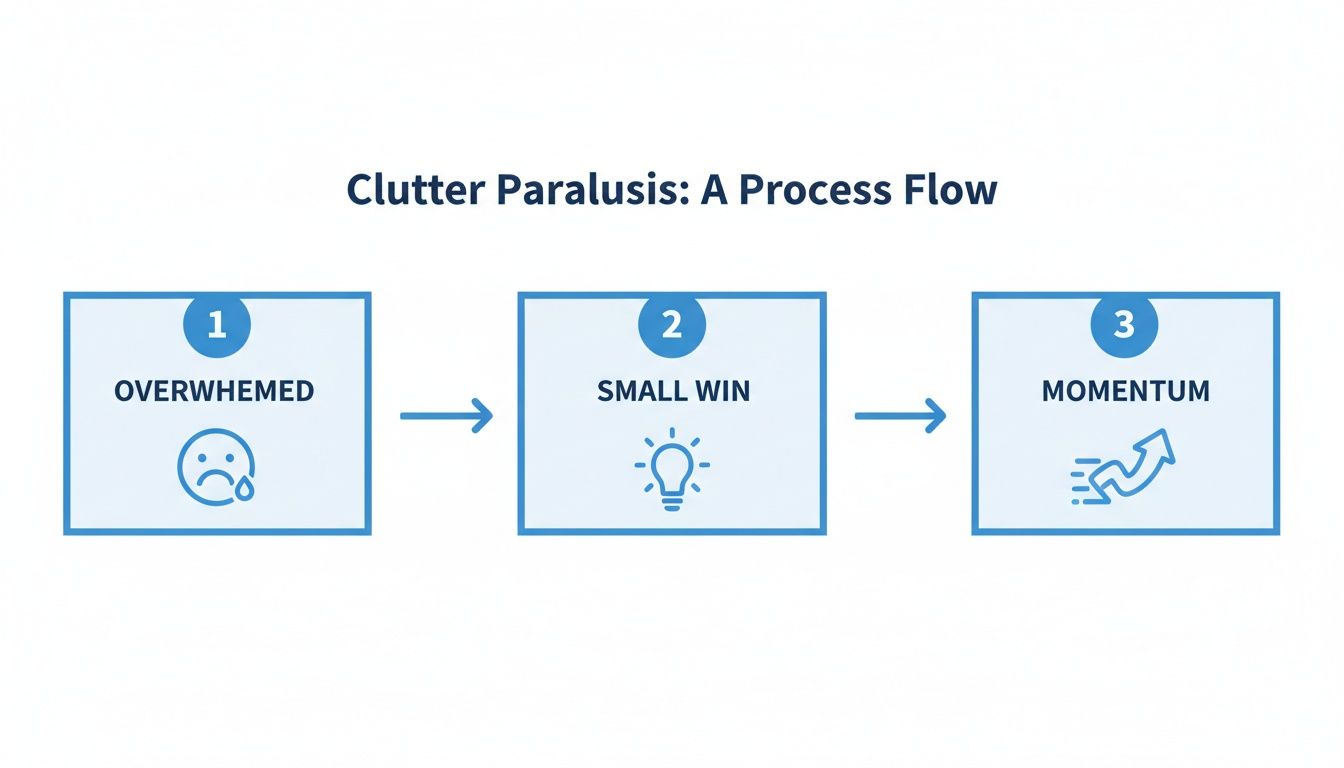
It’s all about breaking that paralysis cycle with one small win. That’s all it takes to start a chain reaction.
Your Room Prioritization and Time Estimate Plan
This table is your strategic guide to tackle your home room by room. It’s designed to focus on high-impact areas first, maximizing your sense of accomplishment and building momentum right away. Think of it as a flexible blueprint for your decluttering journey.
| Room | Priority Level | Why It’s a Great Place to Start | Estimated Time (Weekend Sessions) |
|---|---|---|---|
| Kitchen | High | The heart of the home. Organizing it streamlines daily routines and instantly reduces stress. | 2-3 sessions |
| Living Room | High | Reclaiming this space gives you a peaceful area to relax and recharge, offering a big psychological win. | 1-2 sessions |
| Bedroom | High | A calm, organized bedroom improves sleep and sets a positive tone for your day. | 2 sessions |
| Bathroom | Medium | A quick win! It’s a small space, so you can often declutter it in a single session, boosting your confidence. | 1 session |
| Home Office | Medium | Tackling paper clutter and creating an organized workspace can significantly reduce mental load. | 1-2 sessions |
| Closets | Medium | Done one at a time, closets provide contained, manageable projects that make a big difference. | 1 session per closet |
| Garage/Attic/Basement | Low | Save these for last. They’re often big jobs and less critical to daily life. You’ll need momentum for these. | 3+ sessions |
Use this plan as your starting point, but feel free to adjust it based on your own home and what causes you the most daily frustration. The best plan is the one you’ll actually stick with.
A Flexible Plan for Real Life
Think of this roadmap as your GPS—you’re still the one driving. Everyone’s home is different, and everyone’s pain points are unique. Maybe your biggest source of stress isn’t the kitchen but the home office where bills and papers have staged a hostile takeover. That’s fine! The core principle holds true: start with the area that will give you the most relief.
The best room to start with is the one that, if it were organized, would make the biggest positive difference in your daily life. Don’t overthink it; trust your gut.
Once you’ve picked your starting point, commit to just that one space. Don’t let yourself get sidetracked by the mess in the hallway or the boxes in the garage. Your mission is to see one room through to completion before moving on. This laser focus is what keeps the overwhelm at bay and ensures you actually finish what you start.
Get Your Head in the Game First
Before you even pull out a single drawer, it’s critical to get into the right headspace. Decluttering can stir up a lot of unexpected emotions—guilt over money spent, nostalgia for the past, and anxiety about making the “wrong” decision. These feelings are totally normal, but they can derail you in a heartbeat. The mental clutter is just as real as the physical stuff.
It can be incredibly helpful to intentionally separate your sense of self from the state of your home. If you’re struggling with the emotional weight of it all, take a few minutes for a guided meditation. Our resource on why you are not your clutter can help you detach from the stress and approach the task with a calmer, clearer mind.
Remember, this is a journey of making progress, not a judgment on your past. Each item is just an item, not a reflection of your worth. With a solid plan and a compassionate mindset, you can finally move from feeling stuck to making real, lasting change.
From Kitchen Chaos to a Calm You Can Cook In
The kitchen is the command center of the home. It’s where the day starts with coffee, where meals bring everyone together, and where late-night snacks happen. But because it’s the hub of so much activity, it can easily slide into chaos, turning a space for connection into a source of daily stress.
Let’s be real: walking into a kitchen with overflowing counters and jam-packed cabinets after a long day is draining. If this sounds familiar, you’re not alone—it’s a scene that plays out in 68% of American households daily. The good news is you can absolutely fix this. By tackling your kitchen zone by zone, you can cut through the noise and reclaim your peace.
Start with the Easiest Win: The Trash First Method
Before you even think about sorting or organizing, you need to create some breathing room. The biggest mistake people make is trying to organize clutter. Instead, we’re going to build momentum with the easiest decisions possible. Grab a trash bag and recycling bin, and let’s do a quick pass using the “Trash First” method.
For the next 15 minutes, your only job is to find the obvious, no-brainer junk. Don’t get sidetracked.
- Expired Food: Scan the pantry, fridge, and spice rack. If it’s past its prime, it’s out.
- Junk Mail & Old Receipts: That pile on the counter needs a quick sort. Most of it is probably trash.
- Broken Gadgets: The toaster that burns one side? The spatula with the cracked handle? It’s time to say goodbye.
- Worn-Out Sponges & Dish Towels: If they’re stained, frayed, or just plain sad-looking, let them go.
This one step takes almost no mental effort but gives you a huge visual and psychological boost. You’re not just tossing things; you’re clearing away the decision fatigue and proving to yourself that you can do this.
Conquer the Pantry One Shelf at a Time
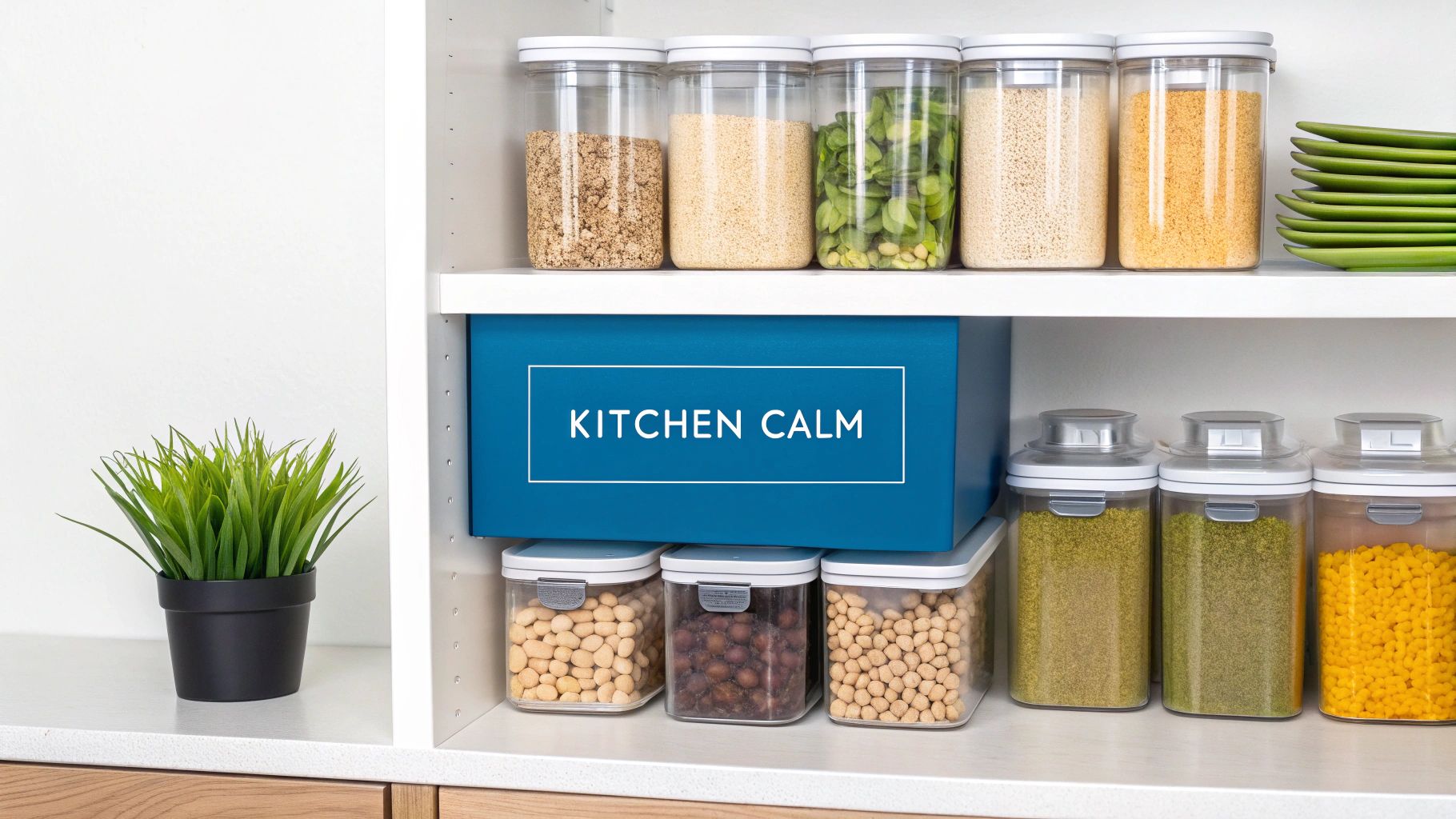
Now that the obvious trash is gone, it’s time to face the pantry. To avoid creating an overwhelming pile on your floor, pull everything out from just one shelf at a time. As you take each item out, start grouping like with like—all the pasta goes in one pile, all the canned goods in another.
This is where you’ll have those “aha!” moments, discovering duplicates you never knew you had (hello, four half-empty boxes of crackers) and items you bought with good intentions but never use. This process is a huge reason why the home organization market has surged to $13.27 billion globally—people are craving more efficient living spaces. Something as simple as a modular shelving system can increase pantry storage efficiency by an average of 35%, a game-changer in smaller kitchens. You can explore the full report on global home organization market trends to see just how big this movement is.
After sorting, give the shelf a good wipe-down and put back only the items you actually use and love.
Pro Tip: Think about your daily workflow. Keep all your baking supplies together. Create a “breakfast zone” with cereals, oats, and coffee. And if you have kids, put their snacks on a lower shelf they can reach themselves.
Tame Your Drawers and Cabinets
Let’s be honest, drawers and cabinets can quickly become black holes for mismatched utensils, random gadgets, and teetering stacks of plastic containers. The strategy here is the same: empty one drawer or cabinet completely, group similar items, and be ruthless about what gets to go back inside.
For many of us, this is where decision paralysis kicks in. What about that apple corer you used that one time? Or the huge collection of novelty mugs? This is a perfect moment to get a little help from technology. Our app, DeclutterNow, uses AI to break through that decision fatigue. Just snap a photo of an item, and the AI can help you quickly decide whether to keep, relocate, sell/donate, or toss it.
A few simple tools can also make a world of difference:
- Drawer Dividers: These are non-negotiable for utensil drawers. They stop the daily jumble and make finding a teaspoon feel like a small victory.
- Pull-Out Organizers: For those deep, dark cabinets, these are lifesavers. They bring everything from the back to the front, so you never have to get on your hands and knees to find the right pot lid again.
- Vertical Storage: Use tension rods or simple dividers to store cutting boards, baking sheets, and platters on their sides. You’ll be shocked at how much space this saves.
Reclaim Your Countertops for Good
Your countertops are prime real estate, meant for chopping vegetables and prepping meals—not for permanent storage. The goal isn’t a completely barren surface, but to ensure everything that’s out has a purpose and a place. Now that your drawers and cabinets are organized, you’ll suddenly have much more room to put things away.
Start by evicting the “countertop squatters”—those items that live there but don’t belong. The mail, the keys, the bread maker you haven’t touched in a year. Find a proper home for them elsewhere. It also helps to group small appliances, like your coffee maker and toaster, into a designated “appliance zone” to reduce the visual noise.
Finally, lock in your progress with a simple daily habit: the 10-minute kitchen reset. Before heading to bed, spend a few minutes wiping down the counters, putting stray items away, and loading the dishwasher. This tiny routine is the secret to preventing clutter from creeping back in, making sure your kitchen stays the calm, functional space you want it to be.
Turn Your Bedroom and Closets Into a Restful Retreat
Your bedroom should be your sanctuary. It’s the one place in the world where you can truly shut everything out and recharge. But let’s be honest, for most of us, it ends up being a dumping ground for laundry baskets, clothes that don’t quite fit in the closet, and all those random things that have nowhere else to live.
The end result? A space that actually adds to your stress instead of taking it away. This is particularly true for the closet—the undisputed epicenter of daily decision fatigue. Staring into a chaotic, jam-packed closet every morning trying to pull an outfit together is a classic way to feel overwhelmed before your day has even started.
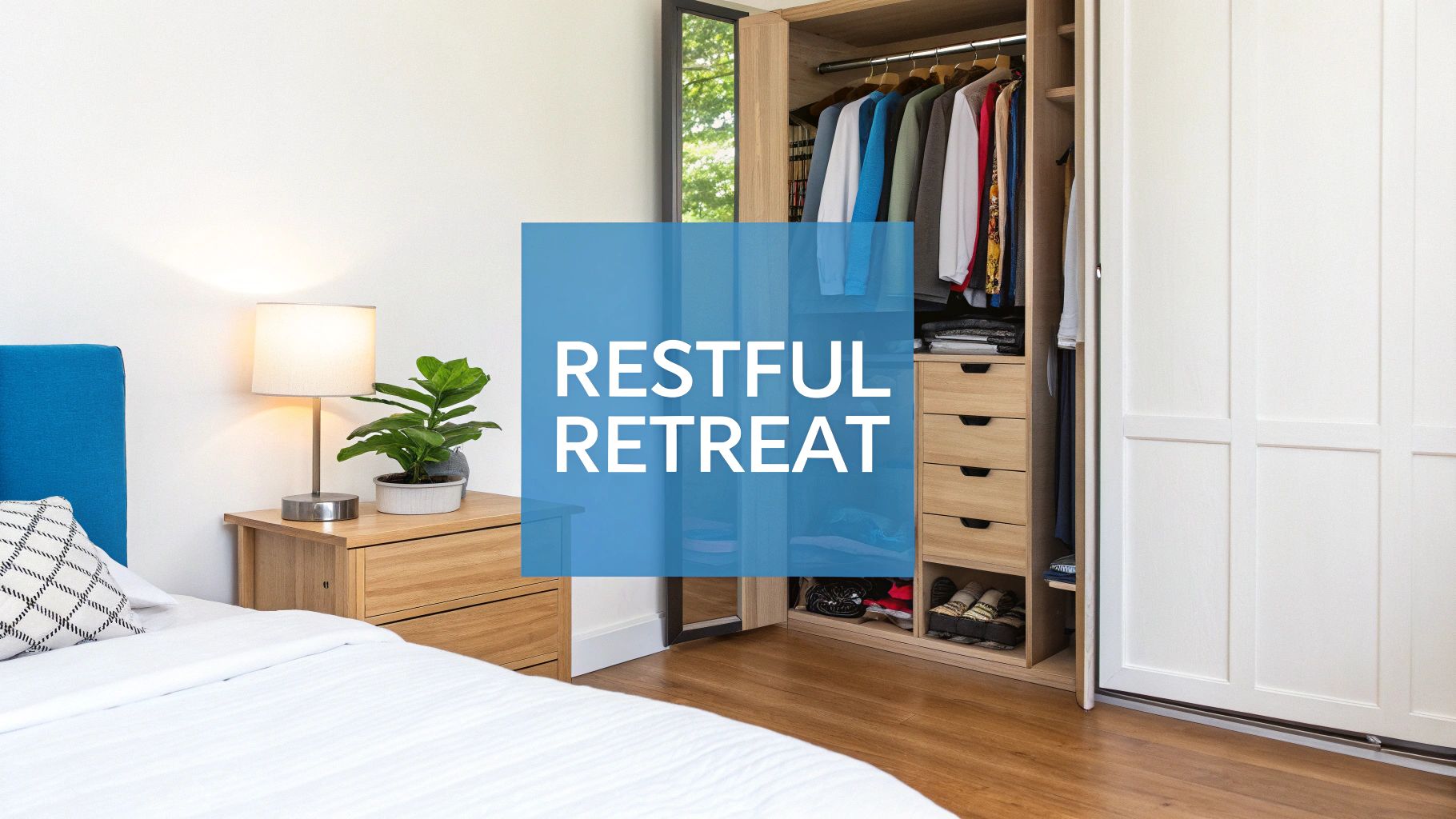
Let’s fix that. The goal here isn’t about achieving some magazine-cover version of perfection. It’s about making tangible progress toward a bedroom that actually feels calm and restorative.
Start With the Closet to Get the Biggest Win
The closet is the engine that powers bedroom clutter, so tackling it first will make the biggest and most immediate impact. But whatever you do, avoid the classic mistake of yanking everything out at once. That’s a surefire recipe for getting completely overwhelmed, giving up, and being left with a disaster zone worse than when you started.
Instead, we’re going to work in small, manageable categories. This simple trick breaks a paralyzing task into bite-sized pieces your brain can actually process.
- Do a Quick “Trash First” Sweep. Grab a garbage bag and do a quick pass for the obvious junk. Think broken hangers, old shopping bags, empty shoe boxes, and those crinkly plastic covers from the dry cleaner. This is a zero-effort warm-up that gives you a quick win without any tough decisions.
- Pick One Category. Now, choose a single type of clothing to focus on—just your t-shirts, for instance, or all your jeans. Take only those items out and pile them on your bed.
- Sort at Speed. Go through the pile and rapidly sort each item into one of three groups: “Keep,” “Go,” and “Maybe.” The key is not to overthink it. The “Keep” items go straight back into the closet. The “Go” pile is for donating or selling. The “Maybe” pile is for anything you’re genuinely unsure about.
After you’ve finished one category, step back and take a breath. You’ve already made real progress! Repeat this with another category—sweaters, dresses, shoes—when you feel ready. By focusing on one small group at a time, you build momentum without burning out.
Clear Your Surfaces for Instant Calm
With the closet underway, let’s shift our attention to the surfaces that act as clutter magnets: your nightstands and the top of your dresser. A cluttered surface directly contributes to a cluttered mind. In fact, research from Princeton University confirms that visual clutter competes for your attention, which can decrease performance and spike your stress levels.
- Your Nightstand: This prime real estate should only hold what you need right before sleep and right upon waking. A lamp, your current book, a glass of water, a phone charger. That’s about it. Everything else—old receipts, forgotten water bottles, random knick-knacks—needs to be trashed or find a proper home.
- Your Dresser Top: Treat this like a clean, calm space, not a secondary closet. If you need a spot for daily jewelry or keys, use a small, designated tray. Everything else belongs inside the drawers, out of sight.
You can clear your main surfaces in less than 15 minutes, and the psychological boost is huge. It instantly makes the entire room feel more put-together and peaceful, reinforcing all the great progress you’re making.
Get Smart With Simple Storage
You don’t need to spend a fortune on a custom closet system to get organized. A few simple, strategic tools can practically double your storage and make finding things a breeze. For a deeper dive into practical strategies, check out our complete guide on how to organize a messy room.
- Slim Velvet Hangers: These are an absolute game-changer. They take up a fraction of the space of bulky plastic or wood hangers and their grippy texture means clothes actually stay on them.
- Drawer Dividers: Stop digging through a jumbled mess of clothes. Use dividers to create neat sections for socks, underwear, and folded shirts. You’ll be amazed at how much easier it is to get ready.
- Under-Bed Storage: Don’t let that space go to waste! Low-profile bins are perfect for stashing seasonal items like bulky sweaters or extra bedding. This frees up precious real estate in your closet for the things you wear all the time.
By breaking the process down into these manageable chunks, you can finally reclaim your bedroom from the clutter and turn it back into the true retreat it’s meant to be.
Reclaim Your Living Spaces and Bathrooms
Your living room should be a place to relax, and your bathroom a space to refresh. But let’s be honest, these high-traffic areas often become magnets for daily clutter—mail on the coffee table, magazines, a collection of remote controls, and half-used products crowding the bathroom counter.
When these spaces are in a constant state of chaos, it creates a low-level hum of stress you might not even notice. It’s tough to unwind in a living room that feels more like a storage unit, and nearly impossible to feel refreshed in a bathroom where you can’t find a clear spot. Let’s build a few simple systems to keep these essential rooms feeling functional and welcoming day after day.
Taming the Living Room Chaos
The living room is a shared space, which means clutter can multiply in the blink of an eye. The real secret to keeping it under control isn’t a massive, one-time overhaul, but creating simple, intuitive systems that everyone in the family can actually stick with.
The most powerful organizing principle is simply giving everything a designated “home.” It sounds almost too basic, but it’s a game-changer.
- Remote Controls: Get a small, decorative tray or a shallow basket for the coffee table. This is now the remotes’ permanent home, and it’ll put an end to the daily couch-cushion treasure hunt.
- Mail and Papers: Set up a “landing zone” right near the entryway. A simple wall-mounted file holder or a designated tray on a console table works wonders. Just make a habit of processing it all once a week.
- Blankets and Pillows: A large woven basket tucked in a corner is an easy and surprisingly stylish solution. It makes the 10-minute evening tidy-up a simple toss-and-go task.
The whole point is to make putting things away just as easy as putting them down. When a system is obvious and requires almost no effort, it has a much better chance of sticking.
A professional organizer once said, “Store items where you use them. This will ensure that the organizational flow of the house makes sense.” This is especially true for the living room; if the book basket is next to your favorite armchair, books will magically end up back in the basket.
Creating a Spa-Like Bathroom
Bathrooms are usually small and packed with products, making them a prime candidate for what I call “clutter paralysis.” The limited space can feel impossible to organize, but that’s actually an advantage—you can often completely transform a bathroom in a single, focused session.
Your first move is a ruthless purge, starting with the medicine cabinet and that dreaded under-sink area. I always recommend the “Trash First” method to build immediate momentum and see progress fast.
- Toss Expired Products: Go through every single medication, makeup item, and skincare product. If it’s past its expiration date, it’s gone. No second-guessing allowed.
- Eliminate Duplicates: How many half-empty bottles of shampoo do you really need? Consolidate what you can, be honest about what you’ll actually use, and get rid of the rest.
- Purge “Someday” Items: That fancy face mask you bought a year ago and never touched? The hotel samples you’ve been hoarding “just in case”? It’s time to let them go.
Once you’ve cleared out the excess, you can finally organize what’s left. In a small space, smart storage is everything. Use clear, stackable bins under the sink to group similar items—one for hair products, one for cleaning supplies, and so on. Drawer dividers are also a non-negotiable for keeping makeup, cotton swabs, and other small toiletries from becoming a jumbled mess.
The final, satisfying step is reclaiming your counter space. The only things that should live on your bathroom counter are the items you use every single day, like your toothbrush and hand soap. Everything else deserves a home in a drawer or cabinet. I find that using a small tray to contain even these daily items creates a visually clean and organized look that makes a huge difference.
Getting Past Common Decluttering Roadblocks
Even with the best plan in the world, you’re going to hit a wall. It happens to everyone. The trick isn’t avoiding roadblocks, but knowing how to navigate them so you don’t lose all the great momentum you’ve built. Let’s tackle some of the most common questions that come up when you start organizing your home room by room.
I’m Completely Overwhelmed. Where Do I Even Begin?
When you feel paralyzed by the sheer amount of stuff, the answer is to think small. Really small. I call this the “Trash First” method.
Forget the entire room for a second. Your only mission is to find one tiny, contained space—a single junk drawer, the top of your nightstand, that pile of mail on the counter. Now, scan it only for obvious trash. We’re talking expired coupons, junk mail, old receipts, broken pens. Things that require zero emotional energy to toss.
That small, quick win gives you a little jolt of accomplishment. It’s just enough to break through the “clutter paralysis” and build the confidence to tackle the next small spot.
What Do I Do with Things I Feel Guilty Tossing?
Ah, the guilt pile. This is probably the biggest hurdle for most people. The secret is to change how you think about it. You aren’t just “getting rid of” an item; you’re giving it a new life and purpose. Right now, it’s just sitting in your home, unused. For someone else, it could be the exact thing they’ve been looking for.
Try using a simple four-box system: Keep, Relocate, Donate/Sell, and Trash. For those guilt-inducing items, your focus is squarely on the “Donate/Sell” box.
- Think about a specific charity that could benefit. Does your local animal shelter need old towels? Does a women’s shelter need professional clothing?
- Imagine the satisfaction of getting a little cash for it on a site like Facebook Marketplace.
- Could a friend or family member genuinely use it and be thrilled to get it?
Suddenly, you’re not just decluttering; you’re contributing or even earning a little money. This simple mental shift can make letting go so much easier.
“When your home is disorganized, you lose things. What does that cost? Time lost searching for items, money spent replacing items lost and opportunities lost not being prepared for what comes your way.” – Kathy Vines, Certified Professional Organizer
How Do I Stop My Home from Becoming a Mess Again?
Keeping your home organized isn’t about massive, weekend-long purges. It’s about building small, consistent habits that become second nature. You need to create simple systems that are almost effortless to maintain.
First, adopt a strict “one in, one out” policy. This is a non-negotiable for problem areas like clothes, books, and kids’ toys. When a new sweater comes in, an old one has to leave. This rule alone is a game-changer for preventing that slow, steady buildup of clutter.
Next, create “landing zones.” You need a designated spot right by the door for the things you bring in and out every single day—keys, mail, sunglasses, purses. When these items have an official home, they stop colonizing your kitchen counter.
Finally, try a 10-minute “reset” every evening. It’s not about deep cleaning. It’s just a quick sweep where everyone in the house puts things back where they belong. A little bit of progress every day is the real secret to keeping clutter from creeping back in.
Feeling stuck on a tough decision? DeclutterNow uses AI to break through that paralysis. Just snap a photo, and get an instant, psychology-backed recommendation to keep, relocate, sell, or trash your item. Turn overwhelm into action and see real progress today.
Try DeClutter Now free →