

If you've ever stared at a room full of boxes, feeling completely frozen and paralyzed by decisions, you know the feeling. It’s that moment when you ask, "How much would it even cost to get professional help for this?" It's a great first question on the path to finally making progress.
On average, a professional organizer will charge somewhere between $50 and $150 per hour. But that's just a starting point. The final price tag can swing quite a bit depending on where you live, the organizer’s level of experience, and just how big your project really is.
The Real Cost of Hiring a Professional Organizer
Let's be honest: those boxes that have been sitting for years aren't there because you're lazy. They're a sign of a very real phenomenon called "clutter paralysis." The mental drain of deciding what to keep, toss, or donate for every single item is immense, and it’s why so many of us simply get stuck.
Hiring a pro can feel like a lifeline, but it's a significant financial commitment. Knowing the costs upfront helps you figure out if it's the right move for you.
What Do Professional Organizers Charge?
Industry data shows that most organizers fall within that $50 to $150 per hour range. However, someone just starting out might charge as little as $25 to $45 to build their portfolio. On the other end of the spectrum, a certified expert with specialized skills—especially for challenging situations like hoarding—can command rates from $150 to $300 per hour.
To give you a clearer picture, here’s a quick breakdown of what you might expect to pay.
Professional Organizer Costs at a Glance
This table summarizes the typical pricing models and national average costs you'll encounter when looking for professional organizing services.
| Service Type | Average Hourly Rate | Common Project Cost |
|---|---|---|
| General Home Organizing | $55 – $100 / hour | $330 – $600 (for a 6-hour session) |
| New/Beginner Organizer | $25 – $45 / hour | $150 – $270 (for a 6-hour session) |
| Specialized Services | $100 – $200+ / hour | $1,200+ (for hoarding, chronic disorganization) |
| Virtual Organizing | $50 – $75 / hour | $200 – $300 (for a 4-hour consulting block) |
Keep in mind these are just averages. The total cost will always depend on the time it takes to complete your specific project.
"It's not just about the hourly rate. It's about the total investment required to see a project through. A single room can take several hours, and a whole-house project can quickly run into thousands of dollars."
Is There Another Way?
Before you commit to that expense, it's worth knowing there are other ways to turn clutter paralysis into progress. You can make huge strides on your own by starting small and building momentum. The trick is to sidestep that initial decision fatigue without the high price tag.
By using a tool like DeClutter Now, you can start with the easiest decisions first—the trash. This psychology-backed method helps you clear out a significant amount of clutter and reclaim your space, saving a professional's expensive time for only the toughest challenges that remain.
Decoding Professional Organizer Pricing Models
So, you're wondering, "how much does a professional organizer charge?" You'll quickly find out there's no single, one-size-fits-all answer. Professional organizers structure their fees in a few different ways, and understanding them is the first step to finding someone who fits both your project and your wallet.
It’s a bit like hiring a contractor to renovate your bathroom—are you paying them by the hour, for the whole finished job, or for a bundle of services? Let's break down the common models you'll encounter.
The Hourly Rate Approach
The most straightforward pricing structure is a simple hourly rate. Think of it like a taxi meter: the clock starts when they arrive, and you pay for the exact time they spend hands-on in your space. This approach is fantastic for smaller, contained tasks—like finally conquering that one chaotic closet or whipping a pantry into shape.
The flip side? For bigger, more ambiguous projects (hello, garage full of those boxes that have been sitting for years!), an hourly rate can feel a little nerve-wracking. It’s tough to guess the final bill, which can add financial stress right when you're trying to eliminate the stress of clutter.
This flowchart can help you think through which pricing model makes the most sense for your situation, based on your budget and how big the job is.
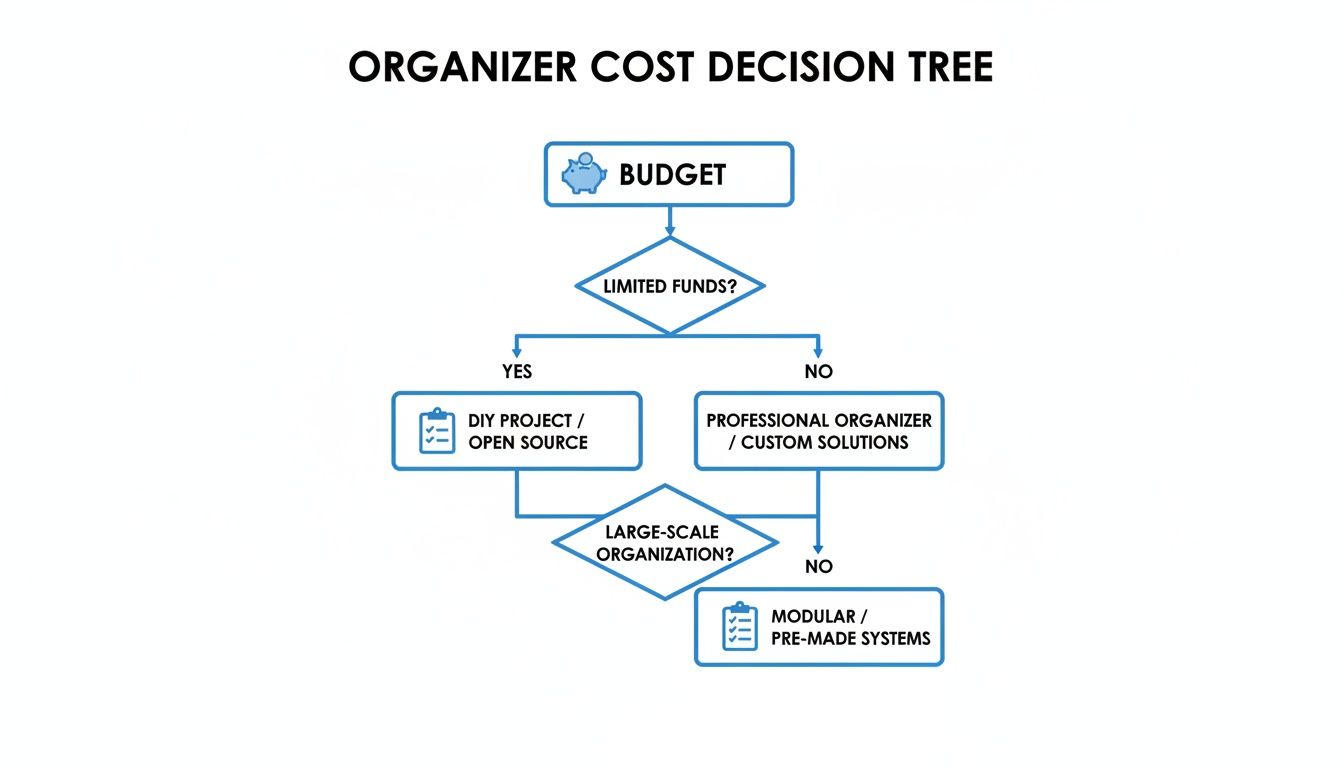
As you can see, the best route often comes down to a trade-off: do you want the flexibility of an hourly rate for a small job, or the cost certainty that comes with a bigger project fee?
The Flat-Fee Project Model
Another popular option is the flat-fee or project-based rate. This is your all-inclusive vacation package. After an initial consultation where the organizer assesses the scope of the work, they'll give you a single, fixed price to get the job done. It doesn't matter if it takes them 10 hours or 20—the price is the price.
The huge advantage here is predictability. You know exactly what you’re investing from day one, which lets you relax and focus on the results instead of watching the clock.
The only potential downside is a bit less flexibility. If you suddenly decide to add another room halfway through, it will likely require a whole new quote. This model is ideal for anyone who wants a set budget for a significant overhaul, like a complete kitchen reorganization or a top-to-bottom basement clear-out.
Package Deals for Bigger Goals
Finally, many organizers offer packages of hours. This is the "buy in bulk and save" option. You purchase a block of hours—say, 12 or 20—at a discounted rate compared to their standard hourly fee. The more hours you buy, the more you typically save per hour.
These are perfect for large-scale, multi-room projects or for clients who know they'll need ongoing support. Committing to a package not only saves you money but also helps you commit to the process, ensuring you build real, lasting momentum. For those interested in the business side of things, learning how to start an organizing business involves creating these very types of compelling service offerings.
How Organizer Packages Can Save You Money
If you’ve ever stared at a room full of boxes, feeling completely stuck, you know that just starting is the hardest part. The sheer volume of stuff—and the decisions that come with it—can be paralyzing. This is exactly where professional organizer packages come in, turning that overwhelming feeling into a clear plan of attack.

Think of it like buying in bulk at the grocery store. Packages bundle a set number of organizing hours—often in chunks of 10, 15, or 20 hours—at a lower price than you'd pay one hour at a time. The more hours you buy upfront, the more you save.
This model is built for those bigger, more daunting projects, like finally reclaiming the garage, sorting through a packed basement, or overhauling a home office. It’s a smart financial incentive to push past a quick tidy-up and truly transform the spaces that have been weighing on you.
The Psychology of Committing to Progress
Beyond the cost savings, there's a powerful psychological benefit. Packages are a fantastic antidote to what we call "clutter paralysis." By committing to a block of time, you’re creating a dedicated, scheduled container for progress. That vague goal of "someday" suddenly becomes a paid-for, on-the-calendar reality.
This structure is a game-changer for building momentum. Your first session breaks through the inertia, and knowing you have more sessions already booked keeps you from losing steam. It’s a proven way to make sure you see the project all the way through to the finish line.
Committing to a package isn't just about saving money; it's a commitment to yourself to break through the paralysis and finally make progress on those spaces that have felt stuck for so long.
Real-World Savings on Organizer Packages
The discounts you can get with a package are often pretty substantial. Many organizers structure them to reward clients who are ready to make a real change. For instance, a professional who normally charges $75 per hour might offer a six-hour block at 10% off, but a 12-hour commitment could earn you a 20% discount.
This tiered approach is pretty standard. You'll see package prices for small-to-medium projects ranging anywhere from $150 to $2,000, with bigger discounts for longer commitments. One organizer might charge $225 for a single three-hour session, but their 12-hour package could be $725. That simple choice brings your hourly rate down by almost $15. You can discover more insights about these organizing fees to see how different package structures deliver value.
To see what this looks like in practice, here are a few real-world examples:
- A 6-Hour Package might cost $399, saving you $51 over the hourly rate.
- A 12-Hour Package could be $699, saving you a cool $201.
- An 18-Hour Package at $999 puts a hefty $351 back in your pocket.
Let's break down how those savings add up in a typical scenario.
Sample Organizer Package Savings
Here’s a quick look at how committing to more hours upfront can dramatically reduce your per-hour cost, based on a standard hourly rate of $75.
| Hours Booked | Cost Per Hour (Standard) | Package Price | Total Savings |
|---|---|---|---|
| 6 | $75 | $399 | $51 |
| 12 | $75 | $699 | $201 |
| 18 | $75 | $999 | $351 |
As you can see, the savings grow significantly with the size of the package. By choosing the right one, you're not just making a smart financial move—you’re setting yourself up for the deep satisfaction of a completely transformed space.
What Goes Into an Organizer's Rate?
So, why does one professional organizer quote $50 an hour while another, just a town over, asks for $150? The price isn’t just pulled out of thin air. Several key factors directly influence the final cost, and understanding them is the first step to finding the right fit for both your budget and your project.
Hiring an organizer is a lot like hiring any other skilled professional—you're investing in their expertise. A seasoned pro with a decade of experience and a wall full of certifications will naturally command a higher rate than someone just starting out. Their price reflects a proven track record of solving complex clutter challenges, and doing it efficiently.
Experience and Specialization
An organizer's background is one of the biggest drivers of their price tag. Those with specialized training, like certifications in chronic disorganization from the Institute for Challenging Disorganization or deep experience with hoarding situations, offer a level of expertise that justifies a premium.
The data backs this up. An organizer with less than a year of experience might charge around $25 per hour, while someone with over a decade in the field could easily bill $85 per hour or more. You can dive deeper into professional organizer hourly rates to see how experience shapes pricing across the industry. This difference isn't just about time on the job; it reflects a much deeper understanding of the psychology behind clutter.
It’s not just about tidying up; it's about creating sustainable systems. A truly experienced organizer saves you money in the long run by building solutions that prevent you from needing to hire them again in six months.
Geographic Location
Where you live matters. A lot. An organizer working in a high-cost-of-living area like New York City or San Francisco has higher overhead, and their rates will naturally be higher than those of an organizer in a smaller, rural community.
Think of it this way: the general cost of doing business—from insurance to fuel to marketing—gets baked into their pricing. It’s simple economics. Also, don't forget to ask about travel fees. Many organizers include a certain mileage radius in their standard fee but will add a surcharge for clients located further out to cover their time and expenses.
Project Scope and Complexity
Finally, the nature of the project itself plays a massive role. Let’s be honest: organizing a small pantry is a completely different beast than tackling a basement that hasn’t seen the light of day since the 90s.
The scope and complexity will directly impact the time, strategy, and physical effort required, which all affects the price.
- Simple Projects: Single rooms like closets, home offices, or pantries are usually on the lower end of the cost spectrum.
- Complex Projects: Whole-house decluttering, garage clear-outs, or prepping for a major move are much bigger undertakings and will cost more.
- Specialized Situations: Projects involving hoarding tendencies, extreme clutter, or biohazards demand specific training, safety protocols, and a different psychological approach. These situations rightly sit at the highest end of the pricing scale, often hitting $150-$300+ per hour.
Smart Ways to Reduce Your Organizer Bill
Hiring a professional organizer is a serious investment in your home and your peace of mind, but that doesn't mean it has to drain your bank account. With a bit of smart prep work, you can dramatically cut down the final cost. The key is making sure every single minute you're paying for is spent on the stuff you truly need an expert for.

Think of it this way: you wouldn't hire a professional painter and then pay them their premium hourly rate to move your couch and lay down drop cloths. It’s the same exact logic here. Paying an organizer $75 or $100 an hour to watch you throw away empty Amazon boxes is just not a good use of your money.
The secret is to get the easy decisions out of the way before they even walk through your door.
Start with Trash to Build Momentum
This is where our "Trash First" methodology becomes your best friend for saving cash. For most people, the biggest roadblock isn't the tough, emotional decisions—it's that initial "clutter paralysis" that keeps you from starting at all. By zeroing in on the obvious junk first, you can break through that mental logjam.
Before your organizer arrives, just do one quick sweep of the room. Your only goal? Find and bag up anything that is undeniably trash.
We’re talking about things like:
- Expired food in the pantry or old medications
- Broken electronics or toys you know you'll never fix
- Piles of junk mail, old receipts, and flyers
- Empty product boxes and packaging
This one step can clear a shocking amount of space and visual clutter. It lets your organizer get straight to the work you hired them for: the strategic sorting and system-building that will actually help you.
By clearing the easy stuff first, you're not just tidying up; you're buying back your organizer's expensive time. Every bag of trash you remove on your own is money saved.
Use a Tool to Make Pre-Work Easy
That initial sorting phase—staring at a mountain of stuff—is where most people get stuck. Decision fatigue is real, and it sets in fast. This is where an app like DeClutterNow can give you a huge advantage by helping you score those quick, easy wins. Just snap a few photos, and the AI helps break through decision fatigue by suggesting what to do with each item.
This helps you sort everything into clear piles—trash, donations, and things to sell—long before your pro shows up. This pre-work means they can jump right into their zone of genius: creating functional, lasting systems for the things you've already decided to keep.
This simple strategy lets you get the same (or even better) results in fewer hours. And for the items you decide to sell, you can find valuable tips on how to price items for resale to get the most money back. Taking this proactive approach turns what could be a huge expense into a focused, manageable investment.
Make Real Progress Without the Hefty Price Tag
Let's be honest. Learning about the costs of a professional organizer can bring you right back to the problem that started it all: clutter paralysis. You know you need help, but seeing those high price tags can feel just as overwhelming as staring at a room full of boxes you haven't touched in years.
Our founder knows that feeling intimately. For a long time, she had boxes from a move sitting completely untouched. Every single time she looked at them, a wave of exhaustion washed over her. It wasn't because she was lazy; it was pure decision fatigue. The traditional organizing methods just weren't cutting it because they jumped straight to the hard questions.
Why Momentum Beats Perfection Every Time
She realized the answer wasn't necessarily to hire someone else. The real breakthrough came from finding a way to shatter that initial paralysis and build momentum. This led to a new, psychology-backed approach that flips the whole process on its head. We don't start with 'does this spark joy?' – we start with 'is this actually trash?'
This "Trash First" methodology is all about creating quick wins. Each simple decision—tossing an old receipt, a takeout menu, or a broken gadget—gives you a little dopamine hit. That positive feedback is the fuel that keeps you going, turning a mountain of a task into a series of small, manageable steps. If you're looking for more strategies like this, our guide with decluttering tips for beginners is a great place to start.
You don't need a huge budget to make a huge impact. You just need the right starting point to turn overwhelm into action and finally make progress.
Think of this as the empowering, budget-friendly alternative to hiring a pro. It helps you take back your space on your own terms and timeline. It proves that you have what it takes to create a calmer home all by yourself. After all, the goal isn't perfection; it's simply progress.
Frequently Asked Questions
When you're thinking about hiring a professional organizer, a lot of questions pop up, especially about how it all works and what it's going to cost. Let's get right to it and answer some of the most common ones we hear.
How Long Does It Take to Organize a Room?
This is the classic "how long is a piece of string?" question, but I can give you some solid benchmarks. A small, relatively simple space like a pantry or a front hall closet can often be knocked out in 3-5 hours.
On the other hand, a larger room with a lot more complexity—think a jam-packed garage or a home office buried in paperwork—is a bigger project. That could easily take 8-12 hours or even more, usually broken up into a few sessions so you don't get completely burned out from making decisions.
Do Organizers Help You Throw Things Away?
Yes, but maybe not in the way you think. A great organizer is more like a supportive, neutral coach. They will never force you to get rid of anything.
Instead, they'll ask the right questions to help you figure out for yourself what an item truly means to you and if it deserves a place in your home. Their real job is to help you feel confident in letting go of what's no longer serving you.
Are Travel Fees Included in the Price?
This really depends on the organizer's business policy. Many will include travel within a certain distance—say, a 30-mile radius—as part of their standard rate. If you live further out, you should probably expect a travel fee. Just make sure to ask about this during your first conversation so there are no surprises on the final invoice.
The most important question to ask yourself is: "What is the cost of not getting organized?" The investment in a pro, or a tool to get you started, is often small compared to the daily cost of stress and overwhelm.
Is Tipping a Professional Organizer Expected?
Tipping isn't a standard expectation in this field. Most professional organizers are small business owners who set their prices to cover their time and expertise.
That said, if you feel your organizer did an absolutely amazing job and you're just ecstatic with the outcome, a tip is a very kind and appreciated gesture.
Feeling that "clutter paralysis" but not quite ready to commit to the cost of a professional? DeClutter Now is a psychology-backed tool designed to help you push through that decision fatigue all on your own. You'll start with the easiest choices, build momentum, and see real progress without the hefty price tag.