

Welcome home. The first thing you see isn’t a calm, inviting space. It’s 'the pile'—a jumble of shoes, mail, keys, and coats that seems to grow daily. It’s a common sight, and it’s not because you’re lazy or messy. It’s a classic case of 'clutter paralysis,' where the sheer number of small decisions ('Where does this go?' 'Do I need this?' 'Should I put this away now?') becomes so overwhelming that it’s easier to do nothing at all. That pile is the physical result of decision fatigue.
Those boxes that have been sitting in your garage for years probably started with a similar pile. Traditional organization methods often fail because they ask you to make too many hard choices at once, demanding perfection from the start. But what if you could bypass the paralysis entirely? This guide is different. We're going to explore 10 powerful foyer organization ideas designed specifically to build momentum, not achieve an unrealistic, overnight transformation.
Forget overhauling everything at once. This listicle provides actionable, psychology-backed steps to reclaim your entryway, one quick win at a time. Each idea is crafted to reduce the number of daily decisions you have to make, creating systems that work for you, not against you. We will cover everything from smart storage solutions and layout tips to family coordination strategies. It's time to turn that feeling of overwhelm into real, visible action and make your entryway a welcoming, functional space.
1. Entryway Shoe Storage & Bench Systems
The mountain of footwear by the front door is one of the most common sources of clutter paralysis. An integrated entryway shoe storage and bench system is one of the most effective foyer organization ideas because it tackles two problems at once: it corrals shoes and provides a practical spot to sit while putting them on or taking them off. This dual-functionality is a cornerstone of an efficient entryway, preventing pile-ups and making daily routines smoother for everyone in the household.
These systems are not one-size-fits-all. They range from sleek, modern benches with hidden compartments, like Pottery Barn's Leather Storage Bench, to more utilitarian solutions like IKEA's TJUSIG bench, which features open slats for easy access. The key is to transform a high-traffic drop-zone into a structured, functional, and welcoming space.
Actionable Tips for Implementation
- Conduct a Shoe Audit First: Before you buy anything, take a quick photo of every pair of shoes currently living in your entryway. This visual inventory helps you understand the actual capacity you need, preventing you from buying a unit that’s too small (or too large).
- Prioritize High-Frequency Footwear: Reserve the most accessible spots in your new bench or cabinet for the shoes your family wears daily or weekly. Seasonal or special-occasion footwear should be stored elsewhere, like a closet or under-bed container, to free up prime real estate.
- Map Your Hidden Storage: For benches with hidden compartments, the "out of sight, out of mind" problem is real. Create a simple inventory list (e.g., "Dad's running shoes, kids' rain boots") and tape it to the inside of the lid. This visual cue saves you from rummaging through the entire compartment to find what you need.
- Schedule Seasonal Swaps: Set a recurring calendar reminder every three to four months to audit your shoe storage. This is the perfect time to relocate off-season pairs and identify any shoes that are worn-out, outgrown, or no longer used, clearing space for the season ahead.
By strategically combining seating and storage, you create a system that naturally encourages tidiness. For more guidance on establishing zones and routines, explore our comprehensive guide on organizing an entryway.
2. Coat Closet Organization with Zones
The front closet often becomes a black hole where jackets, bags, and miscellaneous items disappear, only to be rediscovered in a tangled mess. Implementing a zoned system transforms this chaotic space into a highly efficient, grab-and-go station. This is one of the most impactful foyer organization ideas because it assigns a specific home for every item and for every person, drastically reducing morning chaos and making it simple to find what you need instantly.
This approach, popularized by professional organizers like The Home Edit, moves beyond a single, overstuffed rod. It uses strategic division to create clarity. You can find modular solutions like Rubbermaid or Closetmaid kits at stores like The Home Depot, or invest in custom installations from specialists like California Closets. The goal is to maximize vertical space and give every coat, bag, and accessory a designated, visible spot. For an all-in-one solution that combines various organizational elements like coat hooks, shoe storage, and a bench, consider options such as highly functional and stylish storage hall trees.
Actionable Tips for Implementation
- Assign Zones by Person or Purpose: Designate a specific vertical section of the closet for each family member. Within each person's zone, you can further categorize by item type: heavy coats on top, light jackets below, and bags on hooks. This creates clear ownership and prevents items from migrating.
- Install Adjustable, Tiered Rods: Maximize vertical space by installing a second, lower rod. This is perfect for shorter items like kids' jackets or blazers, effectively doubling your hanging capacity. Ensure the rods are adjustable to accommodate different heights and changing needs.
- Start with Trash, Then Sort: Before organizing, pull everything out. Start with the easiest decisions: find any obvious trash (old receipts, broken hangers). This builds momentum. Then, ask for each coat: "Have I worn this in the last year? Does it still fit?" This declutter prevents you from organizing items you no longer need.
- Implement a "One In, One Out" Rule: Once organized, maintain order by adopting a simple rule. For every new coat or jacket that comes into the closet, one must be removed. This prevents the slow creep of clutter and keeps the system from becoming overstuffed again.
By creating a structured, zoned closet, you eliminate the daily scramble for outerwear. To dive deeper into designing a system that works for your space, explore our guide on choosing the right closet organization system.
3. Wall-Mounted Coat Racks and Peg Systems
When floor space is at a premium, one of the most effective foyer organization ideas is to look up. Wall-mounted coat racks and peg systems utilize vertical space to hang coats, bags, and accessories, lifting clutter off the ground and creating an open, airy feel. This approach moves beyond a single, bulky coat tree, offering a streamlined and often more customizable solution to manage the daily influx of outerwear and bags.
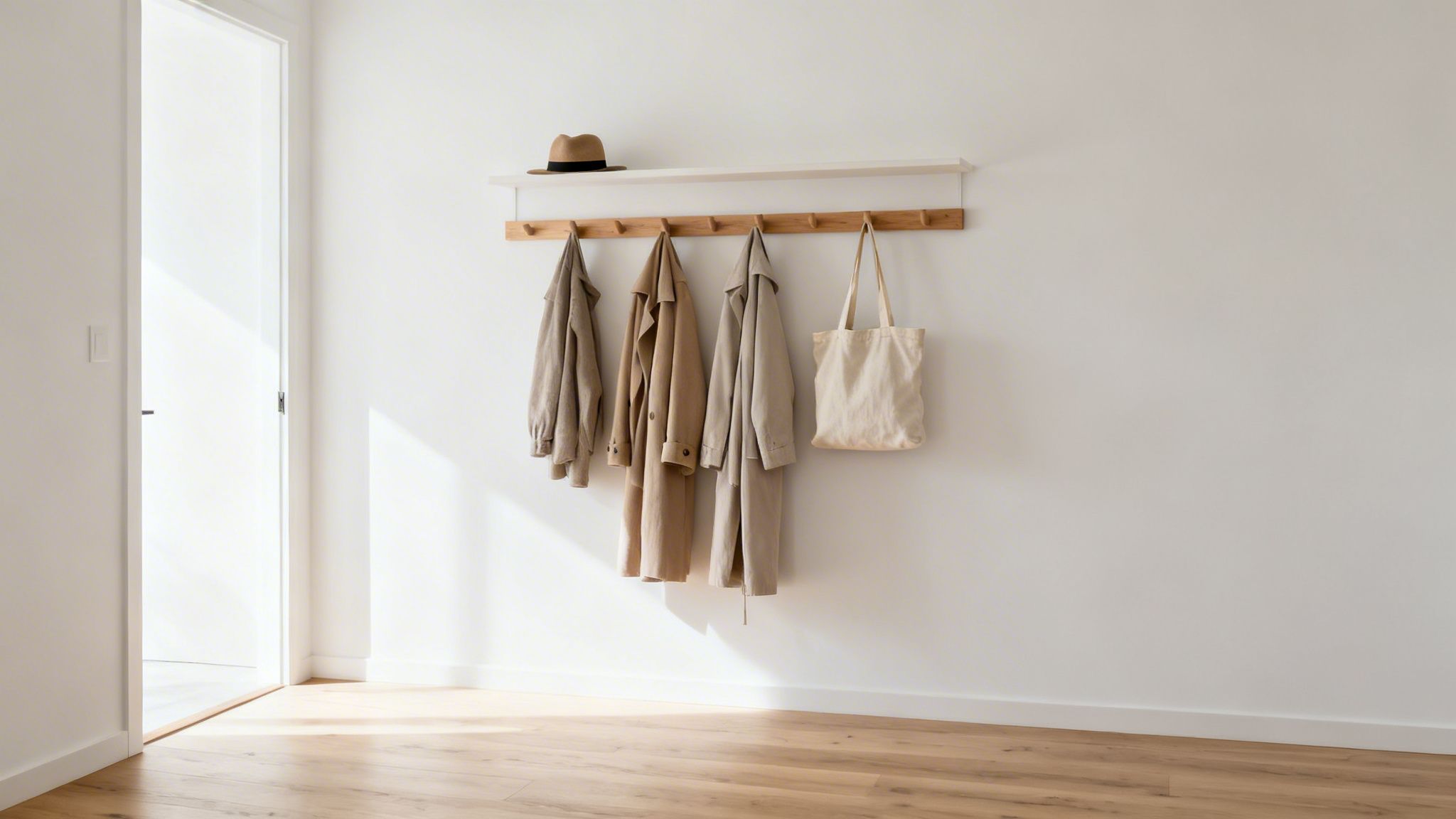
Popularized by the minimalist and functional principles of Scandinavian design, these systems range from traditional wooden peg rails, like those from Schoolhouse Electric, to modern modular boards, such as Muuto's Dots. The goal is to provide a dedicated "home" for every item that enters the door, transforming a blank wall into a hub of intentional, visible storage that prevents pile-ups on chairs and floors.
Actionable Tips for Implementation
- Audit Before Installing: Before you drill any holes, lay out all the coats, bags, and scarves that typically land in your foyer. Photographing the collection provides a clear visual of what you need to store, helping you choose a rack with the right number of hooks for currently used items only.
- Limit Hooks to Prevent Overcrowding: A key to maintaining this system is avoiding a "more is more" mindset. Assign a specific number of hooks (e.g., 2-3) to each family member for their most-used items. This built-in limit forces regular clear-outs and prevents the rack from becoming a catch-all for forgotten jackets.
- Place It Strategically: Install the rack or peg system at an accessible height for everyone who will use it, including children. Placing it in a direct line of sight from the door serves as a visual reminder to hang things up immediately, short-circuiting the habit of dropping items on the nearest surface.
- Implement a Seasonal Sort: Don’t let your wall rack become a museum of past seasons. Use a simple sorting method: hang only current-season coats. Relocate off-season items to a closet, donate unused jackets, and store sentimental pieces. This keeps your entryway functional and relevant year-round.
4. Entryway Console Table with Drawers and Baskets
For entryways that lack a full closet or are too narrow for bulky furniture, a console table offers a perfect blend of style and function. This is one of the most versatile foyer organization ideas because it creates an immediate "drop zone" for daily essentials like keys and mail, preventing them from migrating further into your home. A console table with integrated drawers and open space for baskets underneath provides a multi-layered system for both concealed and accessible storage.
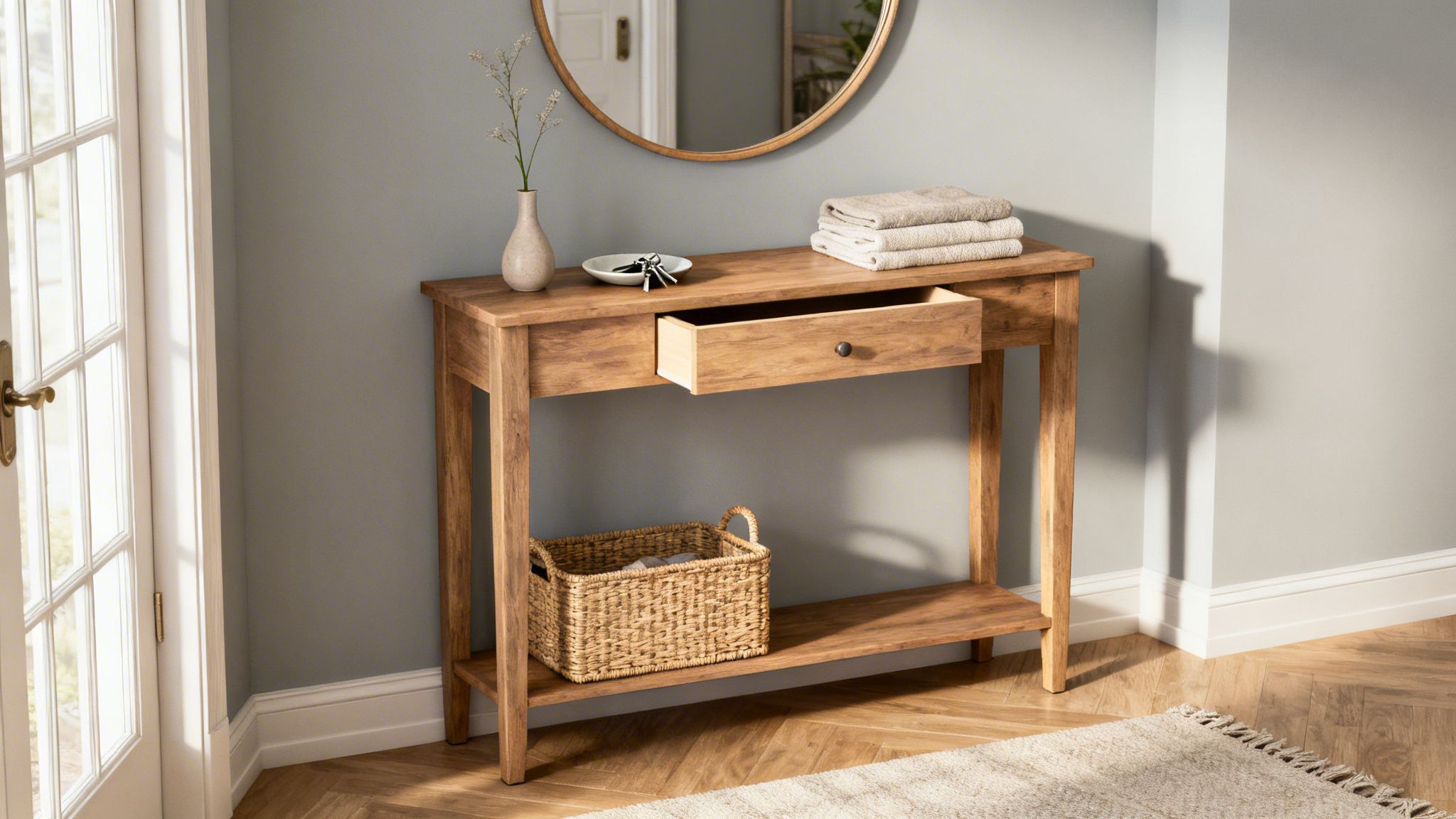
This solution elevates the foyer from a simple passageway to a deliberate, organized space. Options range from West Elm's Mid-Century Console with sleek, hidden drawers to more rustic farmhouse styles from Target's Threshold collection that pair well with woven baskets. When considering your options, remember that you can find unique pieces at thrift stores or flea markets; learning how to upcycle furniture with easy DIY tips can transform an old find into a custom piece that perfectly fits your space and budget. The key is to select a table that provides just enough surface area for intentional decor while maximizing the hidden storage potential below.
Actionable Tips for Implementation
- Designate Drawer Zones: Use small, adjustable dividers inside the drawers to create specific homes for keys, wallets, sunglasses, and stamps. This prevents the drawer from becoming a chaotic junk drawer and turns it into a high-efficiency command center.
- Use the Top Surface with Intention: Limit the items on the console's surface to a maximum of three to five essential or decorative pieces. A small tray for keys, a decorative bowl for mail, and a single lamp or plant are enough. A cluttered surface signals that it's okay to add more, leading to pile-ups.
- Label Your Baskets: Assign a clear purpose to each basket stored under the console. Use simple, attractive labels for categories like "Gloves & Scarves," "Dog Leashes," or "Outgoing Mail." This system ensures everyone in the household knows exactly where to find and put away items.
- Schedule a Weekly Reset: Dedicate five minutes every Sunday evening to completely clear the console table's surface and sort through any accumulated items. This quick routine prevents the "drop zone" from becoming a permanent clutter hotspot and resets your foyer for the week ahead.
5. Entryway Mail and Document Organizer Systems
The front door is the entry point for more than just people; it’s where the daily deluge of mail, flyers, and school papers begins its march across your home. Without a dedicated system, this paper pile-up quickly transforms a clean entryway into a chaotic mess of envelopes and catalogs, leading to clutter paralysis. An entryway mail and document organizer is one of the most crucial foyer organization ideas because it establishes an immediate processing center, stopping paper clutter before it even has a chance to spread.
These systems create a non-negotiable first stop for all incoming paperwork, ensuring nothing gets misplaced. Solutions range from wall-mounted mail sorters with labeled slots, like the OrgaNice Hanging Mail Organizer, to minimalist countertop stands like Yamazaki's Tower mail holder. The goal is to build a quick, reflexive habit: walk in, sort mail, and move on. This simple routine prevents stacks from forming on kitchen counters and dining tables, containing the chaos to a single, manageable zone.
Actionable Tips for Implementation
- Establish Action-Based Slots: Don't just label slots "Mail." Create categories that demand an action: Urgent/Bills, To File, Personal, and Trash/Recycle. This turns your sorter from passive storage into an active processing station, breaking through the decision fatigue of a single, mixed pile.
- Pair Your Sorter with a Trash Can: Place a small trash or recycling bin directly below or next to your mail organizer. By removing any friction, you make it just as easy to discard junk mail as it is to keep it. This immediate disposal is a quick win that builds momentum.
- Schedule a Weekly "Paper Purge": Set a recurring 15-minute appointment on your calendar each week to fully process everything in the organizer. Pay the bills, file the documents, and get rid of what's left. This routine prevents the sorting station itself from becoming a new source of long-term clutter.
- Go Digital at the Door: For important documents you need to keep, use your phone to scan and save them to a digital folder (like Google Drive or Evernote) immediately. Once digitized, you can shred the physical copy, drastically reducing the amount of paper you need to store long-term.
6. Umbrella Stands and Wet Item Storage
A dripping umbrella propped against a wall is a recipe for water damage, slick floors, and a general sense of disarray. Implementing a dedicated spot for wet items is one of the most practical foyer organization ideas, especially in rainy climates. This solution contains water and dirt at the source, protecting your floors and preventing a wet mess from being tracked further into your home. It turns an afterthought into a deliberate, functional system.
These storage solutions range from purely utilitarian to statement pieces. You might opt for a slim, minimalist design like Yamazaki's Tower umbrella stand, which fits neatly into tight corners, or a more decorative ceramic piece from Schoolhouse Electric that adds a touch of style. The goal is to provide a designated home for wet gear, ensuring it’s contained, accessible, and ready for the next downpour.
Actionable Tips for Implementation
- Conduct an Umbrella Audit: Gather every umbrella in your home. Take a quick photo to assess your collection, which often reveals duplicates or broken items you’ve forgotten about. This simple step helps you identify what to discard or donate, preventing an overcrowded stand from becoming a new source of clutter.
- Establish a "One In, One Out" Rule: To maintain order, limit the number of umbrellas per person. A good rule of thumb is one primary umbrella and perhaps one compact travel umbrella per family member. If a new one comes in, an old one must go. This prevents the slow accumulation that leads to clutter paralysis.
- Tag Umbrellas for Easy Identification: In a busy household, umbrellas can easily get mixed up. Use small, color-coded tags, keychains, or even a simple piece of colored tape on the handle to assign each umbrella to a specific person. This small effort saves time and prevents arguments on hectic mornings.
- Pair with a Boot Tray for a Complete System: An umbrella stand handles one part of the problem. For comprehensive wet-weather management, place it next to a durable, low-profile boot tray. This creates a complete "wet zone" where soggy shoes and dripping umbrellas can dry without damaging your flooring or creating a slipping hazard.
7. Key and Small Item Organizers with Charging Stations
The daily scramble for keys, wallets, and a fully charged phone is a modern source of entryway chaos. A key and small item organizer with an integrated charging station is one of the most effective foyer organization ideas because it centralizes these essential daily items. By creating a dedicated "docking station" right by the door, you eliminate cluttered surfaces, tangled cables, and the last-minute panic of searching for a low-battery device.
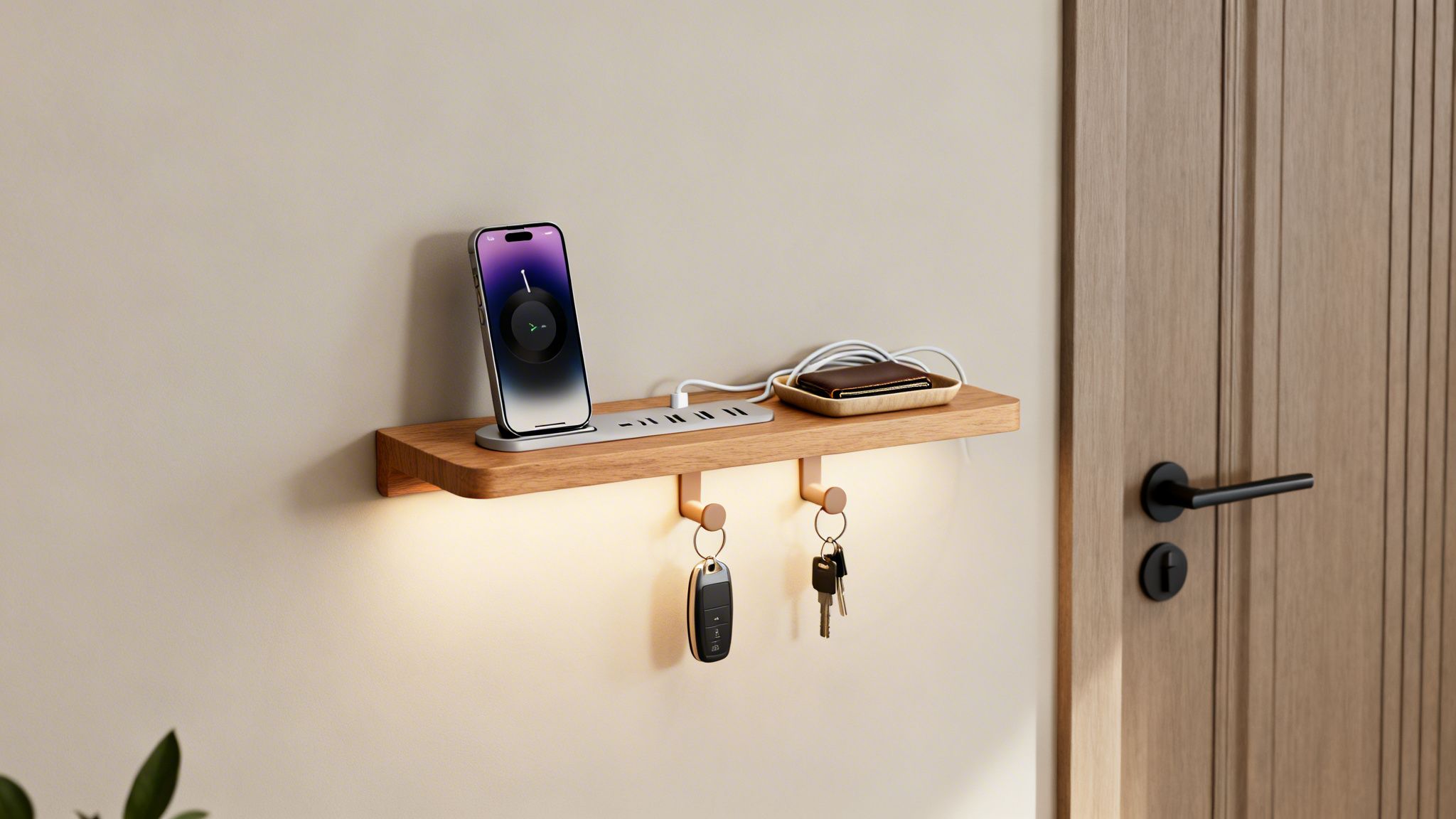
These tech-savvy organizers are designed for modern life, merging form and function. Solutions range from minimalist, wall-mounted shelves like the Hub by Yamazaki, which combines key hooks with a phone rest, to custom handmade options on Etsy that can be tailored to your family’s specific needs. The goal is to establish a simple, repeatable habit: walk in, hang keys, and dock your phone, turning a point of friction into a seamless part of your daily routine.
Actionable Tips for Implementation
- Establish a "Dock and Drop" Ritual: The moment you walk in the door, make it a non-negotiable habit to place your keys on their designated hook and your phone on its charger. This muscle memory is crucial for preventing these items from migrating to the kitchen counter or coffee table.
- Assign and Label Hooks: To prevent mix-ups in a busy household, assign a specific hook to each family member for their keys and devices. Use small labels or different colored hooks to make it clear where everything belongs. This simple system reduces confusion and encourages accountability.
- Manage Cable Clutter: Use short charging cables (6 inches or 1 foot) or a multi-device charging hub to keep wires tidy. Wrap any excess cable length with a small Velcro tie. This prevents a "cable spaghetti" situation that can make the entire organizer look messy.
- Audit the Catch-All Tray: If your organizer includes a tray or small shelf, schedule a quick, two-minute audit every Sunday evening. This is a common spot where pocket clutter like receipts, loose change, and mail can accumulate. Purge what you don't need to keep the space functional and ready for the week ahead.
8. Modular Entryway Storage Cubes and Shelving Systems
When your foyer has awkward dimensions or your storage needs fluctuate with the seasons, a rigid, one-size-fits-all solution can feel limiting. Modular entryway storage cubes and shelving systems offer the ultimate in flexibility, allowing you to create a completely custom organization hub. This approach is one of the most adaptable foyer organization ideas because you can stack, rearrange, and expand the components to perfectly fit your space and your life.
These systems, popularized by brands like IKEA with their iconic KALLAX series, empower you to design a solution that works for you, not against you. Whether you need a low-profile bench, a tall vertical tower for a narrow corner, or an asymmetrical arrangement to accommodate specific items, modular units can be configured to meet the demand. They transform potential dead space into a structured, high-functioning zone for shoes, bags, mail, and more.
Actionable Tips for Implementation
- Map Your Configuration: Before buying, use painter's tape on the floor and wall to outline the dimensions of the modular cubes. This simple trick helps you visualize the scale and flow of the unit in your actual space, preventing costly measurement mistakes.
- Assign Cubes to People or Categories: Create a system of accountability by dedicating specific cubes to each family member for their shoes and bags. Alternatively, assign them by category: one for hats and gloves, one for mail, and one for reusable shopping totes.
- Use Bins to Conceal Clutter: Open cubbies can look messy fast. Use stylish woven baskets or labeled fabric bins to corral smaller, disparate items like keys, sunglasses, and pet accessories. This creates a clean, uniform look while keeping essentials accessible.
- Anchor for Safety: Freestanding modular units, especially tall ones, can pose a tipping hazard in homes with children or pets. Always use the included anti-tip hardware to securely anchor the system to the wall for peace of mind.
Modular systems are particularly effective for renters or anyone who anticipates moving, as they can be reconfigured to fit a new space. For more tips on maximizing small or challenging layouts, check out these small apartment organization ideas.
9. Labeled Bin and Basket Systems with Seasonal Rotation
An entryway can quickly become a dumping ground for items from every season at once: a stray winter mitten in July, a sun hat in December. This is where a labeled bin and basket system becomes one of the most powerful foyer organization ideas. By dedicating specific, clearly marked containers for different categories, you create a systematic way to manage seasonal items, ensuring that only relevant accessories are taking up valuable space at any given time.
This approach transforms chaos into a curated, functional system. It can be as simple as woven seagrass baskets from Wayfair with rustic tags for scarves and gloves, or as robust as a wall of IKEA's BESTÅ cubes filled with labeled bins for each family member. The goal is to make the "seasonal swap" a simple, predictable routine rather than a massive, overwhelming task, keeping the foyer functional and visually calm year-round.
Actionable Tips for Implementation
- Color-Code by Season: Assign a specific color label or bin color to each season (e.g., light blue for winter, green for spring, yellow for summer, orange for fall). This visual shortcut makes identifying and rotating the correct bins fast and intuitive, even for kids.
- Create a Digital Inventory: Before sealing a bin, snap a quick photo of its contents. Store these photos in a dedicated album on your phone or a cloud service, naming each photo after the bin's label (e.g., "Winter Hats & Scarves"). This visual reference is faster than reading a list when you're searching for a specific item.
- Establish a Rotation Schedule: Set recurring calendar appointments twice a year (e.g., April 1st and October 1st) to perform your seasonal swap. Treating it like any other important appointment ensures it actually gets done, preventing winter gear from lingering until mid-summer.
- Limit to One Bin Per Person, Per Season: To prevent the storage area from becoming as cluttered as the foyer once was, set a firm limit. For example, each family member gets one designated bin for their off-season accessories. If items don't fit, it forces a decision about what to keep, donate, or sell, preventing accumulation.
By systematizing your seasonal items, you stop the endless cycle of clutter and retrieval. For help deciding which items are worth keeping and which are ready to sell, DeClutter Now can help analyze your photos and suggest what has resale value.
10. Door-Back and Over-the-Door Organizers
When floor and wall space are at a premium, one of the most overlooked foyer organization ideas is to utilize the vertical real estate on the back of your entryway door. This clever strategy transforms an otherwise unused surface into a powerhouse of storage without taking up a single square inch of your floor. It’s a renter-friendly, budget-conscious solution that can instantly relieve pressure from an overflowing entryway, especially in apartments or homes with small foyers.
These organizers are incredibly versatile, ranging from simple metal hook racks like Yamazaki’s minimalist designs to multi-pocket shoe holders like those from Simple Houseware. They are perfect for corralling lightweight, frequently used items such as shoes, scarves, reusable shopping bags, and pet leashes. By moving these items off the floor or console table and into a designated spot, you create an immediate sense of order and make your daily grab-and-go routine significantly more efficient.
Actionable Tips for Implementation
- Measure Twice, Buy Once: Before purchasing an over-the-door organizer, measure your door's width and thickness, as well as the clearance between the top of the door and the doorframe. This ensures a snug, secure fit that won't impede the door’s ability to close properly.
- Assign Pockets with Purpose: Use clear pocket organizers to create a visual command center. Dedicate specific pockets to individual items: one for sunglasses, another for mail-to-go, and a few for each family member’s hats and gloves. The transparency prevents items from getting lost and encourages everyone to put things back where they belong.
- Respect the Weight Limits: These organizers are designed for lighter-weight accessories, not heavy winter coats or bulky backpacks. Always check the manufacturer's weight capacity to prevent damage to the organizer or your door. For heavier items, a wall-mounted hook system is a better choice.
- Conduct a "Worthy of a Pocket" Audit: Before hanging the organizer, lay out everything you plan to store in it. Take a quick photo of the pile. This simple step forces you to confront each item and decide if it truly deserves prime, accessible storage. It’s a perfect micro-decluttering moment to weed out what you no longer need.
Foyer Organization — 10-Item Comparison
| Item | Implementation Complexity 🔄 | Resource Requirements ⚡ | Expected Outcomes 📊 ⭐ | Ideal Use Cases 💡 | Key Advantages ⭐ |
|---|---|---|---|---|---|
| Entryway Shoe Storage & Bench Systems | 🔄 Moderate — assembly, possible anchoring | ⚡ Moderate space & cost; periodic maintenance | 📊 High clutter reduction; seating + storage; ⭐⭐⭐⭐ | 💡 Families or homes with foyer space needing seating | ⭐ Combines seating and hidden storage; accessible shoes |
| Coat Closet Organization with Zones | 🔄 High — custom rods, labels, installation | ⚡ Closet depth/width, hardware, time to sort | 📊 Very high visibility & order; reduces conflict; ⭐⭐⭐⭐⭐ | 💡 Families/shared households with many coats | ⭐ Maximizes vertical space; clear ownership; orderly flow |
| Wall-Mounted Coat Racks and Peg Systems | 🔄 Low — simple mount or adhesive option | ⚡ Minimal wall space, low cost, fast install | 📊 Good visibility and quick access; ⭐⭐⭐ | 💡 Small foyers, renters, minimalist interiors | ⭐ Space-efficient, inexpensive, renter-friendly |
| Entryway Console Table with Drawers and Baskets | 🔄 Low — minimal assembly/placement | ⚡ Narrow floor footprint, low–moderate cost | 📊 Better landing-zone organization; hidden small items; ⭐⭐⭐ | 💡 Narrow foyers needing a key/mail spot | ⭐ Attractive focal point; concealed small-item storage |
| Entryway Mail and Document Organizer Systems | 🔄 Low — mount or set on counter; routine needed | ⚡ Small wall/counter space, labels; low cost | 📊 Prevents paper spread if maintained; ⭐⭐⭐⭐ | 💡 Homes managing bills and frequent mail | ⭐ Immediate sorting; reduces lost/urgent documents |
| Umbrella Stands and Wet Item Storage | 🔄 Low — simple placement near door | ⚡ Small floor space, inexpensive; requires draining | 📊 Protects floors and contains wet gear; ⭐⭐⭐ | 💡 Rainy climates or households with outdoor gear | ⭐ Contains water/dirt; easy to clean; accessible |
| Key & Small Item Organizers with Charging Stations | 🔄 Moderate–High — may need electrician | ⚡ Requires power access, higher cost, cable management | 📊 Centralizes charging & essentials; improves readiness; ⭐⭐⭐⭐ | 💡 Tech-savvy households wanting convenience | ⭐ Consolidates keys + charging; reduces cable clutter |
| Modular Entryway Storage Cubes & Shelving | 🔄 Moderate — planning, optional anchoring | ⚡ Floor space, modular units, baskets; moderate cost | 📊 Highly customizable organization; scalable; ⭐⭐⭐⭐ | 💡 Flexible foyers, renters seeking freestanding solutions | ⭐ Configurable, expandable, visually organized |
| Labeled Bin & Basket Systems with Seasonal Rotation | 🔄 Moderate — labeling + rotation process | ⚡ Bins, external storage for off-season items; low–moderate cost | 📊 Maintains seasonal order; easier inventory; ⭐⭐⭐⭐ | 💡 Seasonal climates or families rotating gear | ⭐ Clear labels, easier rotation, reduces forgotten items |
| Door-Back & Over-the-Door Organizers | 🔄 Low — hang or adhesive install | ⚡ Uses door space only, very low cost | 📊 Adds storage without floor use; visible pockets; ⭐⭐⭐ | 💡 Small apartments, rental units, lightweight items | ⭐ Maximizes vertical space; inexpensive and renter-friendly |
Turn Your Foyer From a 'Problem Zone' Into a Place of Progress
We’ve explored a wealth of practical strategies, from zoned coat closets and modular cube systems to dedicated mail organizers and smart key holders. Each of these foyer organization ideas offers a path toward a more serene and functional entryway. Yet, the journey from a cluttered landing strip to a welcoming threshold isn’t just about buying the right bench or installing the perfect wall hook. The real transformation happens when you shift your mindset from seeking perfection to building momentum.
The most profound takeaway is that sustainable organization is a system, not a one-time project. It’s about creating intentional "homes" for the items that flow through your door daily: shoes, coats, mail, keys, and backpacks. By implementing even one or two of the solutions discussed, like a designated shoe storage system or a simple basket for outgoing items, you begin to reduce the daily friction that leads to clutter. You’re not just tidying up; you’re designing a process that supports your lifestyle and eliminates chaos before it can take root.
The Real Barrier Isn't Lack of Bins, It's Decision Fatigue
For many of us, the entryway becomes a "problem zone" not because we lack storage but because we're paralyzed by the sheer volume of small decisions. What should I do with this old receipt? Where does this nearly-empty bottle of hand sanitizer go? Does this pair of worn-out sneakers get donated or trashed? This is classic decision fatigue, the mental exhaustion that makes even simple choices feel overwhelming and leads to the dreaded "I'll deal with it later" pile.
This is where our psychology-backed "Trash First" methodology becomes your most powerful tool. Before you even think about purchasing a new console table or a set of matching bins, your first, most impactful step is to clear out the undeniable trash. We don't start by asking, "Does this spark joy?"—we start with, "Is this actually trash?"
Key Insight: Starting with the easiest decisions (like identifying trash) creates a quick win. This small victory provides a dopamine hit that fuels your motivation, making it easier to tackle the next, slightly harder decision. You build momentum, turning the overwhelming task of decluttering into a series of achievable steps.
Your Actionable Path to a Clutter-Free Foyer
Instead of aiming for a magazine-perfect foyer by the end of the weekend, commit to a smaller, more sustainable process. Your next steps don't have to be massive.
- Start with Trash, Build Momentum: Spend just ten minutes in your foyer with a trash bag. Grab expired coupons from the mail pile, old receipts from the catch-all bowl, and any other actual garbage. This is your first quick win.
- Choose One Pain Point: Don’t try to solve everything at once. Is the shoe pile the biggest issue? Or is it the mountain of mail? Select one of the foyer organization ideas from this article that directly addresses that single problem.
- Implement the System: Set up your chosen solution. Whether it's labeling baskets, installing a key hook, or assigning a cubby to each family member, put the system in place.
- Practice the Habit: For the next week, focus solely on using that one new system consistently. The goal is to turn the action into an automatic habit.
By mastering your entryway, you do more than just create a tidy space. You establish a powerful precedent for the rest of your home. You prove to yourself that you can conquer clutter, break through paralysis, and create systems that bring ease and order to your daily life. An organized foyer is the first step toward a home that serves you, a welcoming space that signals you’ve arrived somewhere calm, controlled, and truly your own.
Tired of feeling stuck and overwhelmed by the decisions clutter creates? The principles in this article are the foundation, and DeClutter Now is the tool designed to help you put them into practice. Our AI-powered app guides you through the "Trash First" methodology, breaking down the process one photo at a time to help you finally turn that clutter paralysis into progress.
Ready to take the first, easiest step? Start making decisions with DeClutter Now →