

Are there clothes in your closet, in boxes, maybe even on that chair, that have been sitting there for years? You're not alone, and it's not because you're messy or disorganized. You're likely experiencing 'clutter paralysis'—a state of overwhelming decision fatigue where the sheer volume of choices makes it impossible to even start. It’s not laziness, it's a decision-making traffic jam, and your overflowing closet is the result.
Traditional organizing advice often fails because it demands you make the hardest decisions first, like "Does this spark joy?" Our psychology-backed approach is different. We believe in starting with the easiest decision—"Is this trash?"—to build unstoppable momentum. This guide provides 10 actionable clothes storage ideas designed not just to organize what you keep, but to help break through that initial paralysis.
Each idea is a quick win, a step forward that turns the monumental task of decluttering into a series of small, manageable actions. We'll explore practical solutions from drawer dividers to digital inventories, helping you turn overwhelm into progress. Let's focus on building momentum, not achieving perfection, and finally clear the path to a more functional wardrobe.
1. Vertical Hanging Organization Systems
When floor space is at a premium, the only way to go is up. Vertical hanging organization is one of the most effective clothes storage ideas for small apartments, dorm rooms, or any area where you need to maximize every square inch. Instead of a bulky wardrobe, these systems use wall-mounted rails, over-the-door hooks, or cascading hangers to utilize vertical real estate, keeping your most-worn items visible and accessible.
This approach transforms your wall into a functional, open closet. Think of the minimalist aesthetic seen in retail boutiques or blogs featuring small-space living; a simple wall-mounted pipe or a sleek rail like IKEA’s PINNIG system can hold a surprising number of garments without contributing to visual clutter.
Actionable Tips for Implementation
To make this system work for you, organization is key. Grouping similar items together, like all your shirts or jackets, streamlines your morning routine. Using matching hangers creates a clean, cohesive look that reduces visual stress.
- Categorize: Hang items by type (tops, outerwear, dresses) to find what you need instantly.
- Prioritize Access: Place your most frequently worn clothes at eye level for grab-and-go ease.
- Check Weight Limits: Before installing wall-mounted rails, always confirm the weight capacity to ensure it can support your collection, especially heavy winter coats.
- Seasonal Rotation: Keep the system from becoming overcrowded by storing off-season items elsewhere.
This method is ideal for creating a "capsule wardrobe" display, preventing clothes from getting lost in a deep closet and helping you make quick decisions without feeling overwhelmed.
2. Drawer Dividers and Compartmentalization
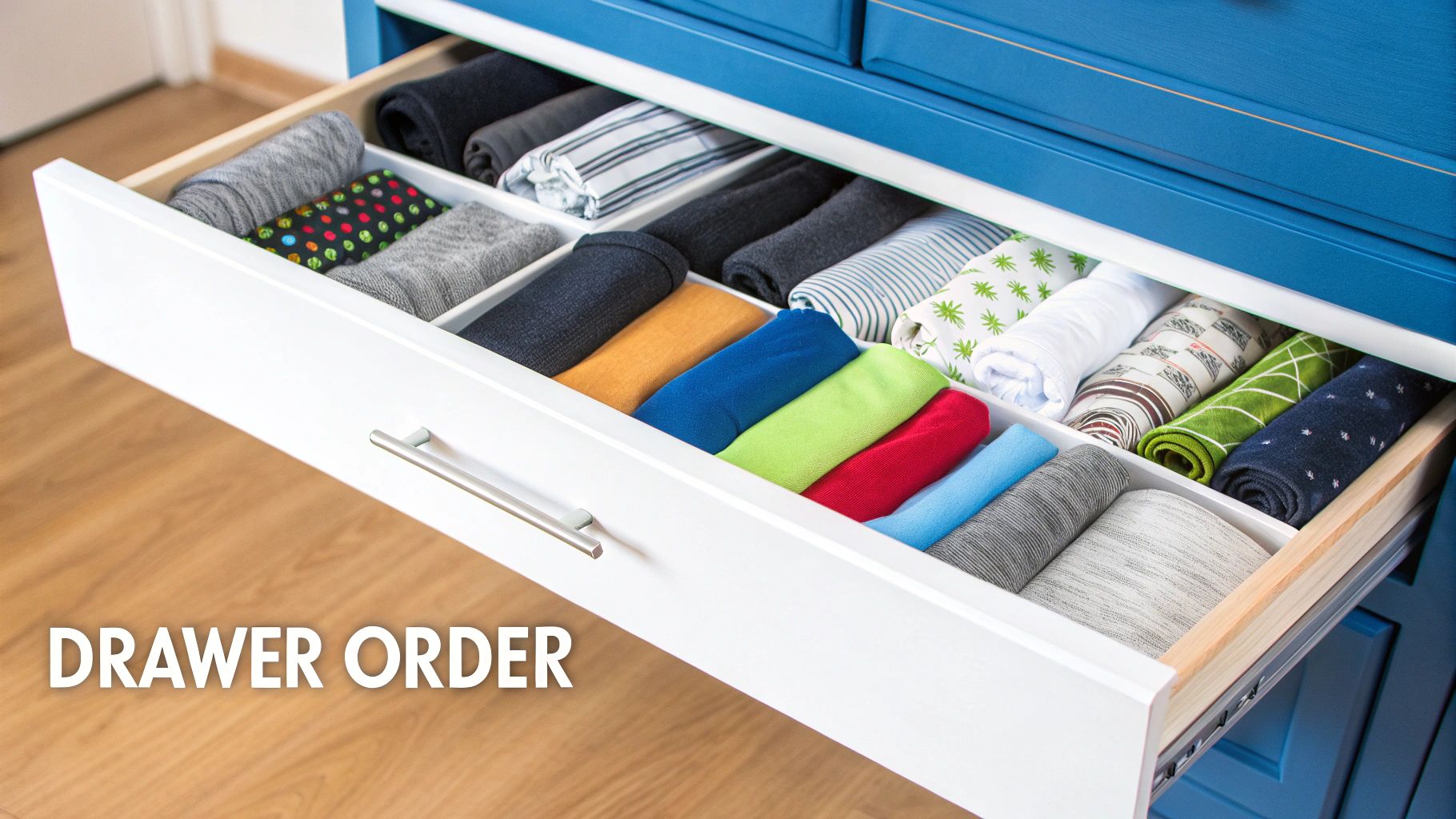
A messy drawer is often a source of daily frustration, turning the simple act of finding socks into a frantic search. Drawer dividers and compartmentalization are transformative clothes storage ideas that reclaim this chaotic space. This system uses inserts, boxes, or specialized organizers to partition drawers, creating a designated home for every item from t-shirts to accessories. It stops everything from becoming a jumbled pile.
The benefit? A grid-like system where items are filed, not stacked. Instead of digging through layers of clothes, you can see your entire inventory at a glance, making it easier to choose an outfit and maintain order. It’s the secret behind those satisfyingly neat #DrawerGoals posts you see online.
Actionable Tips for Implementation
Before you start organizing, you must first declutter. Trying to organize items you don't need creates unnecessary work and prolongs the feeling of being overwhelmed. For a structured approach, check out these decluttering tips for beginners to clear out the excess first.
- Categorize Broadly, Then Refine: Start with simple groups like underwear, socks, and t-shirts. As you build momentum, you can create more specific sections for workout gear or pajamas.
- Fold for Filing: Adopt a vertical folding method so items stand upright. This allows you to see everything at once and prevents you from disturbing other clothes when you pull one out.
- Choose the Right Dividers: Use adjustable dividers for flexibility or small fabric boxes to contain loose items like socks and accessories. Ensure they match your drawer’s depth to prevent things from sliding underneath.
- Label for Longevity: For shared dressers, simple labels on the dividers can help everyone stick to the system, preventing a slow return to clutter.
This method is perfect for anyone dealing with "clutter paralysis" in their bedroom. By giving every single item a defined space, it eliminates decision fatigue and makes putting laundry away a simple, stress-free task.
3. Vacuum Storage Bags and Space Compression
When you’re facing boxes of off-season clothes that have been sitting for years, vacuum storage bags offer a powerful solution. This method uses airtight plastic bags to compress bulky items like sweaters and duvets, reducing their volume by up to 80%. By removing the air with a vacuum cleaner or hand pump, you can transform unwieldy piles of textiles into compact, stackable blocks.
This approach is one of the most effective clothes storage ideas for maximizing space in closets, under beds, or in storage units. Brands like SpaceSaver and Duck have popularized these bags, which protect contents from dust, moisture, and pests. They are a go-to for anyone dealing with seasonal rotation, creating more active space by securely packing away items you don't currently need.
Actionable Tips for Implementation
The key to using compression bags effectively is deciding what’s worth storing. Storing items you’ll never wear again just delays the clutter problem. Use this opportunity to make confident decisions and reclaim your space for good.
- Pre-Sort with Purpose: Before compressing, decide what to keep. Start with the easiest decision: is anything obvious trash? Build momentum from there. Only compress pieces you are confident you'll wear again.
- Label Everything: Clearly label each bag with its contents and the season (e.g., "Winter Sweaters – 2024"). This prevents you from having to reopen bags to find one specific item.
- Avoid Delicate Fabrics: Do not compress natural fibers like wool or delicate materials like silk, leather, or formal wear. The intense pressure can cause permanent wrinkles and damage the fabric's structure.
- Store Smart: Place the compressed bags in a cool, dry location away from direct sunlight, as temperature fluctuations can affect the plastic and the seal.
This method helps break through the paralysis of dealing with seasonal changeover, turning an overwhelming task into a manageable process of sorting and storing.
4. Over-the-Door Organizers and Hanging Pockets
When closet and drawer space is completely maxed out, the back of a door offers prime, often-forgotten real estate. Over-the-door organizers are brilliant clothes storage ideas because they capitalize on this unused vertical surface without requiring any installation or drilling. These hanging systems, available in fabric or clear plastic, provide instant pockets and compartments for smaller items that often create clutter.
This method transforms any door into a highly functional storage hub. It’s a classic solution for dorm rooms, kids' rooms, and small apartments where every inch counts. Instead of letting accessories, socks, or scarves pile up in a drawer, a hanging organizer keeps them separated, visible, and incredibly easy to access, turning a frustrating search into a simple grab-and-go action.
Actionable Tips for Implementation
To maximize this storage solution, assign specific categories to different sections of the organizer. This turns a potential jumble of items into a streamlined system, preventing the "doom pile" of miscellaneous accessories from forming.
- Use Transparent Pockets: Opt for clear pockets to see everything at a glance, which helps you make quick decisions and avoids rummaging.
- Categorize Items: Dedicate specific pockets to accessories, rolled t-shirts, socks, or underwear. This keeps your system logical and easy to maintain.
- Check Weight Capacity: Be mindful of what you store. Heavy items can strain the organizer or damage the door frame. Reserve it for lightweight clothing and accessories.
- Rotate Seasonally: Keep your organizer relevant by swapping out winter gloves and scarves for summer belts and sunglasses as the seasons change.
This approach is perfect for preventing the decision fatigue that comes from staring at a messy drawer. Before loading it up, use an app to snap photos of your accessories and decide what’s worth keeping, ensuring only your favorite, most-used items earn a spot.
5. Under-Bed Storage Containers and Drawers
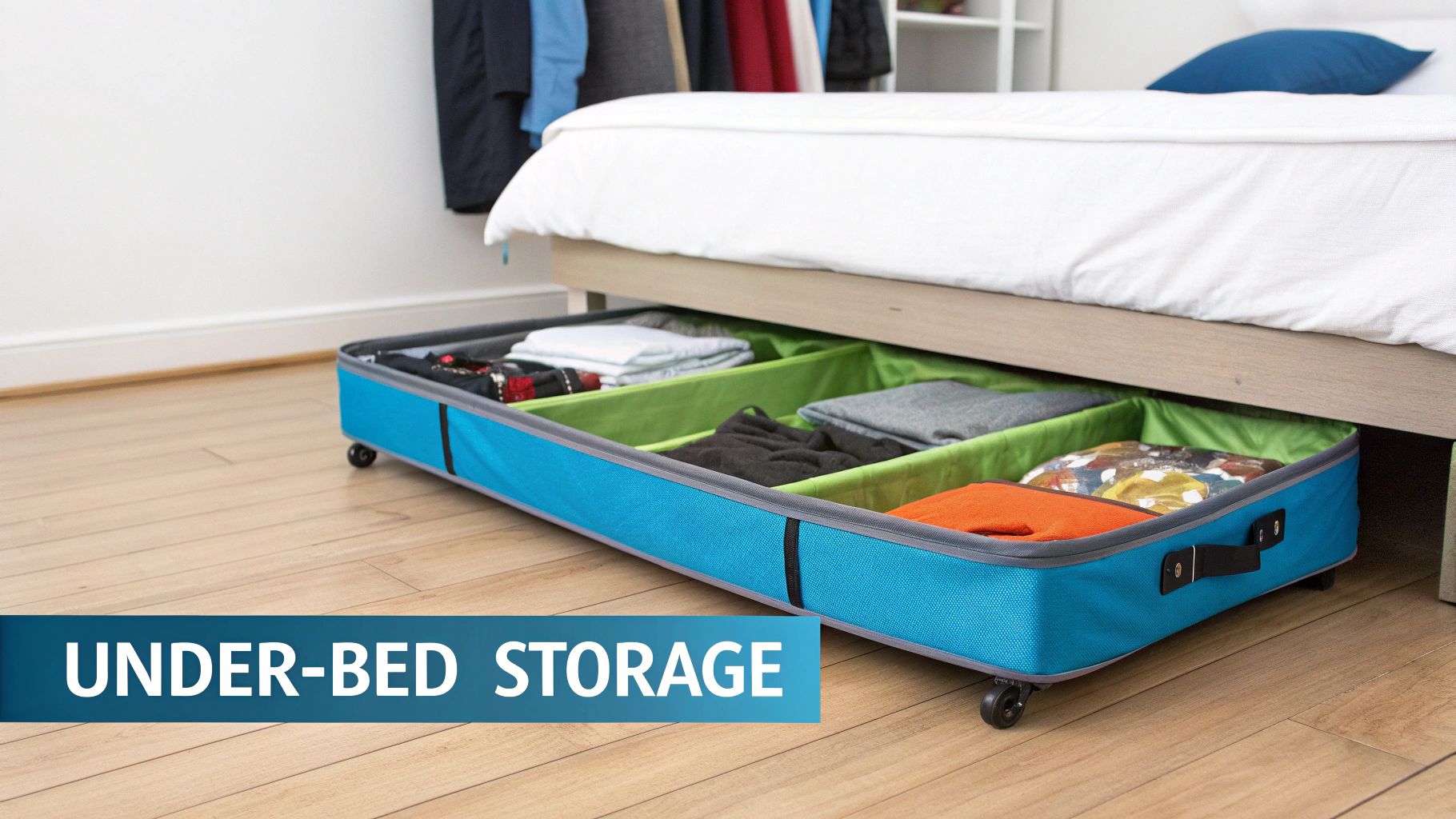
One of the most overlooked areas for storage is the vast, empty space right under your bed. Under-bed storage containers are brilliant clothes storage ideas because they transform this dead zone into a functional, hidden closet. Using flat, shallow boxes, zippered bags, or rolling drawers, you can reclaim significant square footage, keeping items protected from dust and out of sight.
This solution is perfect for managing seasonal wardrobes or storing items you don't need daily, like formal wear or extra bedding. Instead of letting that space collect dust bunnies, you can create a highly organized system that supports your main closet without contributing to visual clutter. Think of it as an accessible attic, ready when you need it.
Actionable Tips for Implementation
To maximize this space effectively, a clear system is crucial. The goal is to avoid an "out of sight, out of mind" scenario where you forget what you've stored. This is where a little planning prevents future headaches and clutter paralysis.
- Use Clear Containers: Choose transparent or semi-transparent boxes so you can get a quick visual inventory without pulling everything out.
- Label Everything: Attach clear labels to each container. For a high-tech solution, use the DeclutterNow app to take a photo of the contents and attach a QR code to the box for an instant visual reminder.
- Protect Your Items: In humid climates, add a few silica gel packets or moisture absorbers to protect fabrics from mustiness.
- Prioritize Infrequent Use: Reserve this space for off-season clothing (like winter sweaters or summer shorts) to minimize the need for frequent access.
This approach is ideal for anyone battling decision fatigue with a packed closet. By moving non-essential items under the bed, you create breathing room and make your daily choices simpler, turning overwhelm into a sense of calm control.
6. Closet Shelving and Stackable Storage
If your closet feels like a deep cavern where folded clothes disappear, it's time to build upward. Closet shelving and stackable storage are essential clothes storage ideas that transform unused vertical space into structured, accessible zones. By installing wall-mounted shelves, modular cubes, or integrated systems, you create distinct layers for sweaters, jeans, shoes, and accessories, preventing the dreaded pile-up on the closet floor.
This strategy brings order to chaos by assigning a specific home to every category of folded item. Systems like IKEA's PAX or Elfa from The Container Store allow you to customize shelf heights and depths to perfectly match your wardrobe needs. Instead of digging through a single, messy stack, you can see every item at a glance, turning your closet into a highly efficient, boutique-like space.
Actionable Tips for Implementation
Before you install anything, take a moment to assess what you actually own. Getting rid of items you no longer need is the crucial first step to avoid organizing clutter. This is where you can turn overwhelm into action and ensure every inch of your new system is used effectively.
- Pre-Sort with AI: Use a tool like DeclutterNow to quickly photograph and categorize your folded clothes. Making keep, sell, or donate decisions before building shelves prevents decision fatigue later.
- Group and Divide: Place similar items together (e.g., all sweaters, all T-shirts) and use acrylic or wire shelf dividers to keep stacks neat and contained.
- Prioritize Placement: Store your most-used items at eye level. Seasonal or less-frequently worn clothes can go on higher or lower shelves.
- Measure for Safety: Always ensure shelves are level and properly anchored to the wall, especially when storing heavier items like denim or shoe boxes. This is a critical safety step.
This method is ideal for anyone with a significant collection of folded clothes, maximizing storage without sacrificing visibility or accessibility. It’s also one of the most effective small apartment organization ideas for making a compact closet work harder.
7. Clothing Rotation and Capsule Wardrobe Systems
Instead of finding new ways to store more clothes, this strategic approach focuses on owning fewer, better items. A capsule wardrobe is a curated collection of versatile, high-quality pieces that can be mixed and matched. By rotating items seasonally, you keep your closet feeling fresh and functional without the overwhelm of having everything accessible at once.
This system turns your closet from a chaotic collection into a purposeful boutique. By limiting your choices to items you truly love and wear, you eliminate the decision fatigue that leads to staring at a full closet and feeling like you have nothing to wear. This is one of the most impactful clothes storage ideas for creating mental clarity.
Actionable Tips for Implementation
The key to a successful capsule system is a ruthless initial edit and a commitment to seasonal rotation. Using a tool to catalog your items can break through the paralysis of deciding what stays.
- Catalog Everything: Use an app like DeclutterNow to photograph every item. Seeing your entire collection visually helps identify duplicates and underused pieces, making it easier to select your capsule candidates.
- Start Small: Test the system with one season. A popular method is Project 333, which challenges you to live with just 33 items for 3 months. This is a low-commitment way to see if the approach works for you.
- Build a Cohesive Palette: Choose a base of neutral colors (black, navy, cream, grey) and add a few accent colors. This ensures maximum interchangeability between all your pieces. You can learn more about how to shop smarter and more sustainably for your closet.
- Rotate and Store: At the end of a season, pack away the current capsule and bring out the next. This keeps your active closet sparse and makes rediscovering your clothes feel like a shopping trip.
8. Specialty Hangers and Hanger Organization Systems
The right hanger does more than just hold a garment; it preserves its shape, maximizes rod space, and creates a sense of calm in your closet. Specialty hangers and organization systems are some of the most impactful clothes storage ideas because they address specific clothing needs, from preventing delicate silks from slipping to supporting the structure of a heavy wool coat. This approach is about upgrading from a mismatched collection of wire and plastic to a unified, functional system.
By investing in hangers designed for your clothes, you're investing in the longevity of your wardrobe. Slim, velvet-coated hangers can instantly double your hanging space while keeping slippery tops in place. Tiered pant hangers or dedicated organizers for scarves and belts consolidate bulky categories, transforming a cluttered rod into a streamlined display where everything has its designated spot.
Actionable Tips for Implementation
The goal is to match the hanger to the garment's needs. A heavy suit on a flimsy wire hanger is a recipe for misshapen shoulders, while a bulky plastic hanger can stretch out a knit sweater.
- Match Hanger to Garment: Use sturdy, wide-shouldered wooden hangers for suits and coats. Opt for slim, non-slip velvet hangers for blouses, dresses, and slippery fabrics.
- Implement a Tracking System: Turn all hangers backward at the start of a season. When you wear an item, turn its hanger forward. This creates a simple visual cue for what you actually use, helping you identify candidates for donation.
- Categorize for Clarity: Group hangers by clothing type (pants, tops, accessories) to make finding specific items faster and easier.
- Invest Proportionally: Use a tool like DeclutterNow to snap photos of your high-value items. This can help you decide which pieces warrant premium hangers, protecting your most cherished clothing.
This method is perfect for anyone looking to bring order and care to their closet, preventing damage and making the daily routine of getting dressed more efficient and enjoyable.
9. Clothing Racks and Portable Garment Solutions
For those who lack built-in closet space or need a flexible storage option, freestanding clothing racks offer an immediate and stylish solution. These portable garment solutions, ranging from industrial metal pipes to minimalist wooden frames, provide hanging storage without any installation. They are perfect for rental apartments, studio homes, or even as a transitional space for seasonal items.
This approach brings your wardrobe into your living space, turning it into a functional and aesthetic feature. Instead of hiding clothes away, a well-organized rack can serve as a curated display, making your daily outfit selection feel like shopping in a boutique. This is one of the most adaptable clothes storage ideas for modern, flexible living.
Actionable Tips for Implementation
To prevent a clothing rack from looking like clutter, curation is essential. Avoid the temptation to simply transfer closet overflow onto the rack. Instead, use it as a tool to mindfully manage your wardrobe and break through the "clutter paralysis" that keeps unused items in rotation.
- Pre-Sort with an App: Before buying a rack, take photos of the clothes you plan to hang on it. Use a tool like DeclutterNow to quickly sort through them and decide what is truly worth keeping on display, avoiding storage of unnecessary items.
- Create a "Wardrobe Purgatory": Use the rack to temporarily hold items you're unsure about. If a piece hangs there unworn for a month, it’s a clear sign to let it go.
- Categorize for Visual Appeal: Arrange garments by color or type (e.g., workwear, weekend outfits) to create a clean, visually pleasing look that simplifies your routine.
- Ensure Stability: Always place your rack on a level surface. For heavier collections, especially with winter coats, check the weight capacity and consider anchoring it if possible to prevent tipping.
This method is ideal for showcasing a capsule wardrobe, managing seasonal transitions, or creating an "open closet" concept in a room without one.
10. Digital Inventory and Photo Documentation Systems
When your physical storage is optimized but you still struggle to see the big picture, a digital inventory is the modern solution. This approach combines physical organization with digital tracking through photos or dedicated apps, creating a searchable visual catalog of your entire wardrobe. It’s one of the most powerful clothes storage ideas for preventing duplicate purchases, planning outfits, and making decluttering decisions without pulling everything out.
This system turns your smartphone into a wardrobe management tool, helping you break through the "I have nothing to wear" feeling. Apps like DeclutterNow use AI-powered photo recognition to identify items, making the cataloging process fast and efficient. This digital clarity helps you appreciate what you own and use it more effectively, a key step in overcoming the clutter paralysis that keeps closets overstuffed.
Actionable Tips for Implementation
To build your digital wardrobe, work systematically. Taking photos as you do laundry or sort seasonal items is a low-effort way to begin. The key is turning documentation into a sustainable habit rather than a one-time chore.
- Start Small: Begin with one category, like shoes or jackets, to avoid feeling overwhelmed. Use an app like DeclutterNow to photograph and tag each item with its condition, size, and wear frequency.
- Tag for Function: Use digital tags for occasions (e.g., "work," "wedding guest," "gym") to quickly assemble outfits for any event.
- Plan and Prevent: Before buying something new, check your digital inventory to see if you already own a similar piece.
- Streamline Selling: A photo inventory is a goldmine for reselling. When you decide to let an item go, the high-quality photo and details are ready for platforms like eBay.
This method is ideal for anyone who feels paralyzed by the sheer volume of their wardrobe. By digitizing your collection, you can make clear, confident decisions from anywhere, turning closet chaos into organized calm.
Top 10 Clothes Storage Solutions Comparison
| Item | Implementation Complexity 🔄 | Resource & Speed ⚡ | Expected Results 📊 | Ideal Use Cases 💡 | Key Advantages ⭐ |
|---|---|---|---|---|---|
| Vertical Hanging Organization Systems | 🔄 Medium — wall/door mounting; may need tools | ⚡ Low materials; moderate install time | 📊 Improves visibility and access; saves floor space | 💡 Small apartments, daily-wear display, limited floorspace | ⭐ Maximizes vertical space; quick outfit selection |
| Drawer Dividers and Compartmentalization | 🔄 Low — simple setup, no installation | ⚡ Low cost; fast to implement | 📊 Tidy drawers; reduced decision fatigue | 💡 Underwear/socks drawers, shared drawers, families | ⭐ Affordable; customizable compartments |
| Vacuum Storage Bags and Space Compression | 🔄 Low–Medium — packing + vacuum sealing | ⚡ Low cost but time-consuming to pack/unpack | 📊 50–80% volume reduction; good protection from dust/moisture | 💡 Seasonal storage, moving, long-term off-season items | ⭐ Dramatically increases capacity; protects items |
| Over-the-Door Organizers and Hanging Pockets | 🔄 Very low — no tools, hangs over door | ⚡ Very low cost; immediate setup | 📊 Adds accessible pockets; limited weight capacity | 💡 Dorms, renters, accessories and shoes | ⭐ No installation; portable and visible storage |
| Under-Bed Storage Containers and Drawers | 🔄 Low — no installation; needs bed clearance | ⚡ Low cost; moderate access speed (bending) | 📊 Hidden storage for off-season or infrequent items | 💡 Small bedrooms, seasonal rotation, limited closet space | ⭐ Utilizes wasted space; protects from dust/pests |
| Closet Shelving and Stackable Storage | 🔄 High — planning and possible professional install | ⚡ Higher cost; long-term efficient access | 📊 Greatly increases organized storage capacity | 💡 Committed organizers, full closets, long-term solutions | ⭐ Customizable zones; supports heavy loads |
| Clothing Rotation and Capsule Wardrobe Systems | 🔄 Medium — requires curation and habit change | ⚡ Low material cost; time to curate; speeds daily decisions | 📊 Reduces total volume and decision fatigue | 💡 Minimalists, travelers, sustainability-minded users | ⭐ Fewer items; easier choices; cost-saving |
| Specialty Hangers and Hanger Organization Systems | 🔄 Low — replace hangers; minor time investment | ⚡ Moderate cost; quick space/protection gains | 📊 Protects fabrics; increases rod capacity | 💡 Protecting premium garments; streamlined closet visuals | ⭐ Prevents shoulder marks; uniform appearance |
| Clothing Racks and Portable Garment Solutions | 🔄 Low — freestanding, no anchors required | ⚡ Moderate cost; instant expandability | 📊 Adds hanging capacity but uses floor space | 💡 Temporary staging, rental homes, studio apartments | ⭐ Portable; no wall damage; decorative display |
| Digital Inventory and Photo Documentation Systems | 🔄 Medium–High — time-intensive setup; learning curve | ⚡ Requires device/app; ongoing maintenance; speeds planning | 📊 Searchable wardrobe, fewer duplicates, easier reselling | 💡 Resellers, planners, wardrobe minimalists | ⭐ Outfit planning, inventory tracking, resale facilitation |
Turn Your 'Someday' Storage Project Into 'Done Today'
We've explored a comprehensive toolkit of clothes storage ideas, from maximizing vertical space with hanging organizers to compressing seasonal items with vacuum bags. You now have practical, actionable strategies to tackle any space, whether it's a sprawling walk-in closet or a compact apartment corner.
But the core lesson isn't just about finding the right container or shelf. True progress is born from decisive action. The most effective storage system in the world will fail if it’s filled with items you no longer need, love, or use. The real challenge isn't a lack of space; it's "clutter paralysis." That feeling of being stuck when you look at a pile of clothes is a common experience, stemming from decision fatigue, not a personal failing.
Your First Step to Progress
The journey to an organized space doesn't start with buying new bins. It starts with a single, manageable decision. Instead of facing the entire closet, focus on one quick win. This is where a new approach can make all the difference. The goal isn’t perfection; it's about building momentum, one easy choice at a time. By tackling the most obvious items first, like something you know is destined for the trash, you create a small spark of accomplishment that fuels the next decision, and the next.
This is the psychology-backed principle that can finally get you unstuck. You don't need a free weekend or a sudden burst of motivation. You just need a starting point. By leveraging tools designed to break through decision fatigue, you can transform the daunting task of decluttering into a simple, step-by-step process. Every item you successfully categorize builds confidence and makes the next choice easier, turning the dreaded chore into an empowering act of reclaiming your space and peace of mind. These clothes storage ideas are your roadmap, but the decision to start the journey is the most critical step. You can actually do this.
Ready to turn clutter paralysis into progress? The most effective clothes storage ideas work best after you've confidently decided what to keep. If you're feeling stuck, let DeclutterNow help you make those first easy decisions. Snap a photo, get AI-powered guidance, and build momentum today. Start building momentum with a free trial of DeClutter Now