
Have you ever felt that incredible rush after helping a friend turn a room full of overwhelming clutter into a calm, functional space? A certified organizer certification is what takes that natural talent and passion and elevates it into a trusted, professional service. It's the official stamp that validates your expertise, giving you a proven framework that immediately builds confidence for clients who feel completely stuck.
What a Certified Organizer Certification Really Means

Lots of people have a knack for creating order. They can walk into a room piled high with boxes that haven't been touched for years and just see the solution. But for a client who is completely stuck in "clutter paralysis," a natural gift isn't always enough. They need a guide they can genuinely trust to lead them out. This is where certification makes all the difference.
Think of it this way: you could work out with a friend who loves fitness, or you could hire a certified personal trainer. Your friend might have some good ideas, but the certified trainer brings a deep understanding of anatomy, established methodologies, and a strict code of ethics. They offer a level of professional expertise that inspires real confidence and makes you feel like you can actually do this.
Beyond Tidiness to True Transformation
Getting certified as a professional organizer isn't just about learning the best way to fold sweaters or which label maker to buy. It's a demanding process that proves you're deeply committed to the profession and, more importantly, to your clients. It's not about achieving perfection; it's about helping people finally make progress.
Pursuing this credential means you have:
- Logged Extensive Paid Hours: The most respected certifications require you to document hundreds, sometimes over a thousand, paid hours working directly with clients. This isn't a hobby; it's proven experience.
- Mastered Core Competencies: You have to prove you're proficient in everything from project planning and spatial design to understanding the psychology-backed reasons behind clutter.
- Adhered to a Code of Ethics: Certification holds you to a professional standard, ensuring things like client confidentiality and respect are always a top priority.
This whole process ensures that when someone hires you, they're not just getting a person who enjoys tidying up. They are getting a partner—an expert with validated skills who can finally help them move forward.
For someone who feels overwhelmed and paralyzed by the sheer volume of decisions, seeing that "Certified" title provides instant relief. It says, "This person gets me. They have a proven process, and I can trust them to guide me through this."
Building Momentum for Your Career
For many professional organizers just starting out, the biggest challenge is proving their value in a busy marketplace. A certified organizer certification immediately cuts through that noise. It's a powerful tool that builds instant credibility and helps justify your rates.
It shows potential clients that you've moved beyond a hobby and have made a serious investment in your craft. This credential doesn't just open doors; it builds the foundation for a sustainable, impactful career helping people turn clutter paralysis into lasting progress.
Why Certification Matters in the Organizing Industry
In an industry built on trust, how do you show potential clients you're the real deal? Simple: a certified organizer certification. It’s the clearest way to signal you’re not just someone with a knack for tidying up, but a dedicated professional who can help them break through the overwhelm.
Think about it this way. When someone invites you into their home, they're often at their most vulnerable. They could be navigating the grief of downsizing a family home or feeling paralyzed by clutter due to ADHD. They don't just need a cleaner space; they need a guide they can implicitly trust to help them start making progress.
Establishing Credibility and Building Trust
A formal certification isn't just a piece of paper—it’s a powerful tool for building that crucial trust right from the start. It immediately tells clients you've put in the work.
- Demonstrates Commitment: Getting certified means logging hundreds—sometimes over a thousand—of paid client hours. It’s proof that you’ve been there and you understand the challenge.
- Adherence to Ethics: Certified organizers are bound by a strict code of ethics. This covers everything from client confidentiality to professional conduct, giving clients peace of mind that they're in safe, respectful hands.
- Validated Expertise: You have to pass a tough exam to get certified. This shows you've mastered key skills that go way beyond basic tidying, like project management, spatial planning, and understanding decision fatigue.
For someone feeling completely overwhelmed, this kind of validation cuts through the noise. It tells them you’re a serious professional with a psychology-backed approach.
Gaining a Competitive and Financial Edge
The professional organizing field is exploding. To stand out in this growing crowd, a certified organizer certification is your secret weapon.
Certification isn’t just a line on a resume; it's a strategic business asset. It validates your expertise, justifies higher rates, and attracts clients who are looking for the best possible guidance to finally make progress.
This credential almost always translates to higher earning potential. Clients are willing to pay a premium for the confidence that comes with hiring a certified pro. If you want to see how this breaks down, take a look at our guide on how much a professional organizer costs.
Ultimately, certification is an investment in your career. It pays you back with client trust and better income, helping you build a business that truly makes a difference.
Comparing the Top Organizer Certification Programs
Trying to pick a certified organizer certification can feel a bit like staring at a cluttered room—it's easy to get overwhelmed by all the options. You’ve got a whole alphabet soup of acronyms out there—CPO®, CPO-CD®, KonMari®—and it’s enough to cause decision fatigue before you even start.
Let's cut through the noise and break down the major players. This will help you figure out which program truly aligns with your career goals and the kind of clients you’re passionate about helping.
Think of these certifications like different specialties. Some cover the fundamentals, while others are designed for highly specific client challenges, like the paralysis that often comes with ADHD.
The Gold Standard: The Certified Professional Organizer (CPO®)
If there's one credential that's widely seen as the industry benchmark, it's the Certified Professional Organizer® (CPO®). It signals a serious commitment to the craft and a high level of real-world experience.
This designation is governed by the Board of Certification for Professional Organizers® (BCPO®) and was developed in partnership with the National Association of Productivity and Organizing Professionals (NAPO) to set a high bar for ethics and professional standards. Earning your CPO® isn't something you do over a weekend; it's a testament to your hands-on client work.
In fact, it's quite an exclusive club. There are only around 350 CPOs globally, which really highlights its prestige. Before you can even think about taking the exam, you have to document a substantial number of paid hours working directly with clients. You can dig deeper into what it takes to become a CPO to see just how rigorous the process is.
As you can see from the requirements, this isn't an entry-level certificate—it's a true mark of a seasoned professional.
The Specialist Credential: The CPO-CD® for Chronic Disorganization
While the CPO® is the gold standard for general organizing, the Certified Professional Organizer in Chronic Disorganization® (CPO-CD®) is a specialized credential for organizers who feel called to help clients navigate more profound challenges. This certification is offered by the Institute for Challenging Disorganization (ICD).
This path is for professionals who want to work with clients experiencing chronic disorganization, which is often connected to conditions like ADHD, hoarding disorders, or other executive function difficulties. It provides you with specialized knowledge and empathetic strategies to support individuals who haven't had luck with traditional organizing methods that often lead to more frustration.
Key Takeaway: Think of it this way: the CPO® demonstrates broad expertise, while the CPO-CD® signals advanced, specialized skills for helping clients break through the paralysis of chronic disorganization. Many of the most accomplished organizers eventually pursue both to offer a full spectrum of services.
Philosophy-Driven Programs: The KonMari® Method
Beyond credentials that focus on professional standards and hours logged, you'll also find certifications built around a specific philosophy. The most famous of these is undoubtedly the KonMari Consultant™ certification, based on Marie Kondo’s "spark joy" approach.
This program is less about project management and more about guiding clients through a specific, mindful journey. Unlike our "Trash First" methodology, which builds momentum by starting with easy decisions, the KonMari® method often begins with the more emotional work of deciding what sparks joy.
Choosing a philosophy-driven path like KonMari® means you're becoming an ambassador for a particular way of thinking. It’s an ideal fit for those who resonate deeply with its core principles and want to build a brand around that unique, powerful method.
Key Organizer Certification Programs at a Glance
To make sense of these different paths, it helps to see them side-by-side. This table breaks down the leading certifications to help you match your aspirations with the right program.
| Certification | Governing Body | Primary Focus | Ideal for Organizers Who… | Best for Clients Facing… |
|---|---|---|---|---|
| CPO® | BCPO® (Board of Certification for Prof. Organizers) | Broad-based professional standards and experience | Want to establish themselves as experienced, credible generalists in the industry. | General clutter, downsizing, time management, and space optimization. |
| CPO-CD® | ICD (Institute for Challenging Disorganization) | Specialized skills for chronic disorganization | Are passionate about helping clients with complex needs (e.g., ADHD, hoarding). | Overwhelm stemming from chronic conditions or executive function challenges. |
| KonMari Consultant™ | KonMari Media, Inc. | A specific decluttering philosophy ("spark joy" method) | Deeply connect with the KonMari® philosophy and want to build a brand around it. | A desire for a mindful, transformative decluttering and organizing reset. |
Ultimately, the right certification comes down to your personal vision. Do you see yourself as a trusted generalist (CPO®), a compassionate specialist (CPO-CD®), or a dedicated guide for a specific philosophy (KonMari®)? Answering that question is the first real step toward building an impactful and fulfilling career.
Your Roadmap to Becoming a Certified Professional Organizer
Thinking about getting your certified organizer certification can feel like standing at the base of a mountain. It’s a big goal, and it's easy to get overwhelmed by the steps. But just like any big decluttering project, you tackle it one small, manageable step at a time. A good plan turns that feeling of paralysis into real progress.
Let's walk through this process with a hypothetical organizer we'll call Sarah. She loves helping people find clarity and calm in their spaces, but she wants the professional credibility that comes with certification. Her journey doesn't start with a textbook; it starts with real, hands-on work.
Step 1: Log Your Paid Client Hours
Before you can even think about applying for a top-tier certification like the CPO®, you have to prove you've actually been doing the work. Most serious programs want to see a solid track record of paid client hours. For Sarah, this means getting organized herself and meticulously tracking every billable minute.
- The Requirement: She needs to log 1,500 paid hours within a three-year window. When you break it down, that’s about 9.5 hours of paid client work every single week.
- What Counts: This isn't just time spent thinking about organizing. It has to be direct client work—things like in-home decluttering sessions, virtual coaching calls, or drafting detailed organizing plans.
- The Strategy: Sarah's first move is to focus on building her business. The certification is the long-term goal, but getting clients and doing the work is how she'll get there. This phase is absolutely essential for gaining the hands-on experience that makes a certification mean something. If you're at this stage, our guide on how to start an organizing business is a great place to begin.
This first step takes the most time, but it’s where you truly build your professional foundation and learn how to help people build momentum.
Step 2: Prepare For and Pass the Exam
Once Sarah hits that magic number of hours, she's ready for the next big hurdle: the certification exam. This isn't just a pop quiz. It’s a comprehensive test designed to confirm she has a professional-level grasp of the entire organizing process.
The BCPO® exam, for example, digs into six core areas: everything from the initial client intake and needs assessment to project planning, hands-on implementation, client follow-up, and the legal and ethical standards that govern our work. To get ready, Sarah will need to invest in some quality study materials and carve out dedicated time to really master these concepts.
The exam itself runs about $450 to $500, so it’s a real investment of both time and money. It’s a tough but critical step to prove you have the well-rounded expertise clients deserve.
Step 3: Maintain Your Hard-Earned Credential
Passing the exam is a huge moment, but the journey isn't over. A certification isn't a one-and-done trophy; it’s a living credential that you have to maintain through ongoing professional development. This is what keeps its value high and shows your skills are current.
A certification isn't a one-and-done trophy. It's a living credential that reflects your ongoing dedication to excellence and ethics in the organizing profession, which is what gives it so much value.
For Sarah, staying certified means:
- Paying Annual Fees: She’ll have an annual maintenance fee, usually around $100, to keep her certification active.
- Continuing Education: To recertify every three years, she has to complete 45 hours of continuing education or choose to retake the exam.
This visual timeline gives you a sense of when some of the industry's most recognized certifications came on the scene.
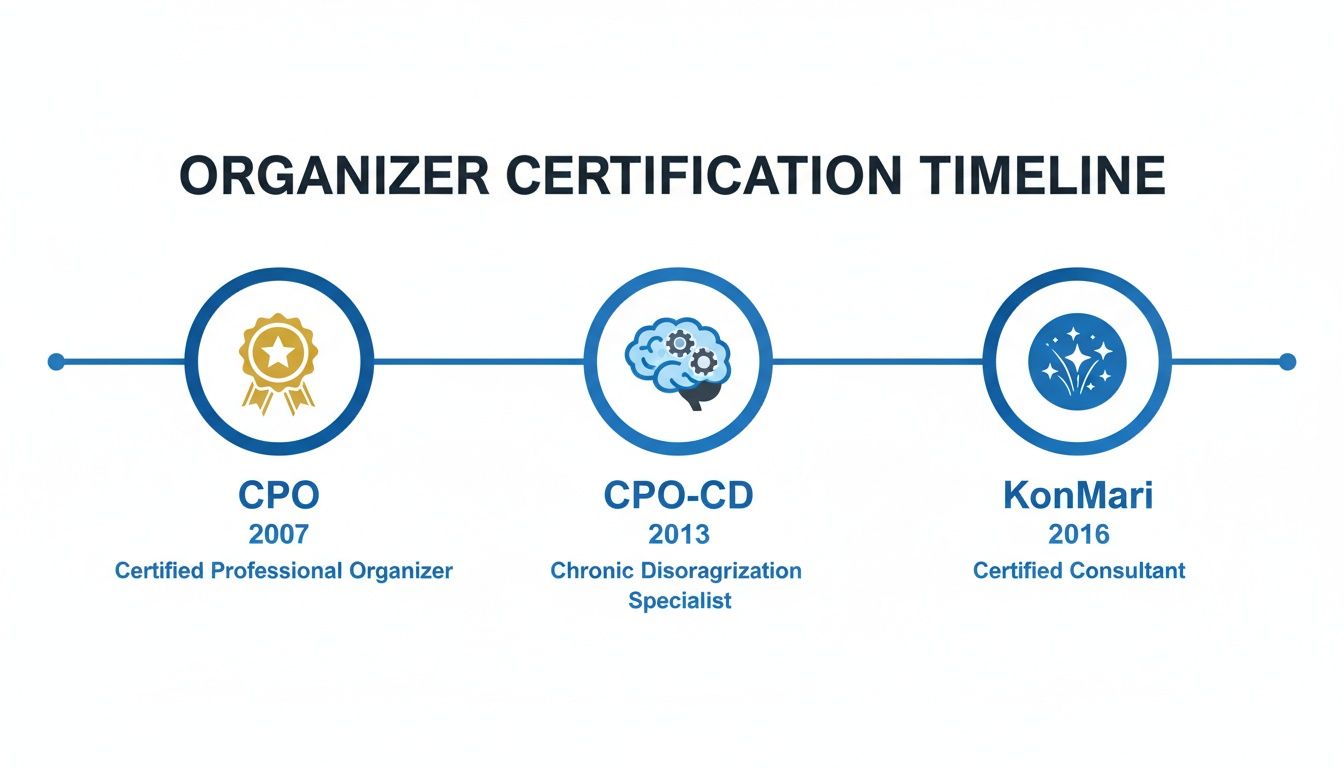
The whole process shows that certification is a long-term professional commitment. It ensures that when a client hires a certified organizer, they're getting someone who is truly at the top of their game. By following this clear roadmap, what once felt like a mountain becomes a series of achievable, rewarding steps in your career.
Weaving Modern Tools Into Your Organizing Practice
Getting your certified organizer certification gives you a solid foundation in time-tested methods. But the organizers who really stand out today are the ones who cleverly mix those classic principles with modern technology. Think about it: your biggest challenge isn't just sorting a pantry during a session. It's making sure your clients can keep the momentum going when you're not there.
This is where you can make a huge difference. So often, clients fall back into that old, familiar state of overwhelm between your visits. Those mystery boxes that have been sitting there for years suddenly feel paralyzing again. The solution? Give them a tool that helps them build quick wins, reinforcing the systems you’ve taught them.
Beating Clutter Paralysis Between Sessions
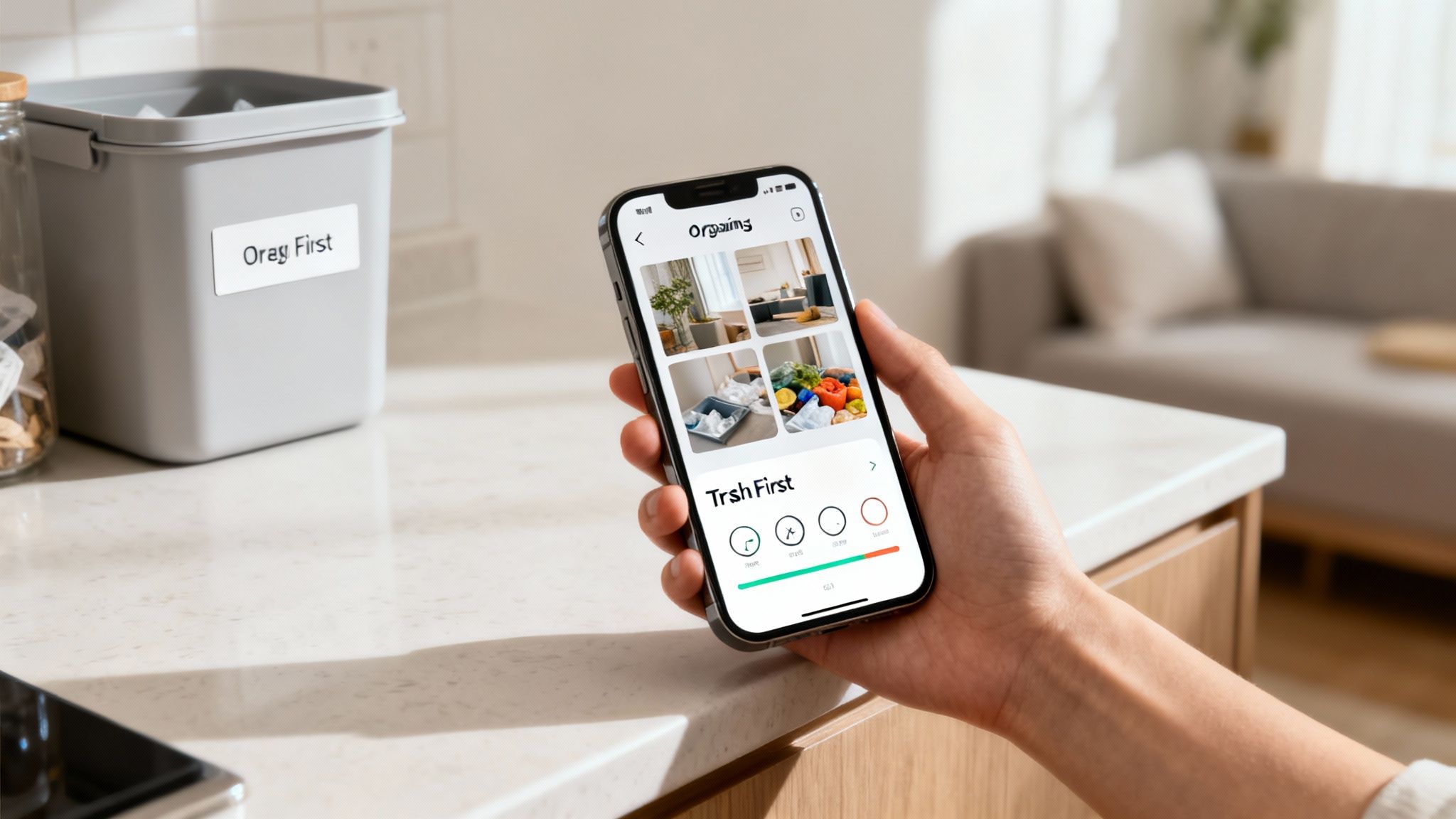
Picture this: your client is standing alone in front of a cluttered countertop, ready to give up. Instead of getting stuck, what if they could pull out their phone, snap a photo, and get an immediate, simple prompt to make just one decision? That’s what a tool like DeclutterNow does. Its AI helps break through the decision fatigue that grinds all progress to a halt.
This kind of tech support fits perfectly with your professional guidance. It extends your value well beyond your billable hours and helps clients build the small, consistent habits that create real, lasting change. You're not just organizing their stuff; you're teaching them how to maintain their space for good.
By bringing a psychology-backed tool into your practice, you empower clients to tackle the root of the problem. You help them shift from feeling paralyzed by every choice to feeling capable of making smart decisions on their own, one item at a time.
Putting the "Trash First" Method to Work
One of the biggest reasons people get overwhelmed is that most organizing advice starts with tough, emotional decisions. Our "Trash First" methodology completely flips that around. We don't start with "does this spark joy?"—we start with "is this actually trash?" This is all about getting quick, easy wins, which builds the dopamine and momentum needed to tackle the harder stuff.
As a certified organizer, you can introduce this idea in your sessions and then use an app to help them stick with it.
- Start with Obvious Trash: First things first, guide your client to spot and toss anything that is clearly trash or recycling. It's an instant win that clears space and builds momentum without causing any stress.
- Spot Donations and Items to Sell: With the obvious junk gone, it's easier to identify things for donation or sale. Some apps even have features like eBay integration that can help them turn that clutter into cash.
- Make Confident Keep/Relocate Decisions: Once the clutter is thinned out, deciding what to keep and where to put it becomes so much less daunting.
This simple, step-by-step process helps clients feel a real sense of accomplishment, which makes them far more receptive to the bigger organizing systems you’re putting in place. Many of the best home organization apps are built to support this exact kind of focused, motivating work.
Becoming a Tech-Forward Partner
When you incorporate a tool like DeclutterNow into your services, you're doing more than just organizing. You're positioning yourself as a tech-savvy partner who is truly invested in your client's long-term success. You’re giving them a complete support system that tackles their single biggest hurdle: the paralysis that comes from decision fatigue.
This blend of your certified expertise with smart, supportive technology ensures your clients don't just get an organized home for a week. They gain the skills and the tools to keep it that way, turning a temporary fix into a sustainable new way of living.
Beyond the Basics: Advanced Certifications and Finding Your Niche
Earning your first certified organizer certification is a huge milestone. It’s a moment to celebrate! But it’s also just the first step on a much longer, more interesting professional journey. Once you've got that foundational credential under your belt, a whole world of specialization opens up. This is where you can build a highly focused—and often more profitable—practice by serving clients with specific, challenging needs.
Think of it this way: your initial certification is like a general practitioner's degree. Advanced certifications are your ticket to specializing. This focus transforms you into the go-to expert for a particular group of people, many of whom are feeling stuck and are actively searching for someone with your unique skills.
Specializing in Chronic Disorganization
One of the most rewarding and impactful niches is helping clients who struggle with chronic disorganization. These aren't just people who have a messy space; they're often navigating challenges like ADHD, hoarding tendencies, or other conditions where standard organizing methods just fall flat. They need more than a tidy-up—they need a compassionate, knowledgeable guide who truly understands the psychology behind their clutter paralysis.
This is where specialized credentials make all the difference. Beyond the core CPO® credential, the Institute for Challenging Disorganization® (ICD) offers the rigorous Certified Professional Organizer in Chronic Disorganization® (CPO‑CD®) designation. Earning this proves you have the specialized training needed to help clients who have struggled for years. You can read more about how top organizers combine certifications to better serve a wider range of clients.
For clients who feel completely misunderstood by traditional organizing advice, finding a CPO-CD® can be a profound relief. It signals you have the tools to help them build momentum in a way that truly works for their unique brain wiring.
Expanding Your Skillset Into Growing Niches
While chronic disorganization is a major specialty, it’s certainly not the only path forward. The professional organizing field is always evolving, which means exciting opportunities are popping up in other high-demand areas.
- Productivity Consulting: For many clients, physical clutter is just a symptom of digital and mental disorganization. As a productivity consultant, you’d help them streamline workflows, master their time, and finally conquer the digital chaos in their inboxes and on their hard drives.
- Digital Organizing: This niche is all about taming the digital beast. You could help clients organize thousands of digital photos, build logical file systems for their businesses, or manage the endless firehose of incoming digital information.
- Photo Management: So many people have boxes of old photos and disorganized digital folders that are a huge source of stress and guilt. As a specialist, you’d help clients preserve precious memories by digitizing, organizing, and creating simple systems for their photo collections.
Choosing to pursue an advanced certification and find your niche does more than just add another line to your resume. It connects you with underserved clients, allows you to command higher rates for your specialized knowledge, and helps you build a career that has a deep, lasting impact on the people who need you most. Your journey doesn't end with one certification; it’s an ongoing path of growth, learning, and specialization.
Your Questions About Organizer Certifications, Answered
Thinking about getting certified as a professional organizer is a big move. It’s completely normal to have questions about what it really takes in terms of time, money, and sheer effort. Let's break down some of the most common things people ask.
How Much Does a Certified Organizer Certification Cost?
The final bill can vary quite a bit based on which program you go for. You’ll want to budget for a few different things: the application fee, any courses or study guides you need, the exam fee, and the yearly membership dues for organizations like NAPO.
For a respected credential like the CPO®, the exam itself usually runs around $500. That number doesn't cover the cost of preparatory courses or books you'll likely want, so your total investment could be anywhere from several hundred to a few thousand dollars when all is said and done.
How Long Does It Take to Become Certified?
This is less about classroom time and more about real-world experience. The most recognized certifications, especially the CPO®, require a serious amount of paid client hours before you can even apply.
Think of it as a marathon, not a sprint. The requirement of 1,200 to 1,500 paid client hours—often collected over two to five years—is there to make sure certified pros have seen it all before they earn the title.
Once you’ve logged those hours, you can expect the application and study process to take another three to six months.
Is a Certified Organizer Certification Worth the Effort?
If you're serious about making a long-term career out of this, then absolutely. Getting certified is hands-down the best way to build instant credibility and stand out in a crowded field. It not only justifies higher rates but gives you a serious leg up on the competition.
Even more than that, it sends a clear message to clients. These are people who often feel vulnerable and paralyzed by their clutter. Your certification shows them you’re a true professional, committed to ethical standards and constantly improving your craft.
Do I Need a Certification to Be a Professional Organizer?
Technically, no. There's no law that says you have to be certified to work as a professional organizer. Plenty of great organizers run successful businesses without a formal credential.
But, going it alone without a certification can make it tougher to earn a client's trust, particularly when you're just starting. A certified organizer certification is simply the industry’s gold standard for proving you know your stuff and are committed to helping people finally make progress.
Ready to help your future clients build momentum and overcome clutter paralysis? DeClutter Now is the perfect AI-powered tool to support your professional practice, turning overwhelming decisions into simple, rewarding actions.