
A great closet organization system is what stands between total closet chaos and a calm, functional wardrobe. I'm not just talking about adding a few shelves—I mean a real framework built around your specific clothes and accessories, making sure you can actually see and reach everything you own. The right system is the ultimate cure for that feeling of being stuck, because it gives every last item a proper home.
Starting Your Plan to Overcome Closet Chaos
You know that feeling of staring into a jam-packed closet, completely overwhelmed? Maybe you've had boxes sitting there for years, untouched. That’s not a personal failing; it’s a very real thing called "clutter paralysis." Before you even think about buying a fancy new system, the first real step is to make a simple plan. This isn't about buying bins yet. It’s about getting a clear picture of what you're working with: your space and your stuff.
Breaking it down like this turns a huge, intimidating project into small, manageable tasks. Right now, you're just a detective gathering clues. This takes the emotion out of it and gives you the momentum to finally make progress.
Measure Your Space Accurately
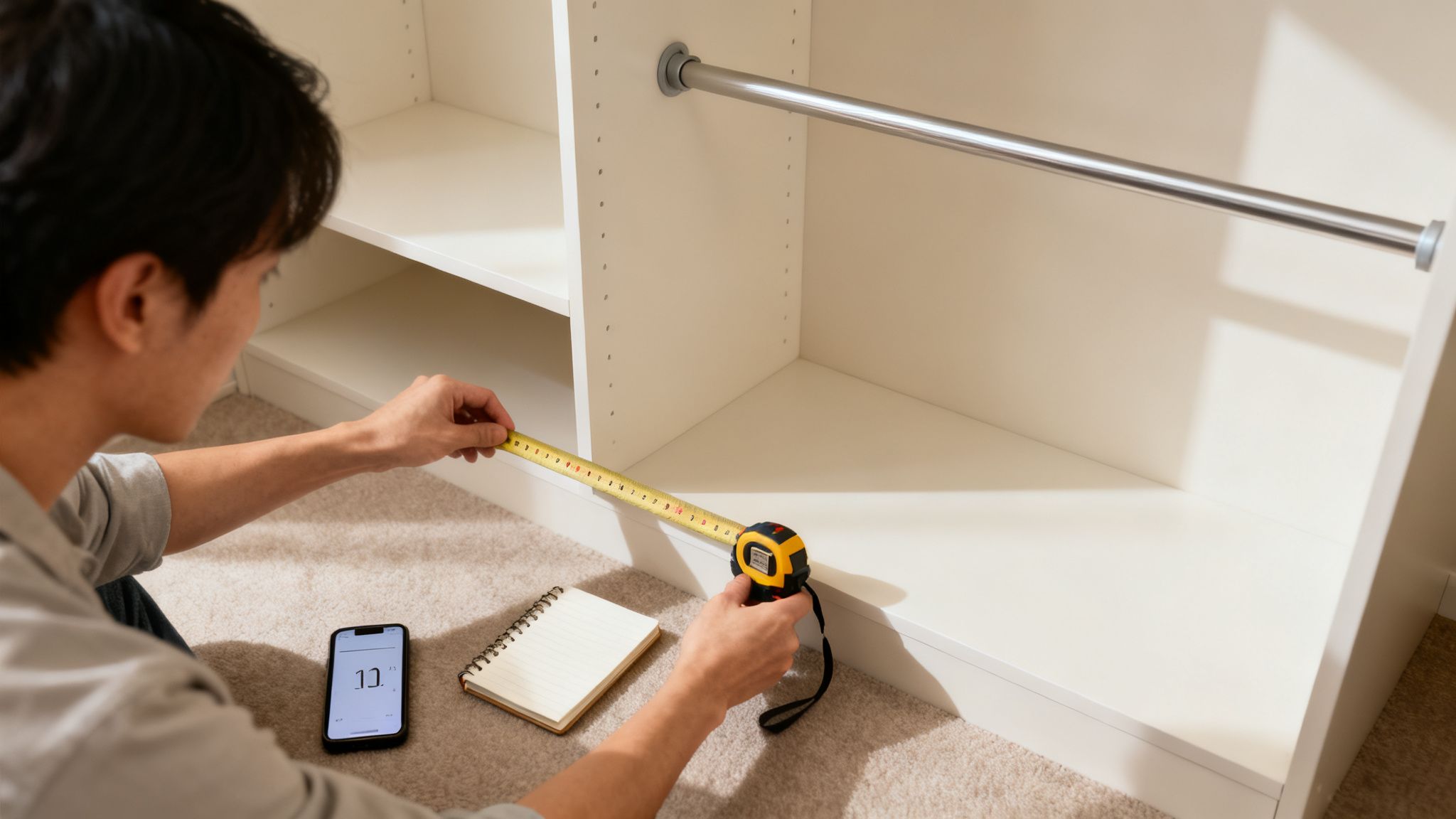
First things first, grab a tape measure. To design a closet that actually works, you need to know the exact dimensions you're dealing with.
- Width: Measure the space from wall to wall.
- Height: Go from the floor all the way up to the ceiling.
- Depth: Measure from the back wall to the front of the closet opening.
Scribble these numbers down somewhere safe. Knowing your exact measurements is the only way to choose a system that will fit perfectly and make the most of every inch. It's a quick win that makes the whole project feel real and achievable.
Take a Quick Inventory
Next, get a rough idea of what you actually own. Don't worry about counting every pair of socks. Just think in big, general categories to get a feel for what your new setup needs to handle. Ask yourself:
- How many long-hanging items (dresses, coats) do I have versus short-hanging ones (shirts, blouses)?
- How big are my piles of folded clothes, like sweaters and jeans?
- Do I have a lot of shoes? What about bags, scarves, or hats?
This quick audit is all about prioritizing. Do you desperately need more hanging space, or are drawers and shelves the real game-changer for you? Getting this right is why the closet organizer market is booming—it was valued at USD 4.5 billion in 2024 and is expected to nearly double by 2033 as more people look for smart ways to manage their space.
This simple visual breaks down those crucial first moves.
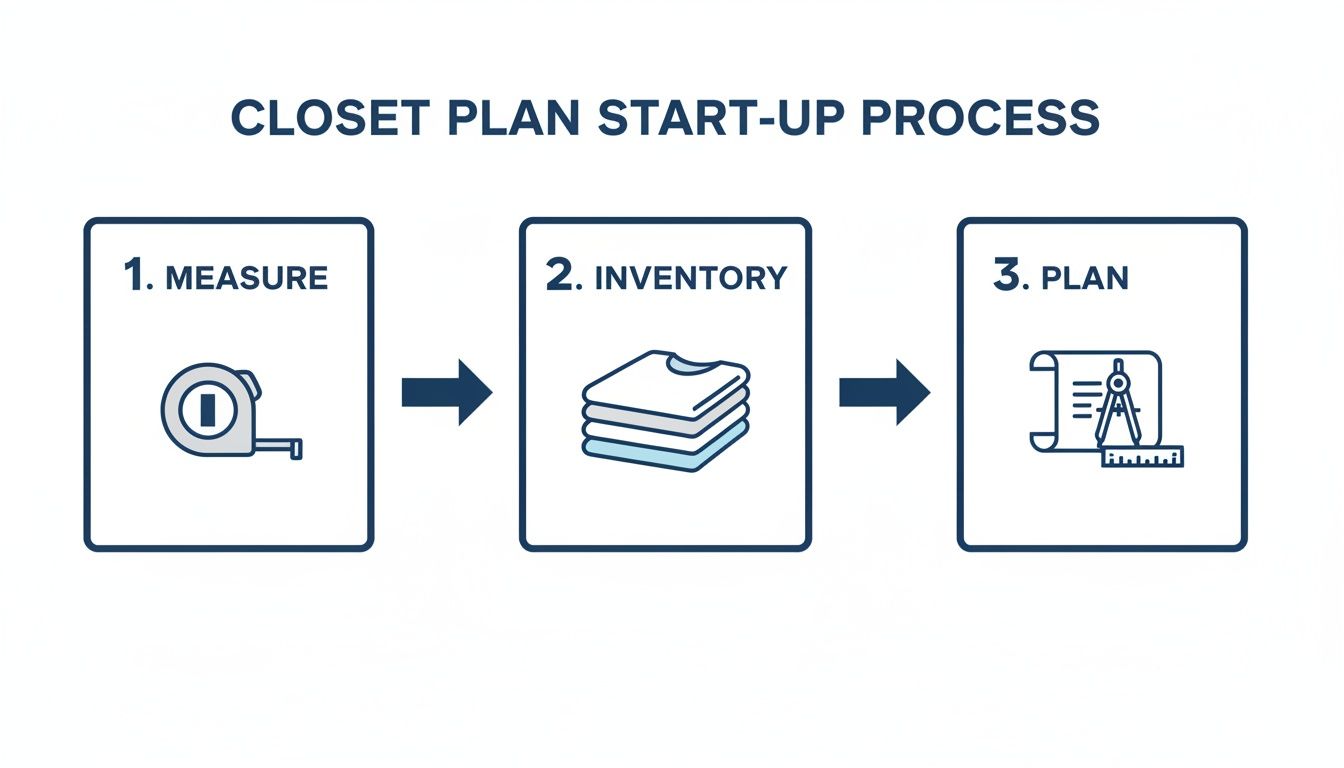
By following this logical flow—Measure, Inventory, Plan—you turn a vague wish for an organized closet into a solid project with clear steps. Once you have this intel, you're ready to start the sorting process, and our guide on how to get rid of clutter is the perfect place to dive into that next phase.
Declutter Your Closet Without the Decision Fatigue
Before a single new shelf or rod can go in, you have to face the beast: emptying the closet. This is the exact spot where most organization projects die. Why? Because you're paralyzed by decisions. Traditional decluttering advice throws you into the deep end, forcing you to make tough, emotional choices right from the start.
You know the scene. A mountain of clothes on the bed, you’re holding a sweater from ten years ago, and all your energy is just… gone.
We’ve all been there. But what if there’s a better way to start? We don't start with "does this spark joy?"—we start with "is this actually trash?"
The secret to building real momentum isn't about tackling the hardest decisions first. It's about starting with the easy stuff—the no-brainers—to get a few quick wins under your belt. This psychology-backed approach gives you a dopamine hit that builds momentum.
Instead of agonizing over that sentimental (but ill-fitting) jacket, our "Trash First" approach flips the script. We start by hunting for obvious trash: the sock with a hole, the hopelessly stained shirt, the lone earring whose partner is long gone. These are effortless choices that immediately shrink the pile and give you that little boost you need to continue.
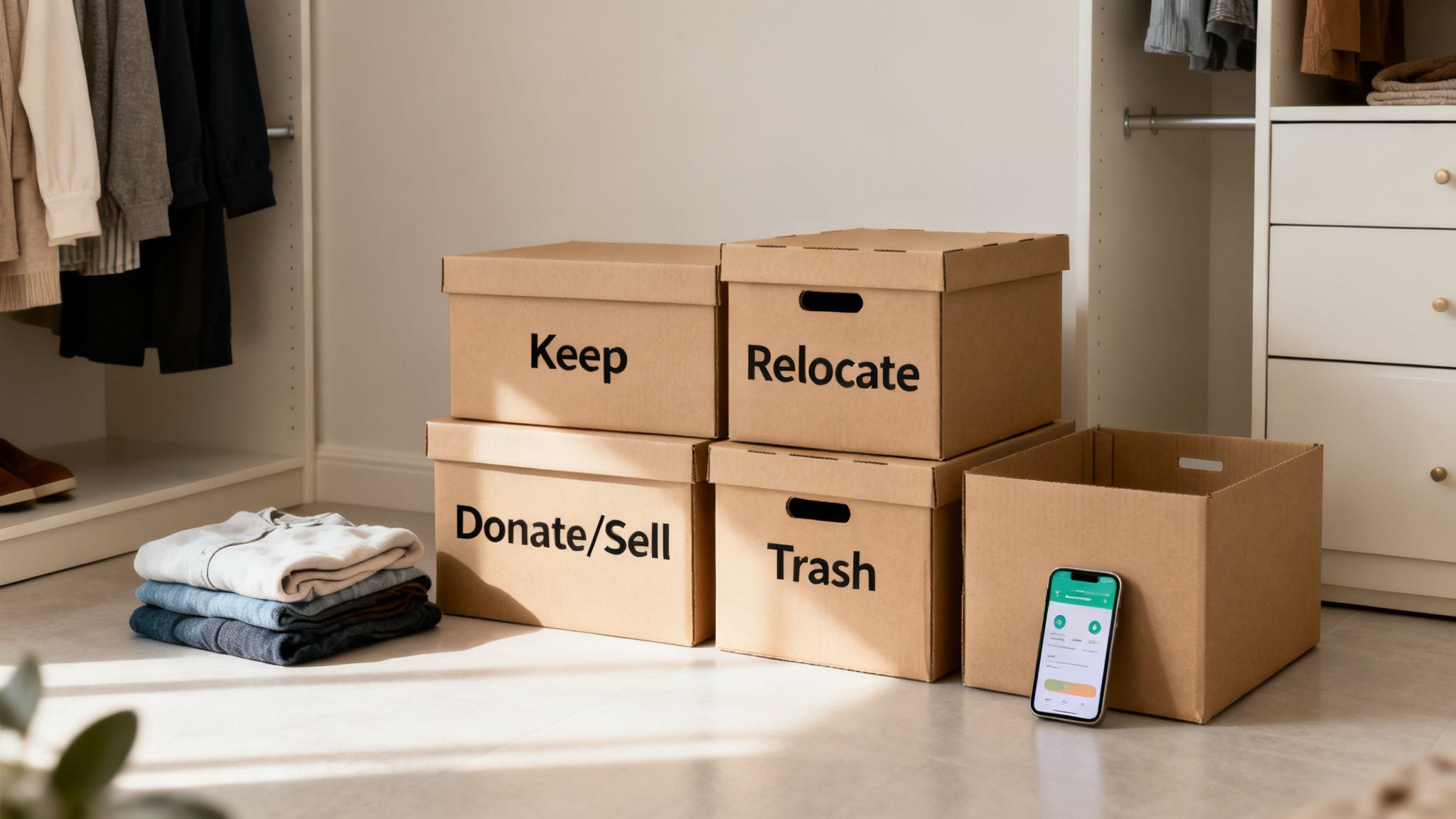
The Four-Box Method, Simplified
Once the actual trash is out of the way, you can sort what’s left. The DeClutter Now app makes this part a breeze by guiding you through the classic Four-Box Method, turning a monumental task into a clear, step-by-step process. You’re not just left alone with overwhelming piles; the app gives you a framework for every single item.
Here’s the breakdown:
- Keep: These are your go-to items. The clothes you love, wear all the time, and will have a place of honor in your new closet organization system.
- Relocate: That stray coffee mug that ended up in the closet, the book that belongs on your nightstand. These things have a home, it’s just not here.
- Donate/Sell: Good-condition items you just don’t use anymore. The app can even help you turn these into cash later on.
- Trash: Anything broken, expired, or unusable that you might have missed in the first sweep.
This structured method takes the guesswork out of it. And let's be honest, as our living spaces get smaller, making every inch count is crucial. A well-designed closet system can boost your usable storage by up to 40%, which is a game-changer in a small home.
The DeClutter Now app helps you sort through your things, making each decision fast and simple.
Its AI-powered suggestions help you categorize things in seconds, breaking through the decision fatigue that brings so many projects to a halt. For those looking for broader strategies, it can also be helpful to eliminate clutter with bedroom solutions, since many of the principles apply to closets, too.
By focusing on one item at a time with a clear path forward, you can finally make progress without the usual stress.
Choosing the Right Closet Organization System for You
Okay, you've done the hard part. The closet is empty, clean, and a blank slate. Now for the fun: choosing a closet organization system that keeps it looking that way for good.
But let's be honest, walking into a home improvement store or browsing online can be just as overwhelming as that pile of clothes you just sorted. From simple wire racks to stunning custom built-ins, the options can feel endless. The secret is to find a system that fits your real life—not just your closet's dimensions.
The perfect system for a long-term homeowner is probably overkill for a renter. Your goal here is to find a practical solution that respects your budget, matches your style, and simplifies your daily routine.
What Are Your Options?
Most closet systems fall into a few key categories, and understanding the difference is the first step to making a smart choice.
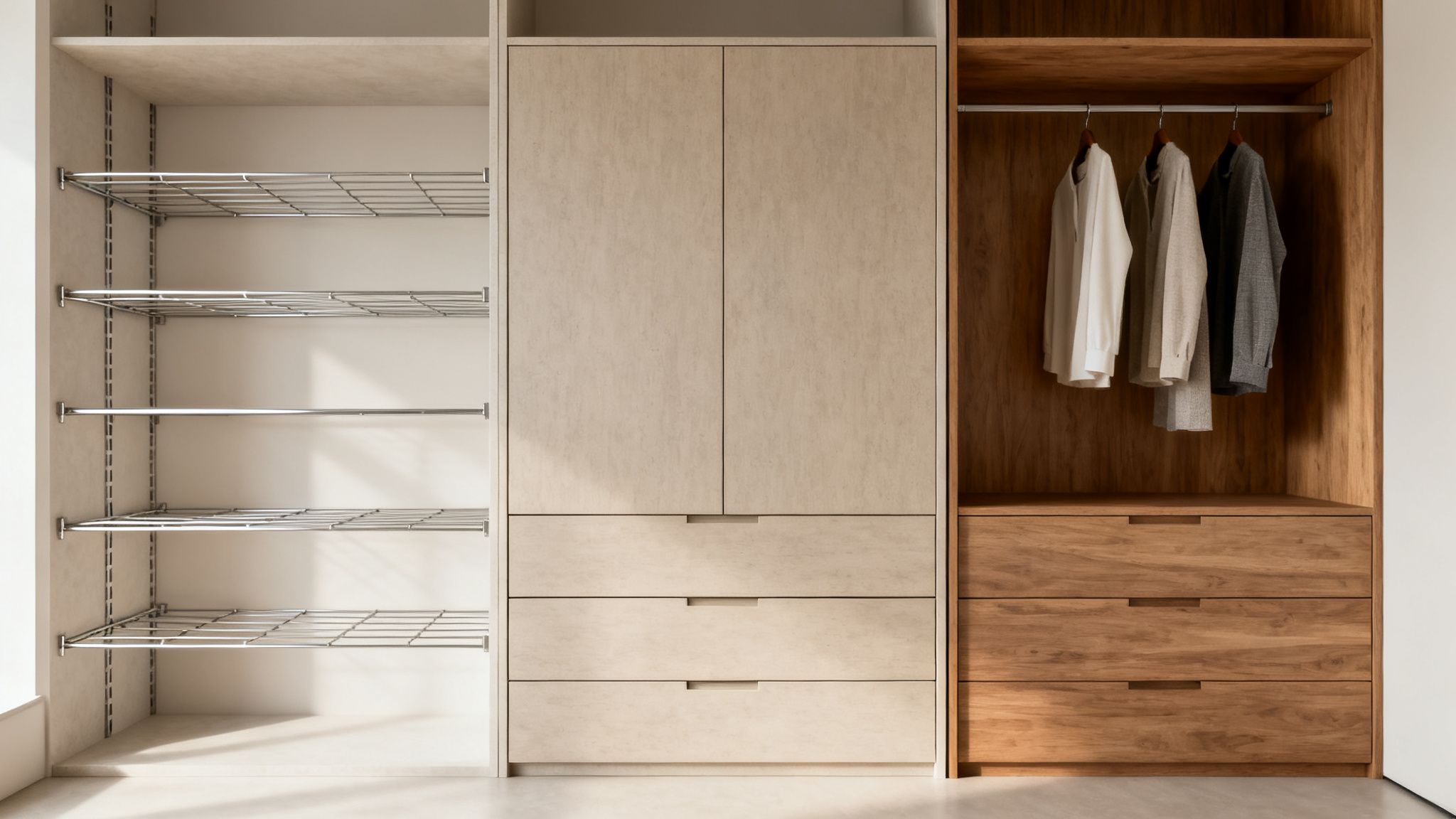
Wall-Mounted Systems: These are incredibly popular for a reason. They attach directly to your walls, which keeps the floor totally clear and gives you that clean, built-in look. You can find them in wire or laminate, and they’re usually very customizable.
Freestanding Systems: Think of these as furniture you place inside your closet—like a standalone wardrobe or a shelving tower. They require zero installation, which makes them perfect for renters or anyone who wants a simple, no-fuss solution they can take with them when they move.
Modular Systems: These offer the best of both worlds. They're made up of individual components like drawers, shelves, and hanging rods that you can mix and match to build a setup that’s uniquely yours. It’s a great way to start small and add more pieces later as your needs (or your wardrobe) change.
It really comes down to a trade-off between permanence and flexibility. If you own your home and you're in it for the long haul, a wall-mounted system is a durable investment. But if you’re renting or might move soon, a freestanding or modular closet organization system is a much wiser choice.
Closet System Comparison Guide
To help you visualize the trade-offs, here’s a quick comparison of the most common types of systems you'll find on the market.
| System Type | Average Cost | Installation | Best For |
|---|---|---|---|
| Wire | Low ($) | DIY-friendly but requires tools | Maximum ventilation, budget projects, and utility closets. |
| Laminate/MDF | Medium ($$) | Moderate DIY or pro install | Achieving a custom, built-in look without the high cost. |
| Solid Wood | High ($$$) | Professional installation recommended | Luxury walk-ins and permanent, high-end solutions. |
Ultimately, the right system is the one that meets your specific needs for budget, ease of installation, and how you plan to use the space day-to-day.
Does the Material Really Matter?
Absolutely. The material of your closet system dictates its look, its lifespan, and its price tag. But you don't always need the most expensive option to get a fantastic result; you just need the right one for your situation.
A common mistake I see is people choosing a system based on aesthetics alone, forgetting to consider how it will stand up to daily use. Trust me, a flimsy system that sags under the weight of your sweaters is far more frustrating than having no system at all.
For a lot of people, laminate systems from brands like ClosetMaid hit that perfect sweet spot. They give you a high-end, custom feel without the custom price tag, and many come in all-in-one kits that are surprisingly simple to put together.
One DIY blogger I follow completely transformed her 1970s closet with a system she found at Lowe's for under $200. She said it was one of the easiest pieces of furniture she'd ever assembled. It’s a great reminder that you don't need a massive budget to create a closet that is both beautiful and incredibly functional.
Should You DIY or Hire a Pro for Installation?
You've planned, sorted, and picked out the perfect closet organization system. Now for the final hurdle: getting it installed. This is where you have a major decision to make. Do you roll up your sleeves and tackle it yourself, or do you bring in a professional to get the job done?
Honestly, there's no universally "right" answer here. It’s a classic trade-off between your budget, your free time, and how handy you feel with a drill. Both paths lead to that beautifully organized closet you're dreaming of, but the journey to get there looks quite different.
The DIY Installation Path
Going the DIY route can be incredibly satisfying. There’s a real sense of pride that comes from building something with your own two hands, and let’s not forget the potential for significant cost savings. Many modern systems, like the ClosetMaid kits you can find at Lowe's, are specifically designed with home assembly in mind. I read a story from one blogger who completely overhauled her closet for under $200 by installing a system herself over a single weekend.
If you're thinking this is the path for you, make sure you're set up for success from the start.
- Gather the Right Tools: Don't try to make do with what you have. You'll absolutely need a reliable drill, a level (this is non-negotiable if you want straight shelves), a stud finder, and a measuring tape.
- Always Find the Studs: This is probably the number one mistake I see people make. Anchoring a heavy closet system into drywall alone is just asking for it to come crashing down. Use that stud finder to locate the solid wood beams in your wall—that’s what will securely hold the weight of all your clothes.
- Read the Manual All the Way Through: It sounds so obvious, right? But in the excitement of starting a new project, it's easy to jump the gun. Read the entire instruction booklet before you even unbox the pieces. It’ll save you a world of frustration later.
Hiring a Professional Installer
On the other hand, if the mere thought of finding studs and leveling shelves makes your palms sweat, hiring a professional is a fantastic choice. What could easily take you an entire weekend of work, a seasoned pro can often knock out in just one day. The biggest benefit here is the peace of mind you get, knowing the job is done quickly, correctly, and safely.
When you start looking for an installer, do a little homework.
- Ask to See Their Work: Any reputable installer will have a portfolio with photos of their past projects.
- Confirm They're Insured: Make sure they carry liability insurance. This protects you in the unlikely event of any accidental damage to your home.
- Get a Detailed Quote: The estimate shouldn't be a single number. It needs to clearly break down the costs for labor and any extra materials required.
In the end, your decision really boils down to what you value more: saving money or saving time and stress. A DIY project might set you back $200 and a weekend, whereas a professional installation could run anywhere from $500 to $1000 but be finished in a matter of hours.
Think about it in a real-world scenario. A busy parent trying to squeeze this project in between soccer practice and grocery runs has very different priorities than a retiree with a wide-open weekend. The best choice is the one that fits your life.
By weighing these factors, you can confidently decide which installation path is right for your new closet organization system. For a deeper dive into different types of systems, the experts at This Old House have some great advice on how to maximize closet space.
Turn Unwanted Items Into Cash With AI
After all that hard work sorting, you’re probably staring at a pretty hefty "Donate/Sell" pile. Don't look at it as just more stuff to get rid of. Think of it as found money—cash you can put directly toward that brand-new closet organization system.
Of course, the thought of listing everything online can feel like a whole new project you just don't have the energy for.
This is where you can turn a potential chore into a quick win. Instead of getting bogged down taking photos, writing descriptions, and second-guessing prices, let a smart tool do the heavy lifting for you.
Effortless Selling with an AI Assistant
The DeClutter Now app has a built-in eBay selling assistant designed to smash through that exact friction. It makes listing your items almost effortless, turning that pile of clothes into live eBay listings in just a few minutes per item.
Here’s how it breaks down the process:
- Snap a Photo: Just take a quick picture of your item. The AI gets to work instantly.
- Get Optimized Listings: The app generates a compelling title and a detailed description automatically, packed with keywords to help buyers find what you're selling.
- Receive Smart Pricing: It suggests a competitive price by analyzing similar items that have recently sold. No more guesswork.
This isn't just about making things easier; it's about making this final step of decluttering feel rewarding. When you convert those unwanted items into money, you're directly funding the very project that’s bringing order back into your home. It’s a really satisfying, full-circle moment.
For certain valuable items, like old electronics, looking into specialized IT equipment buy back services can also be a fantastic way to turn them directly into cash.
The Growing Role of Tech in Home Organization
This kind of smart integration is becoming a bigger and bigger part of modern home improvement. In fact, the custom closets market is projected to more than double by 2035, surging from around USD 33.7 billion to nearly USD 68 billion. While classic manual systems still lead the way, AI-driven and automated options are quickly gaining ground as people look for smarter, more efficient solutions.
Using an AI-powered tool to sell your items means you’re not just clearing clutter. You’re actively part of this shift toward smarter home management, making the whole process faster and more profitable.
Once you have a system down for selling, you'll want to be sure you're pricing everything right to get the best return.
Keeping Your Newly Organized Closet in Check for Good
You've put in the work, and your closet is finally a space you can be proud of. So, how do you stop it from slowly turning back into the "before" picture? The truth is, a great closet organization system is only half the battle; the other half is building simple habits to maintain it.
The goal here isn't to be perfect. It’s about creating a few easy routines that keep clutter from creeping back in. Build momentum, not perfection.
Little Habits, Big Impact
To avoid that old familiar feeling of clutter paralysis, I always recommend starting with two incredibly simple rules. They take almost no effort but make a world of difference. Think of them as the foundation for keeping your closet organized forever.
Embrace the 'One In, One Out' Philosophy: This is probably the single most effective rule for closet maintenance. Every time you buy a new shirt, sweater, or pair of shoes, an old one has to go. This forces you to be more intentional with your shopping and stops your closet from getting overstuffed.
Schedule a 10-Minute Weekly Tidy-Up: Pick a day, maybe Sunday evening, and set a timer for just 10 minutes. Use that time to put everything back where it belongs. Hang up the clothes that have piled up on "the chair" (we all have one!), put your shoes away, and straighten any messy stacks of sweaters. It's amazing what you can accomplish in 10 minutes, and it prevents a small mess from becoming a major project.
Check In with DeClutter Now
Even with the best habits, it’s a good idea to do a quick reassessment every now and then. But forget those dreaded, day-long seasonal cleanouts. Instead, just pull out the DeClutter Now app for a quick session every few months.
The point is to make progress, not to achieve some impossible standard of perfection. A quick scan with the app helps you spot potential clutter before it gets out of hand, making maintenance feel like a quick, satisfying win instead of a chore you put off for months.
This approach keeps your closet organization system working for you, not against you. It ensures that feeling of calm and control you get from an organized space becomes your new normal.
Got Questions? We’ve Got Answers.
Jumping into a closet overhaul always stirs up a few questions. That's completely normal. Getting a handle on the details is the best way to feel confident about your plan and pick a closet system that truly fits your space, your stuff, and your budget.
Let's walk through some of the most common things people ask when they're on the brink of a closet transformation.
What's the Real Cost of a Closet System?
This is the big one, and the honest answer is: it varies wildly. You can get started for less than you might think. A basic DIY wire shelving kit from a big box store like Lowe's could run you just $100 to $200.
If you're looking for something a bit more substantial, modular laminate systems are a popular middle ground, typically landing between $300 and $1,500. The final price tag depends on how big your closet is and how many drawers, shelves, and rods you add.
For a high-end, professionally installed custom wood closet—the kind you see in magazines—you're looking at a bigger investment, usually starting around $2,000 and going up to $10,000 or even more for large, intricate designs.
Which Closet Material Lasts the Longest?
When it comes to pure durability, solid wood is the undisputed champion. It’s built to last a lifetime, but it's also the most expensive option.
For a great blend of strength and value, high-quality laminate or melamine is fantastic. It's tough, resists scratches and warping, and gives you a clean, custom look without the custom price.
Wire shelving is your most budget-friendly choice. It’s perfect for air circulation (great for linens!) but can start to bow under the weight of heavy stacks of jeans or sweaters over the years.
Can I Put a Closet System in My Rental?
Yes, you absolutely can! Renting doesn't mean you're stuck with a single, dysfunctional rod. Freestanding closet units or modular systems that don't need to be anchored to the wall are your best friends here.
Many wall-mounted systems are also renter-friendly. They can be installed with minimal impact and removed when you leave, requiring just a bit of spackle to patch the small screw holes.
Always check your lease agreement before you pick up a drill. If you're unsure, stick with a freestanding wardrobe or a set of shelf towers. They offer a ton of organization with zero installation, and you can take them with you when you move.
Feeling ready to conquer the clutter but paralyzed by the decisions? DeClutter Now turns that overwhelm into action with AI-powered guidance.