
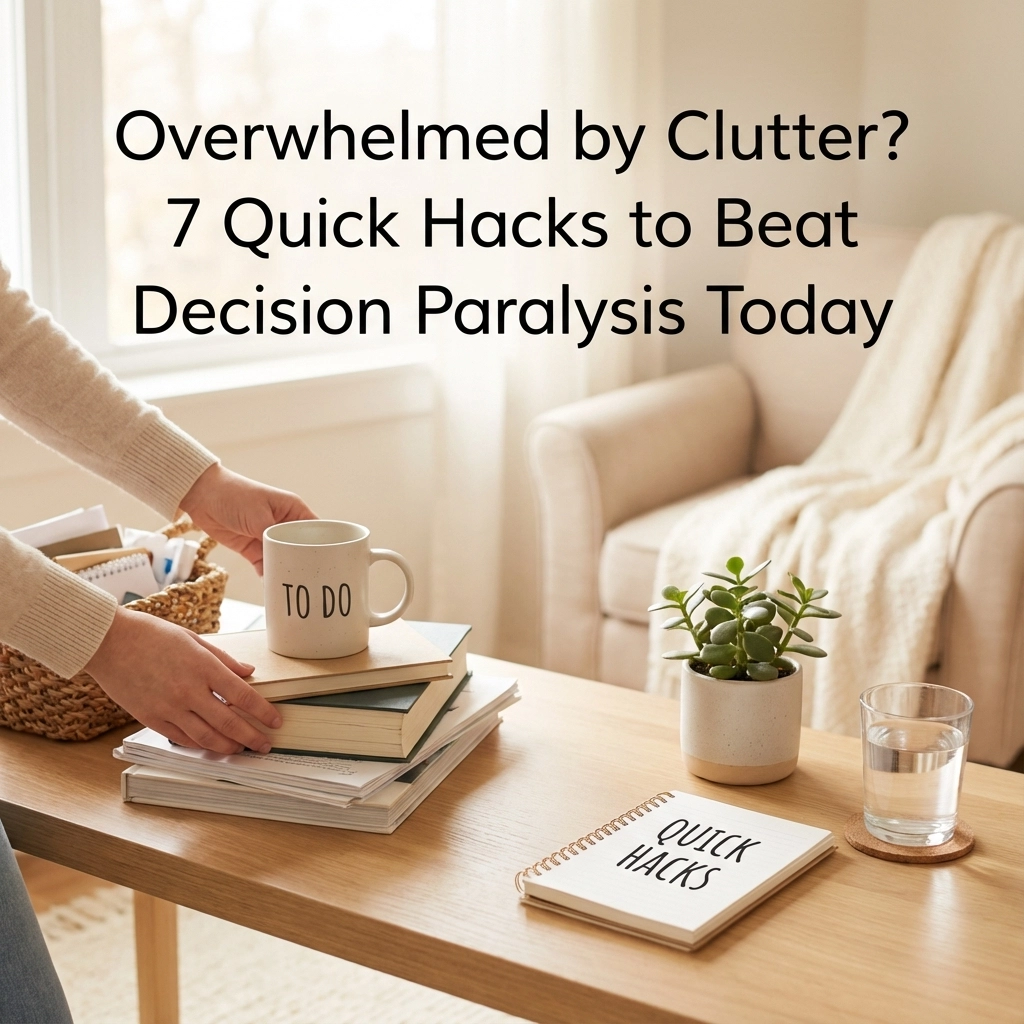
Staring at that pile of stuff in your bedroom again? You’re not alone. Over 80% of Americans feel overwhelmed by clutter in their homes, and the biggest culprit isn’t laziness or lack of time: it’s decision paralysis.
You know the feeling. You pick up an item, hold it for what feels like forever, then put it right back down because you just can’t decide what to do with it. Should you keep it? Donate it? Maybe you’ll need it someday? This mental back-and-forth is exhausting, and it’s exactly why that same pile of clutter keeps staring back at you week after week.
Here’s the thing: decision paralysis isn’t a character flaw. It’s your brain’s natural response to overwhelming choices. But once you understand how to work with your brain instead of against it, decluttering becomes so much easier.
Let’s dive into seven quick hacks that will help you break through decision paralysis and finally start making progress on that clutter that’s been driving you crazy.
Hack #1: Start Small With Achievable Goals
Your brain loves quick wins, but it shuts down when faced with massive tasks. Instead of declaring “I’m going to declutter my entire house this weekend,” pick one tiny area to focus on.
We’re talking seriously small here: a single drawer, your bedside table, or even just the top of your dresser. Set a timer for 15 minutes and commit to just that space. When you finish and see that one area completely organized, your brain releases a little hit of dopamine that motivates you to tackle the next small area.
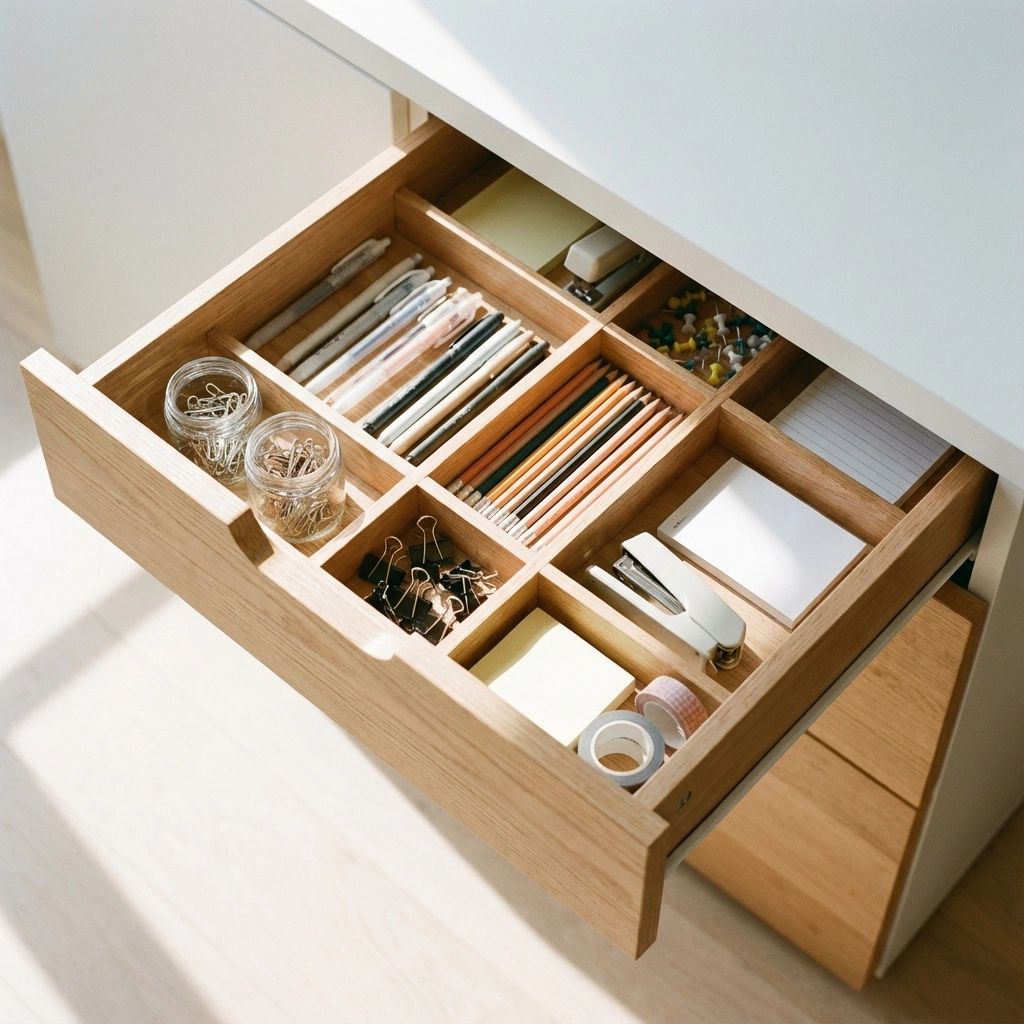
This approach works because it eliminates the mental overwhelm before it starts. You’re not making hundreds of decisions about different categories of items: you’re just focusing on what’s in front of you right now.
Hack #2: Use Predetermined Decision Questions
Decision paralysis often happens because we’re trying to consider every possible scenario for each item. What if I need this random cable someday? What if this dress comes back in style? What if, what if, what if.
Cut through this mental noise by establishing three simple questions before you start decluttering:
- Have I used this in the last year?
- Does this add value to my life right now?
- Would I buy this today if I saw it in a store?
If the answer to any of these is no, the item goes. No exceptions, no “but maybe” thoughts allowed. These predetermined questions act like guardrails, guiding your decisions so you don’t have to reinvent the wheel for every single item.
The key is choosing your questions ahead of time and sticking to them. This removes the emotional component from decision-making and turns decluttering into a simple sorting process.
Hack #3: Set Strict Time Limits Per Item
Here’s a game-changer: give yourself exactly 30 seconds to make a decision about each item. Pick it up, apply your predetermined questions, and make a choice. If you can’t decide within 30 seconds, it automatically goes in the donate pile.
This might sound harsh, but think about it: if you can’t quickly identify why something belongs in your life, it probably doesn’t belong there at all. The items you truly value and use regularly? You’ll know immediately to keep them.

Setting time limits prevents you from spiraling into “what if” scenarios and analysis paralysis. It forces your brain to rely on intuition rather than overthinking, which is often more accurate anyway.
Start your timer, trust your gut, and keep moving. You’ll be amazed at how much faster the process becomes when you’re not allowed to deliberate endlessly.
Hack #4: Create a “Maybe” Box for Uncertain Items
Sometimes you’ll encounter items that genuinely stump you within your 30-second limit. Instead of getting stuck, have a “maybe” box ready to go.
When you hit one of these truly difficult decisions, toss the item in the maybe box and keep moving. Don’t let one challenging item derail your entire decluttering session.
Here’s the magic part: seal up that maybe box and store it somewhere out of sight for three to six months. If you don’t go looking for anything inside during that time, donate the entire box without opening it. If you do need something, you can retrieve just that item and donate the rest.
This hack works because it removes the immediate pressure while still moving items out of your living space. Most people discover they never think about the contents of their maybe box again, which proves they didn’t need those items anyway.
Hack #5: Prioritize High-Impact Areas First
Not all clutter is created equal. Some areas of your home cause daily stress, while others are just mildly annoying. Focus your energy where it’ll make the biggest difference in your day-to-day life.
Ask yourself: which cluttered area bothers you most? Is it the entryway where you can never find your keys? The kitchen counter that’s always covered in papers? Your bedroom that makes it hard to relax?
Start there. When you declutter spaces that directly impact your daily routine, you’ll feel the benefits immediately. This positive feedback loop motivates you to keep going and tackles decision paralysis by showing you concrete proof that decluttering works.
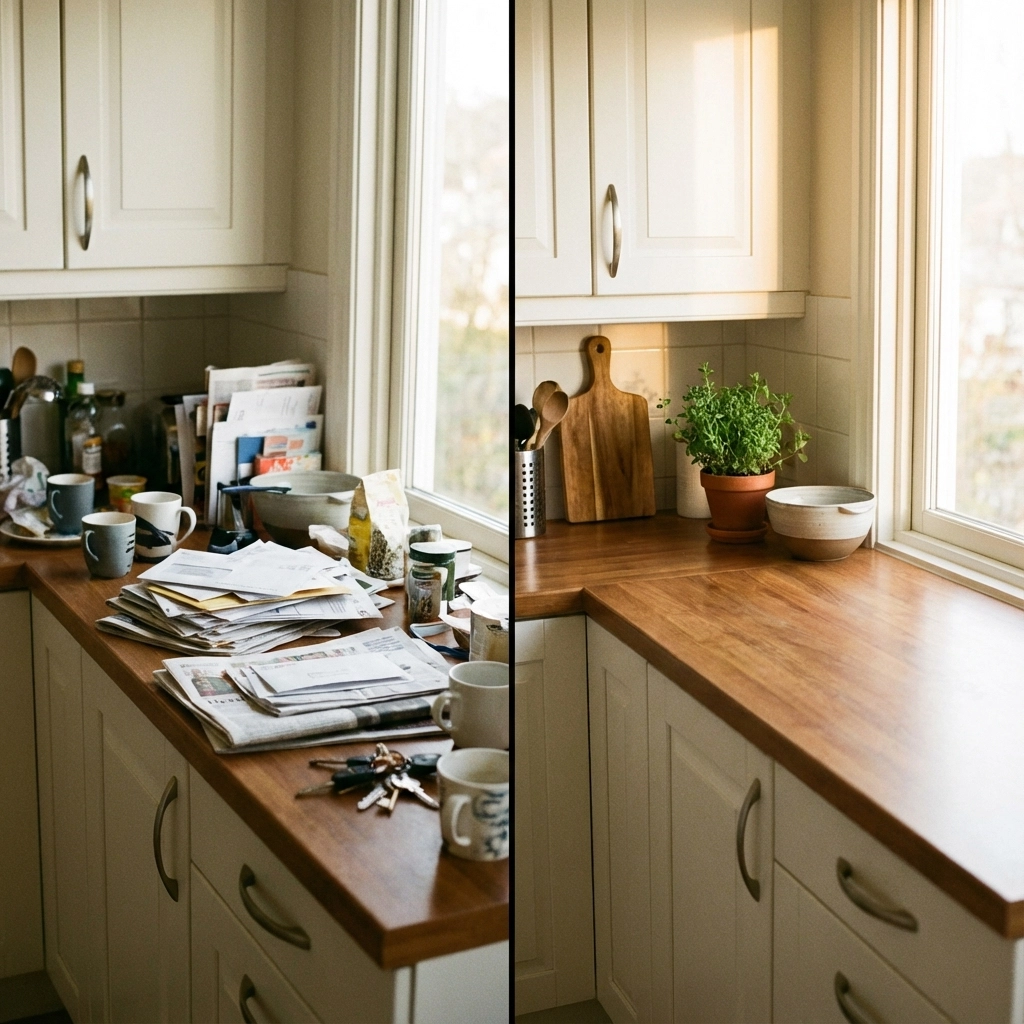
Focusing on high-impact areas first also ensures that even if you don’t finish every room, you’ve improved the spaces that matter most to your daily happiness and functionality.
Hack #6: Remove Items Immediately After Deciding
This hack is crucial but often overlooked: get items out of your house as soon as you finish a decluttering session. Don’t let donation bags sit in your garage for weeks, and don’t keep “trash” items around “just in case.”
When decided items stay in your space, you’ll inevitably second-guess your decisions. You’ll see something in the donation pile and think, “Actually, maybe I should keep this,” undoing all your progress.
Load donations in your car immediately and drop them off within 24 hours. Put trash items directly in the bin outside. Ask a friend or family member to take items away if that helps you avoid backtracking.
The physical removal of items reinforces your decisions and prevents you from falling back into decision paralysis about the same objects over and over again.
Hack #7: Get Outside Perspective or Use Decision Tools
Sometimes we’re too close to our stuff to make objective decisions. Everything feels important when it’s yours, even when it objectively isn’t serving you.
Invite a trusted friend or family member to help with your decluttering session. They can ask the tough questions you might avoid and provide honest feedback about whether you actually need that collection of takeout menus or the 47 coffee mugs in your cabinet.

If bringing in a person isn’t possible, use decision-making tools like apps or structured methods that provide external guidance. The key is having something outside your own overwhelmed brain to help guide your choices.
An objective perspective cuts through the emotional attachment and mental clutter that fuels decision paralysis. Sometimes you just need someone to say, “You haven’t worn that shirt in three years: it’s time to let it go.”
Breaking the Cycle Starts Today
Decision paralysis thrives in complexity, but these seven hacks simplify the entire decluttering process. By starting small, using predetermined questions, setting time limits, and getting items out of your space quickly, you’re working with your brain’s natural tendencies instead of against them.
Remember, the goal isn’t perfection: it’s progress. Every item you successfully decide about builds momentum for the next one. Every small area you complete proves to yourself that you can handle this challenge.
You don’t have to stay stuck in the cycle of feeling overwhelmed by clutter. With the right strategies, you can break through decision paralysis and create the organized, peaceful home you deserve.
Ready to take the next step? DeclutterNow.ai is designed specifically to help you overcome decision paralysis and tackle your clutter with confidence. Our AI-powered approach guides you through personalized decluttering sessions, suggests what to keep or donate based on your lifestyle, and helps you stay motivated throughout the entire process. Stop letting decision paralysis keep you stuck: give DeclutterNow.ai a try today and discover how much easier decluttering becomes when you have the right support system.
Category: Overcoming Clutter Paralysis
Tags: overwhelmed by clutter, decision paralysis, decluttering tips, declutter your home